


Winter protection is most useful for an evergreen rhododendron exposed to wind and bright winter sun or growing in a pot. An established, hardy shrub in a sheltered bed may need only adequate moisture before the ground freezes and a layer of mulch. In an exposed bed, put a breathable screen on the side that needs protection. For a container, focus on keeping the root ball from rapid temperature changes and allowing water to drain.
Tell cold-weather leaf curl from lasting damage
On a freezing day, healthy evergreen rhododendron leaves can roll into narrow tubes and hang down. They often open again when the weather moderates. Look at the same plant in cold and milder weather before doing anything. When the leaves regain their usual shape, there is no need to straighten them, mist them or water because of the change in appearance alone. Deciduous rhododendrons shed their leaves for winter. Compare plants of the same type.
Roots in frozen ground cannot readily replace water lost through evergreen foliage on sunny, windy days. Leaf tips or edges may then dry out. If damage is concentrated on the windward or sunny side, the pattern is a clue. It still needs to be considered alongside drainage, stem damage and the condition of the rest of the plant. Persistent wilting in wet soil, injuries at the base of shoots or spotting across the crown deserve a separate inspection. Once the weather moderates, also check whether the flower buds have survived. See how to check rhododendron buds and flowering.
Two beds in the same Ukrainian garden may winter very differently. A shrub behind a fence or below an open canopy often receives less wind and direct sun than one at an exposed south- or west-facing corner. A mild spell followed by a sharp freeze can injure leaves or flower buds even on a cultivar generally regarded as hardy. Consider the sequence of thaws and freezes, the site's winter drainage and the plant's recent history. A cold-hardiness figure on a label does not describe every garden microclimate, especially for a newly planted shrub or a pot raised off the ground.
Check moisture before the root zone freezes
Pull back a little mulch and feel the soil below it. If autumn has been dry, the ground is still unfrozen and the soil drains well, water the root zone and give it time to absorb the water. Check again below the surface. Water that darkens the top few crumbs can leave the soil around the roots dry. After sustained rain, skip extra watering if the soil is already moist. If you find a puddle that keeps returning, see whether a downspout or sloping path is sending water to the shrub.
Replace the loose mulch around the root area, leaving a gap at the base of the stems. It helps retain moisture and moderates temperature changes around the shallow roots. A sodden mound pressed against the stems also makes it harder to inspect the base. Avoid digging into established roots to solve a drainage problem. Mark where water enters and where it collects so you can plan a correction once the ground has thawed.
Put up a screen on the exposed side
Walk around the shrub after deciduous leaves have fallen. A spot that was shaded in summer can receive direct winter sunlight. A gap between a fence and a wall may funnel wind straight at the leaves. Notice which side is exposed and whether snow slides onto the shrub from a roof. Set up the screen where it will slow the direct wind or soften the strongest sun.
- Before the ground freezes, set stable supports outside the crown. Work carefully around the root zone and test whether the frame shifts in a gust.
- Fasten burlap or another breathable material to the supports. Leave space between the leaves and the screen, with room for air to move.
- Inspect the screen after a windstorm, wet snow or a thaw. If a fastening gives way or the fabric sags, adjust it from outside the frame.
- Remove the screen after the root zone thaws and roots can take up water. If the site is still exposed to drying wind, open it gradually.
Avoid sealing the whole crown under clear plastic. Air underneath can warm quickly in sunshine, and moisture may collect on the leaves. Let ice melt on its own instead of peeling it away or trying to straighten frozen branches. After the thaw, look for a break or a support pressing on a shoot. Where snow is liable to slide from a roof, move a pot out of its path or deal with the risk of falling snow separately from the wind screen.
Give a potted rhododendron its own winter plan
The root ball in a container above ground can cool and warm faster than the roots of the same shrub in a garden bed. Pay particular attention to a small pot on a windy terrace. If the cultivar is suited to outdoor winter conditions, move the pot to a stable place sheltered from strong wind and bright midday sun. Insulate the sides if needed, or set the pot in a larger sturdy container with insulation in the gap. Keep drainage holes clear. Remove a saucer if it keeps rain or snowmelt around the base.
For a tender cultivar or one whose hardiness you cannot confirm, ask the nursery about a cool, protected place for winter. An evergreen in shelter still needs light. A warm, dark room next to a heater may dry the root ball or encourage growth long before the plant can go outside. During a winter thaw, check moisture after the growing mix has defrosted. Water moderately only when it is drying and water can drain. Do not try to thaw ice inside a container with hot water.
Assess recovery before planning spring feeding
Compare the sheltered and exposed sides of the crown with your autumn photo. Once the soil has thawed, look for leaves opening again, buds beginning to grow and meltwater leaving the root zone. Avoid cutting back all the shoots because a few leaves have scorched edges. An injured leaf can remain on a live stem. If you find a split branch or a widespread problem at the base, inspect that shrub separately and note the location. Use the guide to checking garden soil to assess the bed, then look at rhododendron soil, acidity and watering for the particular requirements of this shrub.
If a shrub dries on the same side each winter, reconsider the site. A temporary screen may help this season. For future planting, select a place that suits the cultivar's light needs and lies clear of runoff. If you plan to buy another rhododendron, ask for its botanical name, mature size and separate winter guidance for a bed and a container. That information helps you allow enough room for the plant and for a screen, if the site needs one.
Feeding a rhododendron once active growth returns
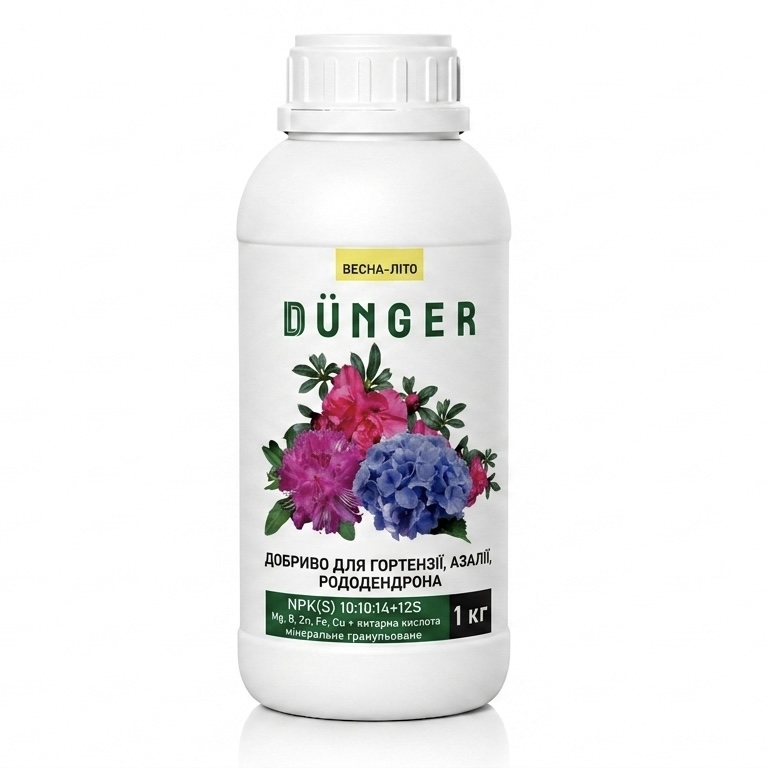
Complex fertilizer for hydrangea, rhododendron, azalea granular
After winter, first assess the shoots, moisture and drainage. If an established, healthy shrub has a confirmed need for the nutrients in this formulation, consider these DÜNGER granules. Rhododendrons are named in the directions. Check the spring or summer stage, soil moisture and the instructions for a shrub of its age and size.
Compare the quantity for the eligible shrubs with the 0.5, 1 and 5 kg packs. Check the full directions, pack photo and current price on the product page. During winter, focus on wind exposure, drainage and root protection.
Frequently asked questions
Check its type, cultivar and site first. An evergreen in exposed sun and wind may benefit from a screen. An established hardy cultivar in a sheltered, well-drained bed often needs only enough moisture and mulch.
Check that the root zone has thawed and that the soil is actually drying. Water only if the excess can drain away. For pots, check both the root ball and the drainage holes.
Wait for the root zone to thaw so the roots can take up water. Open the screen gradually when the weather allows and check the shrub again after a dry, windy spell.


