
For garden cropsFertilizers for spring flowers and greens
DÜNGER granular fertilizer for spring flowers and greens. Choose a 1 or 5 kg pack, check the price of your selected option and enter the number of packs you need.
660.00 ₴


DÜNGER fertilizers for flower beds, perennials and spring flowers. Choose granules or liquid concentrate by plant and application method. Compare nutrients, rates and pack sizes, with delivery within Ukraine.
Fertilizers for spring flowers, perennials and ornamental crops: soil granules and a liquid concentrate. Compare compositions, pack sizes and the method for your plants; product cards provide the full instructions and current prices.
DÜNGER granular fertilizer for spring flowers and greens. Choose a 1 or 5 kg pack, check the price of your selected option and enter the number of packs you need.
DÜNGER fertilizer for vegetables, fruit and berry crops, and flowers in a 5 L canister. View the product details, choose the number of canisters and order for your vegetable garden, berry patch or flower beds.
DÜNGER PK 23:30 phosphorus-potassium fertilizer in granules, supplied in a 5 kg pack. For spring and autumn garden care: berry and ornamental shrubs, fruit plants and perennial flowers.
DÜNGER universal compound fertilizer granules for vegetables, legumes, leafy greens and ornamental plants. Available in 3, 4 and 5 kg packs.
Plan your plant care ahead
Explore the seasonal calendar, prepare for the next stage and choose the pack sizes you need.
Choose a plant group or month. Coloured periods are planning guides for Ukraine, not application dates. Dashed lines require the actual plant stage.
For spring flowers, look for first shoots or buds. The autumn product specifies August-September soil preparation for bulbs. For perennials, the autumn phosphorus-potassium option is used after flowering and before frost. For root watering with HUMIC, the soil must be moist; dilute the concentrate with water as directed.
Your seasonal selection
DÜNGER granular fertilizer for spring flowers and greens. Choose a 1 or 5 kg pack, check the price of your selected option and enter the number of packs you need.
DÜNGER PK 23:30 phosphorus-potassium fertilizer in granules, supplied in a 5 kg pack. For spring and autumn garden care: berry and ornamental shrubs, fruit plants and perennial flowers.
Indicative periods for Ukraine. Consider weather, growth stage and product instructions. This calendar does not prescribe rates or feeding frequency.
Choose an application method and enter the measurements for your flower garden. Compare the number of packs, the amount left over and the purchase cost.
Save your region for your plan and delivery request. Before applying fertilizer, check the weather, soil moisture and plant stage at your site.
Opening your plans
Choose your crop, product and application method. Compare pack counts, fertilizer left over and the cost of your purchase.
Choose flower fertilizers by the plants you grow, their growing conditions and the instructions for the specific product. A bed of tulips, established perennials and a petunia in a hanging basket do not have identical feeding conditions. Even products described as flowering feeds can have different rates and application methods. First decide whether you are treating a measured flower bed, individual plants or seedlings. Then compare the nutrient composition and the product form.
Compare a granular complex for soil application with a liquid concentrate that needs dilution. Measure the flower-bed area, count individual perennials and check the separate feeding method when treating seedlings. If you have already used a compound fertilizer or planted into a potting mix containing nutrients, account for that before making another application.
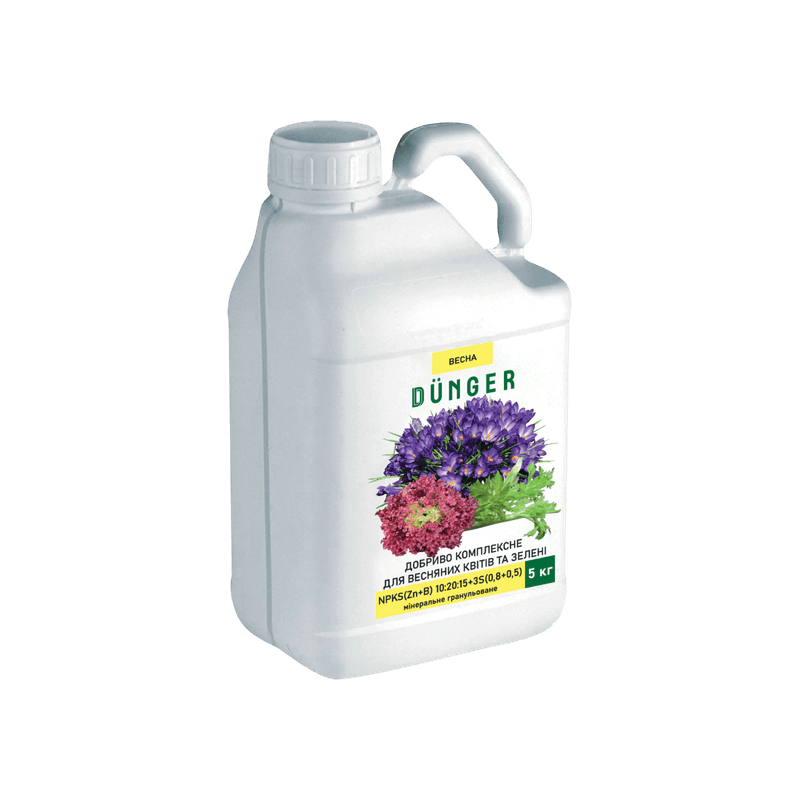
Fertilizer for spring flowers and greens is a granular NPKS 10:20:15:3 complex with zinc and boron. The instructions name crocuses, tulips, daffodils and other spring flowers. It is used before planting or in early spring when shoots emerge or buds develop.
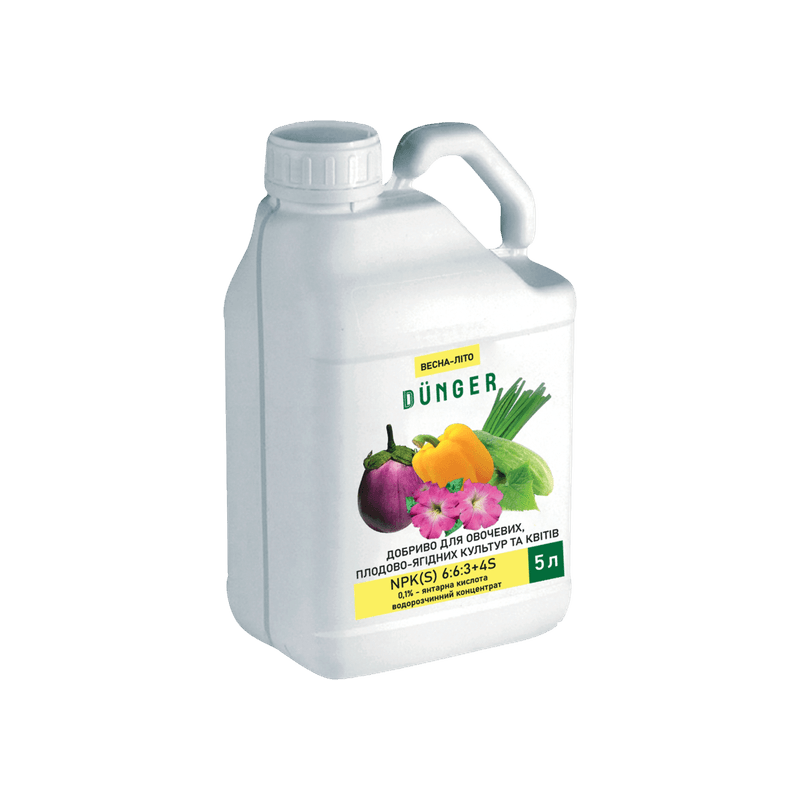
Fertilizer for vegetables, fruit and berry crops and flowers is an NPK 6:6:3 liquid concentrate. Root feeding, foliar application and seedling feeding have separate instructions. Always dilute the concentrate with water.
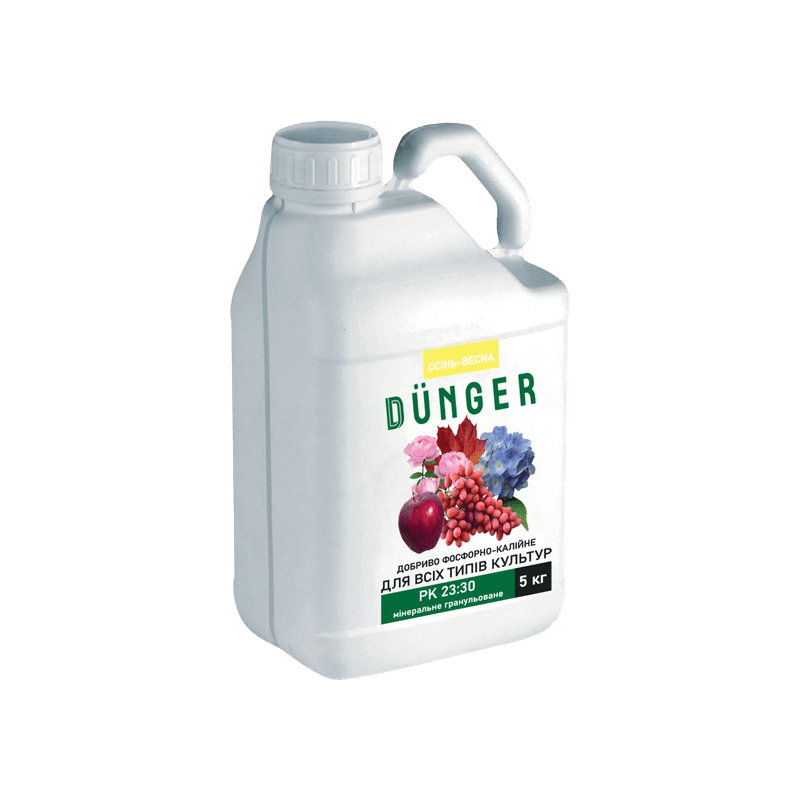
Phosphorus-potassium fertilizer contains P₂O₅ 23% and K₂O 30% in granular form. Its instructions include feeding perennial flowering plants in early spring and autumn application after flowering. It is not a general weekly treatment for every flowering plant.
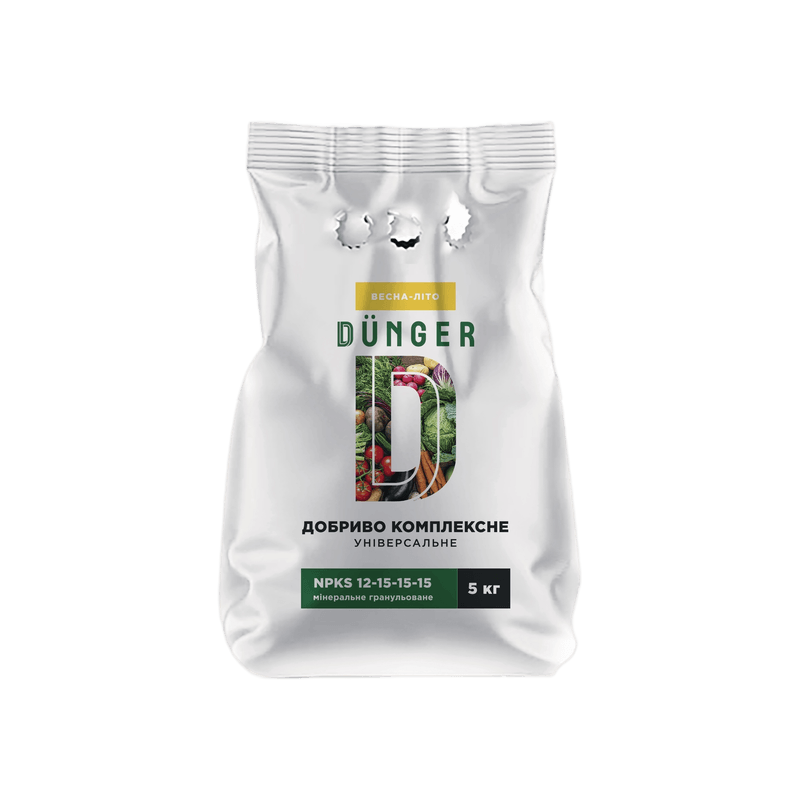
Universal compound fertilizer is a granular NPKS 12:15:15:15 product. Its application table includes a specific flower and ornamental crop rate of 30-40 g/m². For this soil application, measure the bed area, weigh the granules and follow the method on the purchased pack.
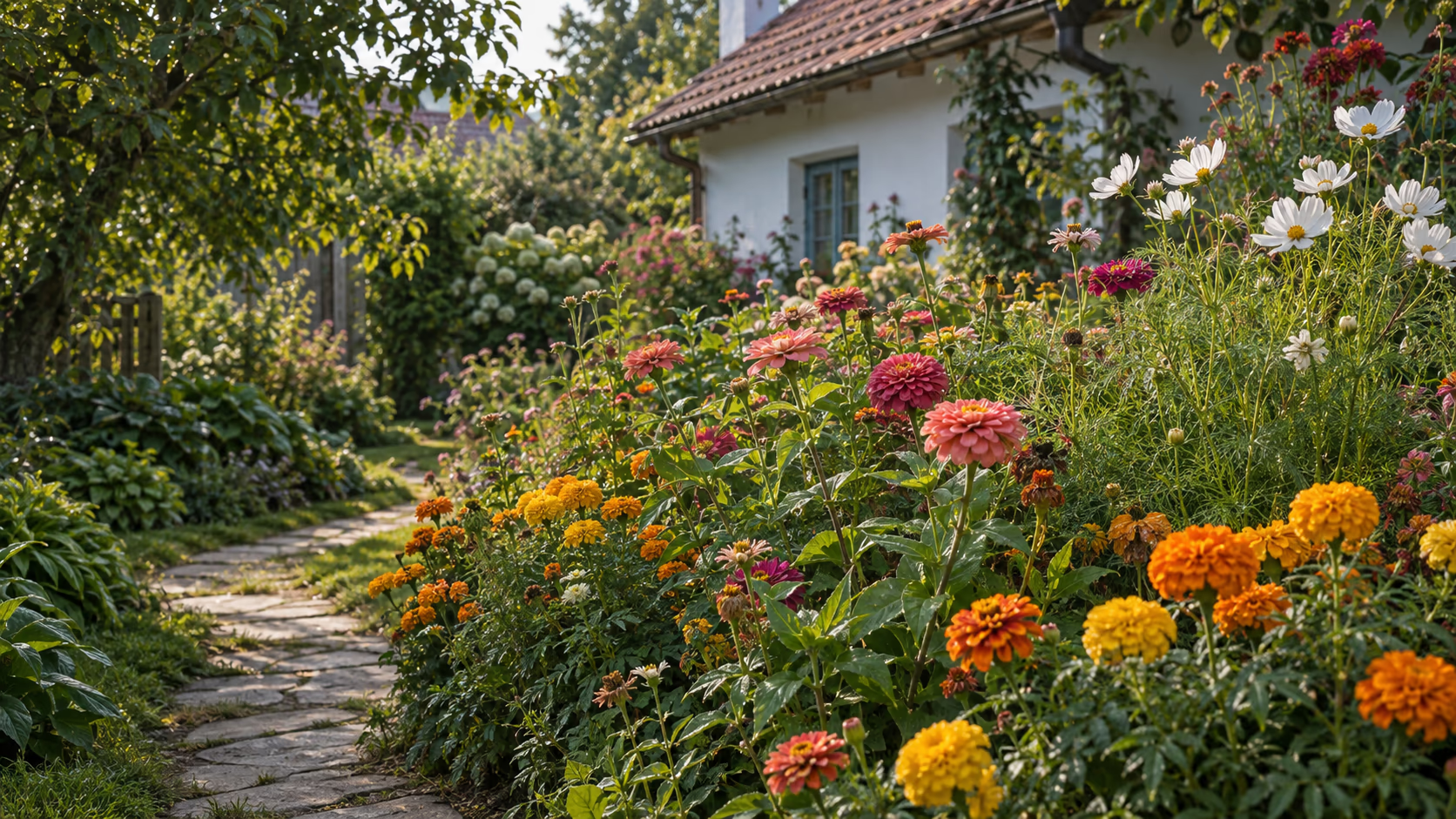
Marigolds, zinnias and other annuals growing in the ground obtain nutrients from the soil their roots can reach. The universal fertilizer rate for flower and ornamental crops is given per square metre. It cannot automatically be converted into a dose for one pot: the amount of growing medium and the number of plants are different.
If you are choosing fertilizer for petunias or balcony flowers, check that the instructions cover the intended application method and account for nutrients already in the potting mix. The liquid concentrate has flower instructions for root and foliar application. Choose the method and prepare the solution at its specified rate; use the separate seedling instruction for young plants. Do not increase its concentration to encourage buds more quickly or combine several fertilizers without considering their total nutrient contribution. Watering, light and the removal of spent flowers remain relevant regardless of which feed you choose.
For an established perennial, consider its size, root-zone conditions and previous applications. The phosphorus-potassium product specifies 30-40 g per plant for early-spring feeding of perennial flowering plants. This is the instruction for that product; it should not be transferred to seedlings, annual plants or another formulation.
More detailed crop pages cover rose fertilizers, peony fertilizers and lavender fertilizers. For example, the rose complex has its own rate per bush. The presence of boron in its composition does not make it a universal boron treatment for every perennial flower.
The catalogue includes a specific spring complex for plants such as crocuses, grape hyacinths, tulips and daffodils. Its instructions distinguish plant groups: 20-40 g/m² for small-bulb flowers and 30 g/m² for tulips and daffodils. Spread it evenly over loosened, moist soil. A spring feeding rate does not replace the instructions for preparing a bed in autumn.
For soil preparation before planting bulbs in August and September, the universal autumn complex specifies a separate rate of 80-100 g/m², incorporated into the soil. This applies to that particular task, not to feeding every flower in autumn. Measure the bed in advance and check which fertilizers have already been incorporated into the soil. If you choose a different autumn product, calculate the amount again using its own rate.
The table separates grams per area, grams per plant and millilitres of concentrate. Choose the row for the product and application method you intend to use. The rates are not meant to be added together. Before applying a product, check its name and the instructions on the package you purchased, especially when treating young or recently transplanted plants.
| Fertilizer | Intended application | Instruction rate |
|---|---|---|
| Spring flower complex | Small-bulb flowers, including crocuses and grape hyacinths | 20-40 g/m² |
| The same spring complex | Tulips and daffodils | 30 g/m² |
| Universal granules | Flower and ornamental crops | 30-40 g/m² |
| Phosphorus-potassium granules | Perennial flowering plants, early spring | 30-40 g per plant |
| Liquid concentrate for flowers | Root feeding of established plants | 50 ml per 10 l of water; 100 ml of prepared solution per plant |
| The same concentrate | Foliar application to established plants | 25 ml per 10 l of water |
| The same concentrate | Root feeding of flower seedlings | 25 ml per 10 l of water; 50 ml of prepared solution per plant |
Calculation example: for a 10 m² flower bed, the universal granule rate of 30-40 g/m² means 300-400 g for one application. For five established perennial plants, the phosphorus-potassium product rate of 30-40 g per plant means 150-200 g in total. These are two separate examples, not a recommendation to apply both products to the same bed.
For the liquid concentrate, 50 ml is the amount of fertilizer diluted in 10 l of water, while 100 ml is the amount of prepared solution applied to one established plant according to the instructions. It does not mean 100 ml of undiluted concentrate. The product description gives a 10-12-day interval for root feeding; this does not apply to the granules or to every other fertilizer.
Start with the plant's needs and growing conditions instead of a compulsory fortnightly schedule. Account for nutrients supplied by the soil, compost, potting mix and previous fertilizer applications. For container flowers, it is particularly useful to know whether the growing mix already contains starter nutrients. A rate for open-ground cultivation is not a rate per litre of potting medium.
In spring, consider the resumption of growth and the stated purpose of the product. Bud formation does not automatically mean stopping all nitrogen feeding and switching to boron: there is no single programme for every flowering plant. Phosphorus-potassium granules cannot replace complete plant care either. For autumn use, follow the particular instructions; the phosphorus-potassium product specifies treating perennial flower beds after flowering and before frost.
Compare the products in the selection above and open the relevant product page. The spring complex is available in 1 and 5 kg packs, the universal product in 3, 4 and 5 kg packs, the phosphorus-potassium product in 5 kg packs, and the liquid concentrate in 5 l packs. The current price depends on the selected variant and is shown on the product page. Kilograms of granules and litres of concentrate do not represent equal amounts of ready-to-use plant feed.
The All products tab gives access to the complete DÜNGER fertilizer catalogue. For indoor potted plants, see houseplant fertilizers; for the garden, explore the landscape gardening range. Shipping and payment terms are on the delivery and payment page. If you need help choosing, contact DÜNGER with the flower species, bed area or container size and information about previous feeding.
Choose a formulation appropriate for your plant group and growing method. The presence of buds does not establish a phosphorus or boron deficiency. Also check light, watering and soil conditions: fertilizer cannot compensate for every cause of poor flowering.
DÜNGER universal fertilizer has a separate rate for flower and ornamental crops of 30-40 g/m². Use it for the relevant soil application, not as a dose for a single hanging basket or a foliar solution.
Frequency depends on the particular product, the plant and nutrients already supplied. The liquid concentrate's 10-12-day interval refers to its root application. It is not a general schedule for the whole selection.
Do not automatically add together the doses of different products or prepare a shared solution without confirmed compatibility. Account for the total nutrients supplied to the same area. Weigh granules for soil application and dilute the concentrate with water using the relevant root or foliar instruction.
No. Separate boron application is not a mandatory treatment for all flowers. A compound fertilizer may already contain it. Another boron product should not be added without an identified need and appropriate application instructions.
Buy Dünger mineral and organo-mineral fertilizers with delivery to any region of Ukraine. Select your oblast - and get fertilizers direct from the manufacturer for your garden, farm or agribusiness. Delivery via Nova Poshta and Ukrposhta to all cities, villages and district centres. Produced in Rivne Oblast, Dunger LLC.
Order & Inquiry

Order mineral and organo-mineral fertilizers directly from the manufacturer. We will help you choose the right product for your garden, farm or landscape.
Let's get acquainted and help you
Press Enter to continue
By clicking the button, you agree to privacy policy
🔔 Get deals & tips first
Follow @dobryva_dunger - deals, tips and new stock straight to your phone.