


Before choosing a fertilizer, answer three separate questions: what kind of soil do you have, how does water behave in it, and do your plants actually need additional nutrients? Dark soil or yellow leaves alone cannot give you the full answer. Start by observing your garden, separate areas with different conditions, and arrange a laboratory soil test when necessary. This makes it easier to choose a suitable product, application method and number of packs.
Soil and fertilizer have different roles
Soil supports roots and holds water, air and nutrients. Its physical condition affects whether roots can use those resources. Fertilizer supplies particular nutrients according to its composition. Buying a larger pack therefore does not automatically solve waterlogging, compaction or unsuitable pH. First establish which problem you need to address.
For example, one bed may stay wet long after watering while the neighbouring area has already dried. This is a reason to investigate drainage and soil conditions before increasing feeding. In another situation, a plant may be growing in suitable conditions but a soil test indicates a need for a particular nutrient. Here, the choice of formulation and application rate should match both the crop and the recommendation you received.
Divide the garden into areas instead of judging it from one sample
The ground beside the house, a raised vegetable bed, the lawn and the soil beneath berry bushes can have very different histories. Soil may have been brought into one area, compost added to another for years, and construction work may have compacted a third. Similar-looking plants do not prove that the soil beneath them is identical. Record these differences before taking samples or calculating a purchase.
For each area, note the crop, approximate dimensions, previous applications, watering arrangements and any places where plants develop differently. These records help you keep test results separate. They are also useful when ordering again: you can return to the information for a particular bed instead of trying to remember its measurements and treatment history every time you buy fertilizer.
How to make an initial assessment of soil texture
Soil texture relates to the proportions of particles of different sizes. Sandy soil feels noticeably gritty, while moist clay soil is often sticky and holds its shape more easily. This observation helps describe the area, but it does not replace nutrient testing. Squeezing a single handful cannot establish the exact clay percentage or provide a ready-made fertilizer rate.
| Observation | What to investigate next | What you cannot conclude from this alone |
|---|---|---|
| The soil feels gritty and loses moisture quickly | Watering practices, organic matter and laboratory assessment of nutrient needs | Every fertilizer must be applied more frequently |
| Moist soil is sticky and compacts easily | Working the soil while wet, traffic across the bed and drainage | A nutrient deficiency must be causing the problem |
| One part of the planting grows less well | Differences in watering, light, soil and previous applications | The whole area needs the same increased fertilizer rate |
Moisture is especially important when working clay soil: pressure on wet ground can increase compaction. Sandy soil allows water through more quickly and often needs closer attention to moisture. These differences affect care, but the appropriate action also depends on the crop, the weather and how the planting is arranged.
Soil pH: check what the plant needs
The pH value describes how acidic or alkaline the growing environment is. A value around seven is considered neutral; lower values indicate more acidic conditions and higher values indicate more alkaline conditions. However, there is no universal need to make an entire garden neutral. Different plants require different conditions, so assess the reading alongside the needs of the particular crop.
Do not automatically apply a decision made for a vegetable bed to blueberries or other acid-loving plants. Even neighbouring crops can have different requirements. If the pH is unsuitable, avoid adding lime, ash or acidifying materials by guesswork. You need a measurement, confirmation that the material is appropriate and a recommendation for your specific situation.
The timing of testing also matters. Recent applications of fertilizer, liming materials or organic matter can affect the result. Before collecting samples, ask your chosen laboratory when and how to take them. An improvised home reaction should not become the basis for calculating a corrective application across the entire garden.
When a laboratory soil test is useful
Testing is particularly useful when starting a new garden, changing crops, working with an unknown application history or finding no clear explanation through observation. It helps distinguish an actual nutrient requirement from an assumption. Test packages vary, so find out in advance which measurements are included and how to interpret them for your planting.
Ask for an explanation of the units, analytical method and format of the recommendations. A number on a laboratory report cannot always be compared directly with a number on a fertilizer pack. In particular, a requirement for an individual nutrient and the weight of a compound fertilizer are different quantities. If the conversion is unclear, establish how it should be done before deciding how much product to order.
How to define your next step after receiving the report
Start with the crop and the particular area tested. Ask which results actually require action and which are already sufficient. If a recommendation concerns potassium, do not automatically turn it into a need for any compound fertilizer. Check which other nutrients your chosen product will also add to the soil. This helps connect the purchase with the task, rather than choosing by the largest numbers on the label.
Clarify the application method separately. A recommendation for preparing the soil before planting should not be transferred to foliar spraying or watering seedlings without checking. Find the relevant plant group and permitted application method on the product page. Match the rate to the area or number of plants specified in that particular instruction row. This keeps the correct starting information for calculating pack quantities and recording subsequent care.
Organic matter and nutrients: more is not always more useful
Organic materials can improve soil properties, but their use still needs assessment. Compost and manure can also supply nutrients. When the same material is added to a bed regularly, include it in the overall application history. Choose any additional compound fertilizer with those earlier inputs in mind.
When buying, distinguish a material intended to develop the growing medium from a product intended to supply specific nutrients. Read the intended uses, composition, application method and restrictions. A seedling tray, a garden bed and an established tree should not automatically receive the same treatment. In particular, a seed-sowing mix requires its own approach to structure and initial nutrition.
From soil assessment to choosing a fertilizer
Write a short description of what you need to buy: which crop needs feeding, at what stage, by which method and over what area. Then compare those requirements with the complete instructions for the individual product. Do not select a rate just because it looks familiar or appears in the first row of a table. An all-purpose product may have separate rates for different plant groups and methods of application.
DÜNGER organo-mineral granules for all types of crops are one option to consider for appropriate plantings. Read the complete product instructions to compare the application options with your intended use. Choosing this product should follow an assessment of the crop, season and conditions in your garden. Its broad intended use does not establish that every soil problem requires this particular fertilizer.
Choose a pack for an identified need
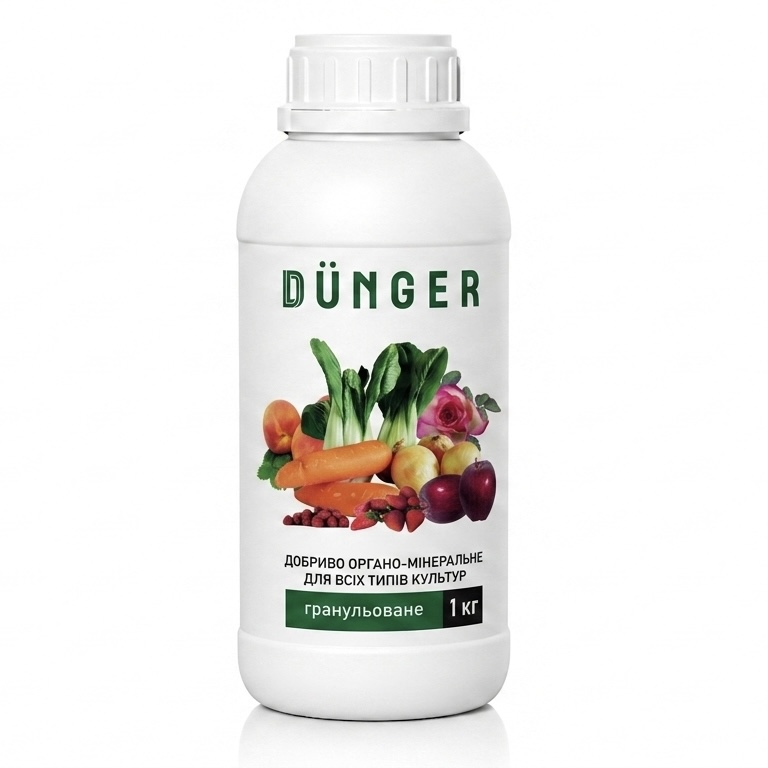
Organo-mineral fertilizer for all types of crops granular
Review the composition, complete instructions and available 1 and 5 kg packs. For your calculation, select the application method and rate category that actually apply to your plants. Check the price and availability for the chosen pack on the product page.
Save your garden areas in My Garden and calculate what you need. The recorded dimensions help you prepare a combined purchase, while you can check pack sizes and quantities before adding products to your basket.
A practical sequence for your garden
- Identify uniform areas and record what grows in each one.
- Assess moisture, structure and differences in plant development.
- Gather the history of watering, organic materials and fertilizer applications.
- When needed, agree sampling arrangements and the required measurements with a laboratory.
- Establish what needs changing: root-zone conditions, pH or nutrient supply.
- For a confirmed nutrient need, check the complete product instructions and calculate the quantity.
- Record the date, method and actual amount applied to guide future care.
Frequently asked questions
Colour is only an observation. It does not reveal the full supply of available nutrients or determine the required fertilizer rate. For an informed choice, consider the crop, conditions in the area and the relevant test results together.
A shared date does not mean a shared requirement. Different crops, growth stages and previous applications may call for different decisions. Combining products in one order can be convenient, but the calculation for each area should remain separate and follow the product instructions.
Plan the next application around the instructions and an actual need. Do not apply more simply to use up the remainder. Keep the packaging with the full product name and follow its storage instructions. When ordering again, check both the product name and pack size.