


Indoor Plant Fertilizers - Buy from Manufacturer Dünger
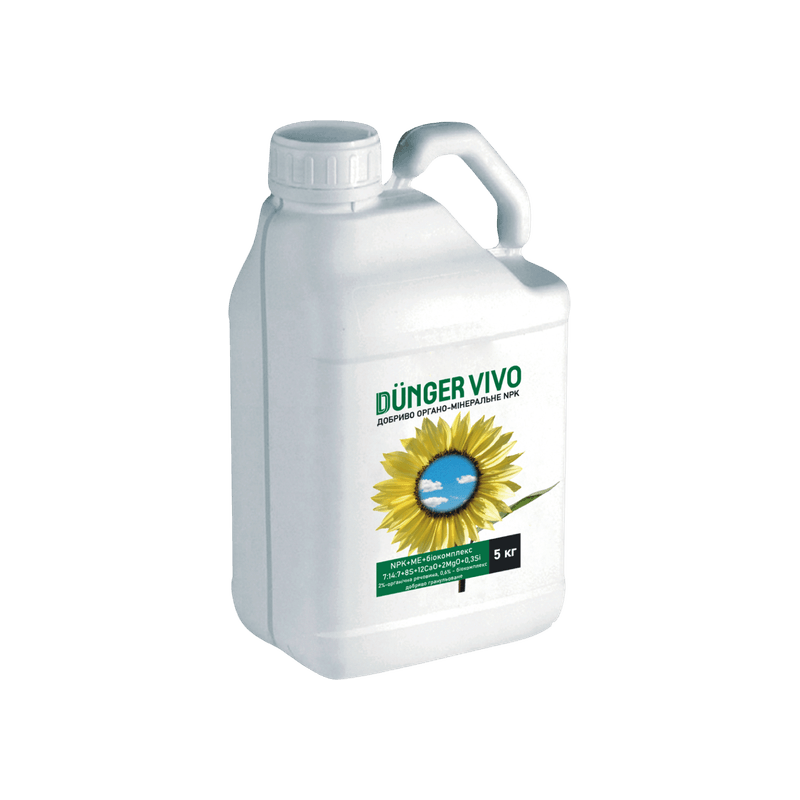
Houseplants are fed only during the active season - March through September. Feeding a dormant plant in winter does not absorb - salts accumulate in the pot and cause root burn. Dosage is 5-10 times lower than for outdoor plants: 1-2 g per 1 L water. The key split: foliage plants (monstera, ficus, dieffenbachia) need N-dominant fertilizer throughout the growing season, while flowering plants need balanced NPK until bud formation and P+K dominant during bloom. DÜNGER mineral and organo-mineral indoor plant fertilizers - granular, slow release, chlorine-free. Delivery by Nova Poshta and Ukrposhta across Ukraine.
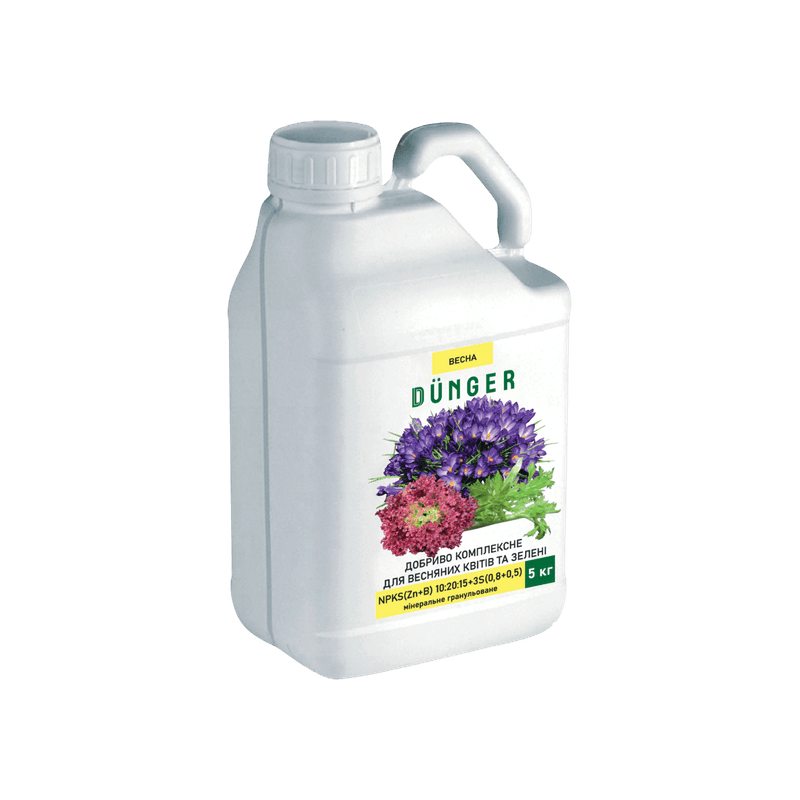
Active Season vs Dormancy: When to Feed Houseplants
The most common mistake houseplant owners make is feeding in winter. Most plants are dormant or have slowed metabolism from October to February. Roots absorb almost no water or nutrients. The fertilizer you apply is not taken up - it remains in the soil as salts. When you water, the salt solution contacts the roots. Result: brown leaf tips, yellowing, general plant decline.
Houseplant feeding calendar:
- March–September (active season): feed every 2-4 weeks. March–May: more frequent (every 2 weeks as the plant wakes up). June–August: as needed based on growth rate. September: last feeding, begin tapering off.
- October–February (dormancy): STOP feeding. Exception: winter-blooming plants - orchids, poinsettia, Christmas cactus, cyclamen - feed only while actively blooming and at half dose.
Foliage Plants vs Flowering Plants: Different Feeding Logic
Two major groups of houseplants require fundamentally different approaches.
Foliage plants (monstera, ficus, dieffenbachia, sansevieria, pothos, peace lily in leaf mode):
- Goal - maximum green leaf mass. Nitrogen N is the key element: builds chloroplast proteins, determines leaf size and color depth.
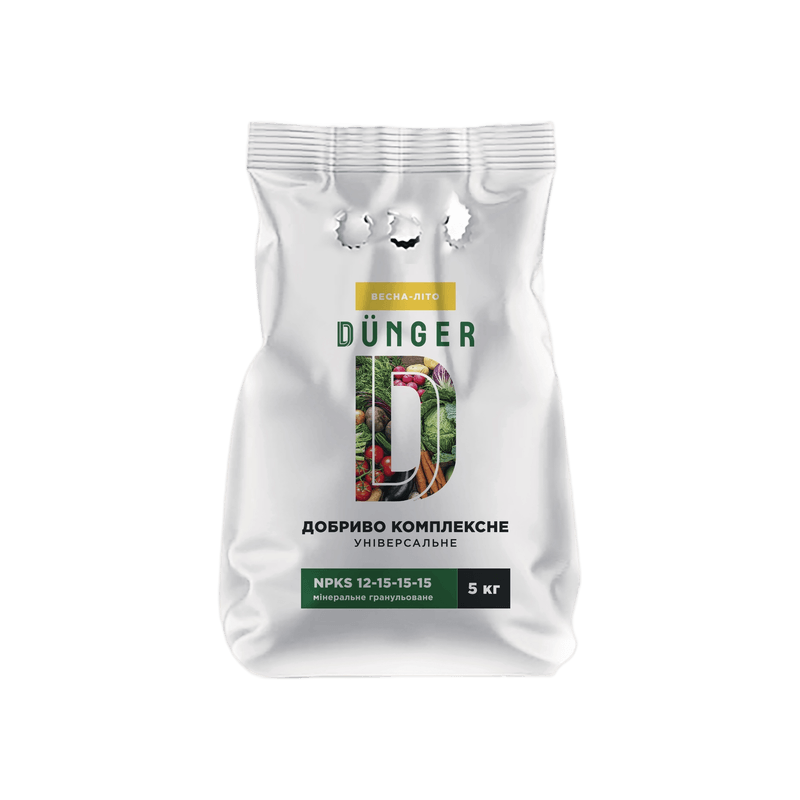
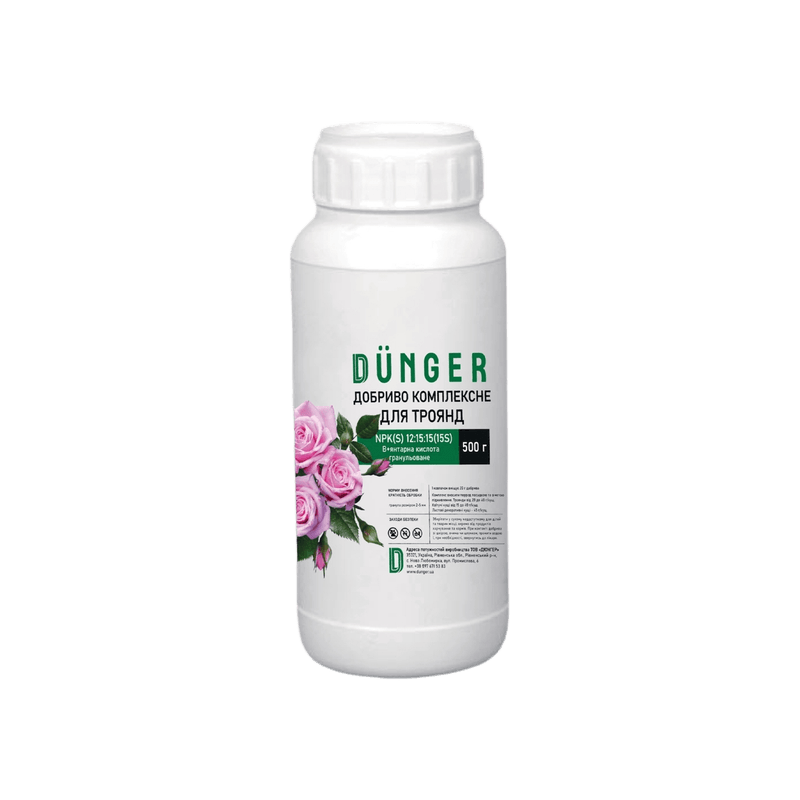
- DÜNGER SKU 1 (N12-P15-K15-S15): 1-2 g per 1 L water, every 2 weeks, March–September. Balanced formula with sufficient N for vegetative growth.
- N deficiency sign: leaves become smaller, yellow from bottom up, deep green color fades.
Flowering houseplants (geranium, begonia, anthurium, kalanchoe, violet, hibiscus, gloxinia):
- Vegetative phase (leaves growing, no buds yet): SKU 1 - 1 g/L every 2 weeks. Balanced NPK for growth.
- Bud formation (first buds appear): SKU 18 (N12-P15-K15-S15-B0.35%) - 1 g/L. B promotes more numerous buds and larger flower size.
- Full bloom: SKU 19 (P23-K30) - 0.5-1 g/L every 2 weeks. P for petal development; K for color vibrancy and bloom duration. No nitrogen - N during flowering causes bud drop.
Four Golden Rules: How Not to Harm Your Houseplant
- Never feed right after repotting. Fresh substrate already contains 2-4 months of nutrients. Adding fertilizer = overdose. Wait 4-6 weeks after repotting.
- Never exceed the dose. Indoor doses: 1-2 g per 1 L. Outdoor: 20-25 g/m². A 10-15x difference. Overdose symptom: brown dry leaf tips (salt burn on root tips blocks water transport). If overdosed: flush the pot thoroughly 3-4 times to leach the salts.
- Water first, then fertilize. Never apply fertilizer to dry soil - concentrated salt solution contacts dehydrated roots. Water first, wait 30 minutes, then apply the fertilizer solution.
- Less is more. A plant cannot absorb more than it needs given current light conditions. In a dark corner even in season, uptake is minimal - halve the dose or move the plant closer to light.
Orchids: Special Feeding Rules
Orchids are epiphytes: in nature they grow on tree bark, their roots are exposed to air and extremely sensitive to salts. Orchid feeding differs from standard houseplants.
- Never use urea-based nitrogen: in bark substrate urea converts slowly - localized ammonia concentration rises and burns roots.
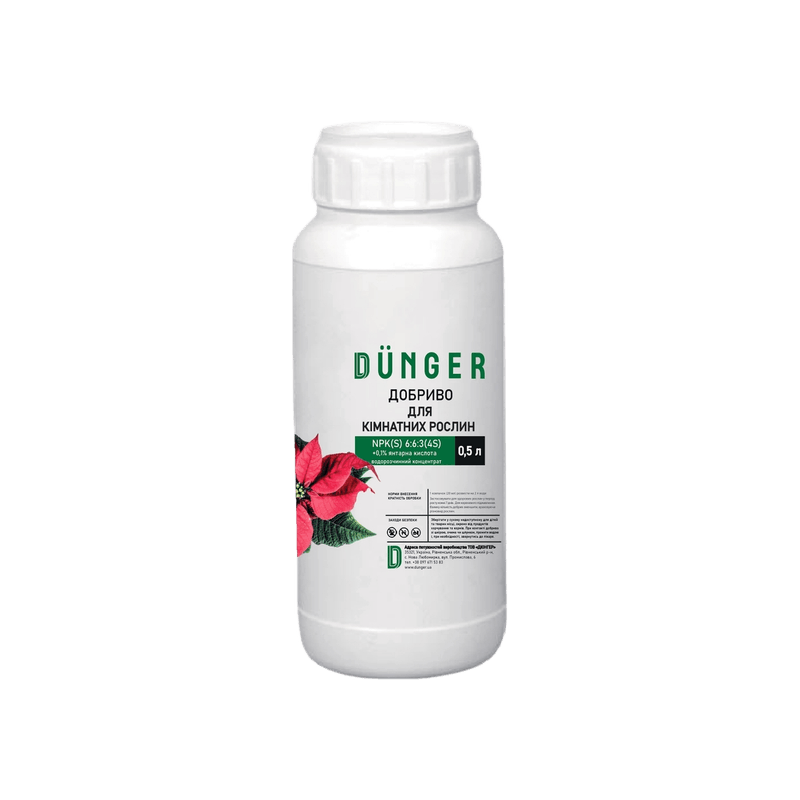
- SKU 29 (N6-P6-K3-S4 + succinic acid) - DÜNGER's gentlest product. 0.5 g per 1 L water, every 2-3 weeks, during active growth only. Succinic acid reduces stress and speeds new root development.
- Foliar chelated iron (Fe-EDTA 5 g/10 L) - 2-3 times per active season. Maintains deep green leaf color; iron-deficient orchid leaves turn pale green or yellowish.
- After flowering: stop feeding for 6-8 weeks - the plant rests. Resume when new roots or leaves appear.
Succulents and Cacti: Minimal Fertilizer, Maximum Care
Succulents and cacti are adapted to poor soils. Their nutrient needs are 5-10 times lower than regular houseplants.
- Feed only in the active season (April–August), no more than once per month.
- In winter STOP feeding completely: succulents are dormant, roots are inactive.
- Nitrogen N - keep to minimum: excess N makes succulents soft, etiolated and rot-prone.
- DÜNGER SKU 19 (P23-K30): 0.5 g per 1 L - once a month April–August. P supports flowering (cacti bloom with adequate P); K for tissue density and moisture retention.
- Or SKU 1 at 0.5 g/L - for young, actively growing succulents.
Nutrient Deficiency Signs in Houseplants and What to Do
- Pale, small leaves, slow growth - N deficiency (or dark placement). SKU 1 every 2 weeks + move closer to light.
- Brown dry leaf tips - fertilizer overdose or excessive watering with chlorinated water. Flush the pot, skip 1-2 feedings.
- Few flowers or buds dropping - P+K deficiency or feeding in winter incorrectly. SKU 18 at bud formation, SKU 19 during bloom.
- Old leaves yellowing between green veins - Mg deficiency. Magnesium sulfate 1 g/L foliar spray.
- New leaves yellow with green veins - Fe deficiency (especially on peat substrate at pH above 7). Chelated iron 1 g/L, foliar application.
- Plant wilts despite watering - root rot from overwatering or salt burn. Check roots, repot into fresh substrate.
Deliver DÜNGER indoor plant fertilizers across Ukraine: Kyiv · Kharkiv · Dnipro · Odesa · Zaporizhzhia · Lviv · Kryvyi Rih · Vinnytsia · Poltava · Mykolaiv · Chernihiv · Cherkasy · Zhytomyr · Sumy · Rivne · Ternopil · Khmelnytskyi · Ivano-Frankivsk · Lutsk · Uzhhorod · Chernivtsi and other cities of Ukraine.
Monstera not growing, orchid not blooming or succulent rotting? Call us - a Dünger agronomist will recommend a solution free of charge. In most cases it comes down to feeding season or dose.
📞 +38 (097) 671-53-83 - free consultation. Mon-Sun 8:00-20:00. Delivery from 0.5 kg.
Dünger Fertilizer Delivery Regions Across Ukraine
Buy Dünger mineral and organo-mineral fertilizers with delivery to any region of Ukraine. Select your oblast - and get fertilizers direct from the manufacturer for your garden, farm or agribusiness. Delivery via Nova Poshta and Ukrposhta to all cities, villages and district centres. Produced in Rivne Oblast, Dunger LLC.
- Order Fertilizers — Vinnytsia
- Order Fertilizers — Volyn
- Order Fertilizers — Dnipropetrovsk
- Order Fertilizers — Zhytomyr
- Order Fertilizers — Zakarpattia
- Order Fertilizers — Zaporizhzhia
- Order Fertilizers — Ivano-Frankivsk
- Order Fertilizers — Kyiv Oblast
- Order fertilizers — Kyiv City
- Order fertilizers — Kirovohrad
- Order fertilizers — Lviv
- Order fertilizers — Mykolaiv
- Order fertilizers — Odesa
- Order fertilizers — Poltava
- Order fertilizers — Rivne
- Order fertilizers — Sumy
- Order fertilizers — Ternopil
- Order fertilizers — Kharkiv
- Order fertilizers — Kherson
- Order fertilizers — Khmelnytskyi
- Order fertilizers — Cherkasy
- Order fertilizers — Chernivtsi
- Order fertilizers — Chernihiv
Fertilizers from Manufacturer in Rivne Region
Order & Inquiry
Get in touch

Order mineral and organo-mineral fertilizers directly from the manufacturer. We will help you choose the right product for your garden, farm or landscape.
Hello!
Let's get acquainted and help you
Press Enter to continue
By clicking the button, you agree to privacy policy