


Soil for a rhododendron must hold usable moisture, release surplus water and remain acidic. A bag marked for acid-loving plants answers only part of the question. Consider where the material will go: into a container, suitable garden soil or a planting hole surrounded by dense clay. Check the site and irrigation water before comparing ingredients. This helps you buy for a particular root environment rather than for an attractive description on a bag.
Separate acidity, structure and feeding
For most garden rhododendrons, the starting point is moist, well-drained soil rich in organic matter, with an acidic reaction around pH 5.0-6.0. This describes a growing environment; it is not an acid application recipe. Identify the species or cultivar as well. Rhododendrons differ in eventual size, hardiness and tolerance of an open position. Choose suitable light and protection from drying winds alongside the soil assessment.
Acidity, physical structure and nutrient supply are three different decisions. An acidic mix that remains waterlogged does not become suitable because its pH is correct. A loose, neutral mix does not automatically meet the needs of an acid-loving shrub either. Fertilizer supplies nutrients according to its instructions. It cannot replace a suitable root environment or a route for surplus water to leave.
Inspect the site beneath the new mix
Look after rainfall for standing water, incoming runoff and compacted ground. Consider the layer beneath the rootball rather than only the loose surface. If a hole remains saturated within dense clay, adding another bag of acidic material does not establish that the drainage problem is solved. Assess drainage or choose a different growing arrangement before buying enough material to fill the hole.
On a light-soil site in Polissia, check how quickly the root layer dries. Around a house where soil has been imported, neighbouring positions may differ considerably. On a heavy site in western or central Ukraine, examine compaction and water remaining after rain. In the south, if testing shows carbonate-rich soil and irrigation water has high alkalinity, consider whether open-ground growing is practical over time. A region name cannot replace evidence from the actual site.
Use the soil assessment before choosing fertilizer for a broader checking sequence. Keep a site sample separate from a sample of purchased growing mix: they answer different questions. Do not combine clearly different areas into one sample when your purpose is to compare those areas. Follow the sampling method supplied with the test or laboratory service.
Understand what a pH result can tell you
Record recent lime, organic matter and fertilizer additions because they can affect the result. A home test can provide a useful indication of acidity, but it does not describe carbonate content, nutrient reserves and physical condition completely. If readings conflict with the plant's condition, or you are planning an expensive group of shrubs, a more detailed analysis can be useful before buying amendments.
A pH reading is not a correction dose. Different soils with the same initial pH need not respond to equal amounts of an amendment. Maintaining an acidic environment in lime-rich ground can be difficult. Consider a container with an appropriate growing medium instead of repeated unverified additions of sulphur, vinegar or citric acid. A decision about the growing system can be more useful than a shopping list of corrective products.
Read the growing-medium label carefully
- Look for suitability for rhododendrons or acid-loving plants and a stated pH range.
- Distinguish a container medium from a material intended to improve garden soil.
- Check ingredients, physical condition and wetting guidance.
- Identify any initial fertilizer charge before adding another complete feeding programme.
- Compare the volume supplied and storage requirements; bag weight is not the required growing volume.
A peat-free medium can be suitable when its properties meet the plant's needs. The presence of peat is not itself a guarantee of an airy, stable root environment. Dark colour, a woodland smell and the words rich soil are not enough to compare products. Ask for characteristics that allow you to assess two actual mixes for the way you intend to grow the shrub.
Avoid transferring arbitrary homemade proportions to every planting hole. Fine, compacted material and structurally useful bark behave differently. Garden compost is not the same product as a formulated container medium. If combining materials, understand their properties and intended use. An ingredient list from another garden does not show how the result will drain or retain moisture on your site.
Containers and garden beds need different decisions
For a container, check drainage openings, medium condition and your ability to monitor moisture. Do not leave the root volume constantly standing in water. A growing medium can lose structure over time. Compaction and poor drainage call for an assessment of the roots and medium, rather than stronger feeding. Select the container in relation to the actual shrub and the care you can provide.
In the garden, remember that rhododendrons root near the surface. Do not bury the plant more deeply merely to conceal its rootball, or compress the surrounding ground into a hard crust. An airy mulch and careful moisture management differ from covering the stem bases with new soil. Work when the ground is workable, without freezing or saturation. A planting month used in another region does not establish suitable conditions for your own site.
Irrigation water affects the medium later
For repeated irrigation, consider alkalinity as well as water pH. Alkalinity describes the ability to neutralize acidity. High pH does not always mean high alkalinity. If the root environment is changing over time, request an irrigation-water analysis and identify the crop. Limescale in a kettle or one test-strip reading cannot determine an appropriate water-treatment programme.
Collected rainwater can be useful for acid-loving plants, but consider collection and storage before relying on it. Water from a household softener should not be treated as purified irrigation water. Water correction requires suitable analysis and equipment. A household acid addition per bucket cannot produce a predictable result across different water supplies. Keep the water question separate from choosing a nutrient product.
Feeding after checking the root environment
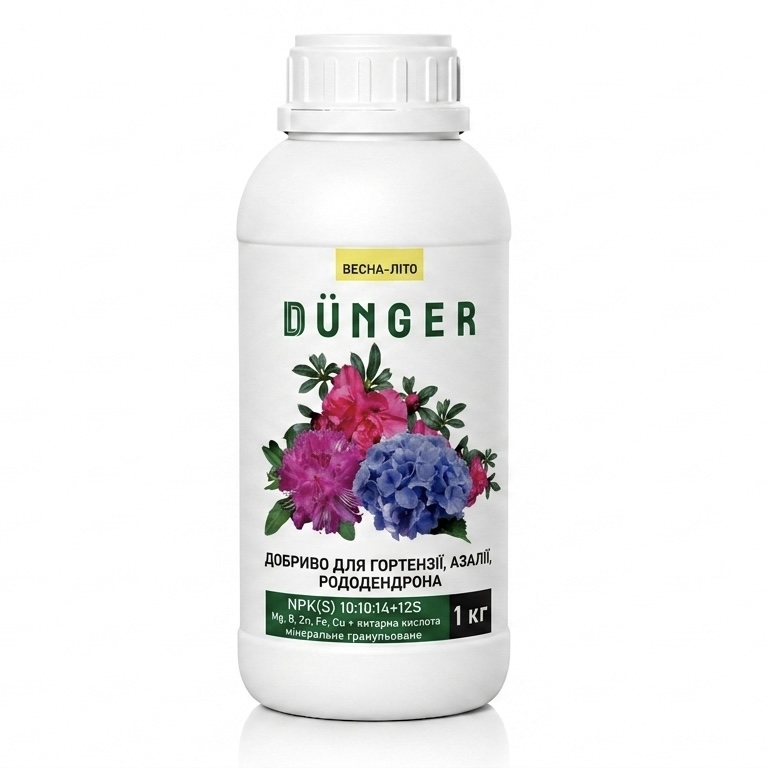
Complex fertilizer for hydrangea, rhododendron, azalea granular
This complex lists rhododendrons. Select it for feeding within its stated season, after checking the root environment. The complete application method and rate follow.
Compare the 0.5, 1 and 5 kg packs against your planned use. Fertilizer weight is not growing-medium volume. Check the selected pack when ordering and account for nutrients already included in the mix. Do not increase the rate to change soil acidity.
Check the environment when leaves turn yellow
Yellowing does not establish that all the soil must be replaced or iron added immediately. Compare moisture, drainage, planting depth and pH results. Unsuitable acidity can affect the availability of certain nutrients, but appearance alone does not identify one cause. For a wider care sequence, use rhododendron care. Rapid deterioration needs investigation rather than a succession of stronger feeds.
Keep the mix name, analysis results and water source in your own notes. In My Garden, separate zones, enter the crop and measurements and prepare a fertilizer plan. Do not combine a rhododendron's requirements with the nearby lawn simply because they are close together. Compare ornamental products in the landscape design category according to their permitted plant groups.
Questions about rhododendron soil
Check its pH, structure and intended use. The term all-purpose does not establish suitability for rhododendrons. The actual properties and growing conditions matter more than the product category name.
No. Check drainage and surrounding soil first. An acidic ingredient does not remove standing water in a dense, wet hole or guarantee a stable root environment later.
Not from pH alone. Alkalinity also matters. Obtain a suitable water analysis before choosing treatment; an untested household acid dose may be inappropriate.
No. Use nutrition according to the instructions after assessing conditions. It does not replace appropriate acidity, air around the roots or drainage for excess water.


