


Potato Fertilizers - Buy from Manufacturer Dünger
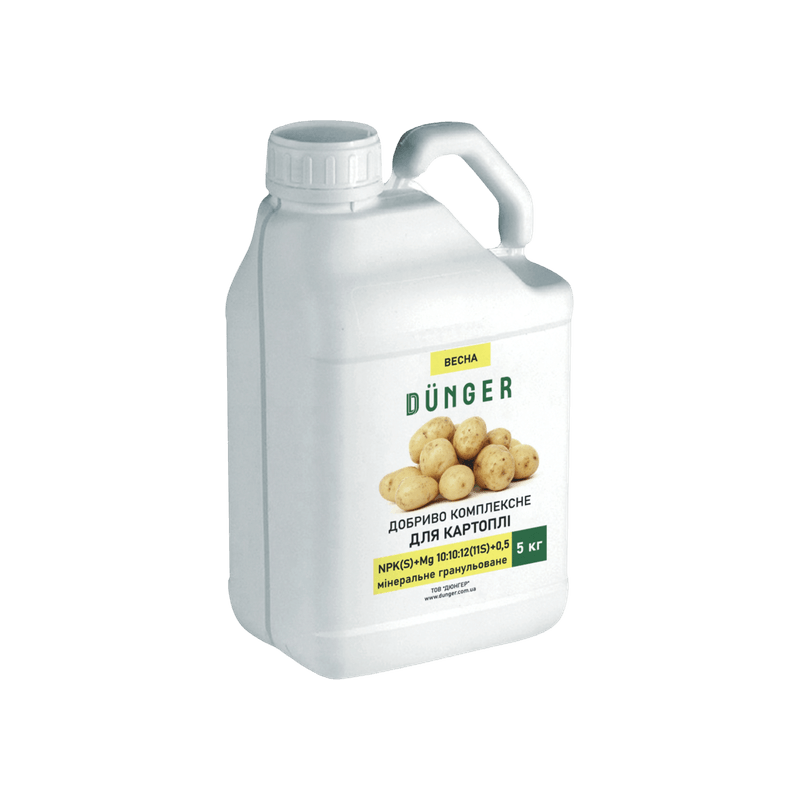
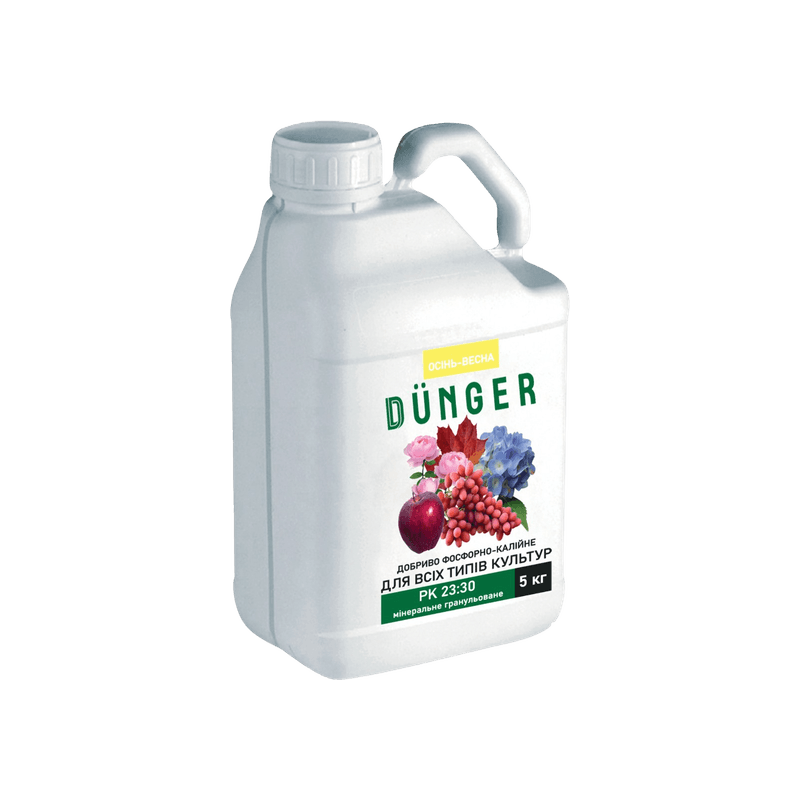
Potato consumes more potassium than any other common vegetable: potassium determines starch accumulation in tubers, their dry matter content, taste and storability. 80% of potato's nutrients are consumed BEFORE FLOWERING - so fertilizer at planting and first hilling is the most critical. After flowering, nitrogen stops and pure P+K takes over for tuber filling. DÜNGER granular SKU 14 potato fertilizer: N10-P10-K12-S11-MgO0.5%, chloride-free, for planting and hilling. Delivery by Nova Poshta and Ukrposhta across Ukraine.
Why Potassium Is the Most Important Element for Potato
Potato has an uniquely high potassium demand. One tonne of harvested tubers removes 6 kg K from the soil. At 40 t/ha yield, a field loses 240 kg K — more than any other common vegetable crop. Without annual replenishment, yield and tuber quality decline steadily.
Potassium controls four critical processes in potato:
- Starch accumulation: K activates starch synthase enzyme. Tubers with adequate K are starchy, flavorful and do not darken when cooked or fried. K-deficient tubers are watery, tasteless and blacken.
- Dry matter and yield weight: higher K = more dry matter per tuber = greater weight at the same tuber count.
- Disease resistance: K hardens cell walls — less penetration by late blight and fusarium.
- Storability: tubers with normal K keep without losses until spring. K-deficient tubers rot and shrivel in storage.
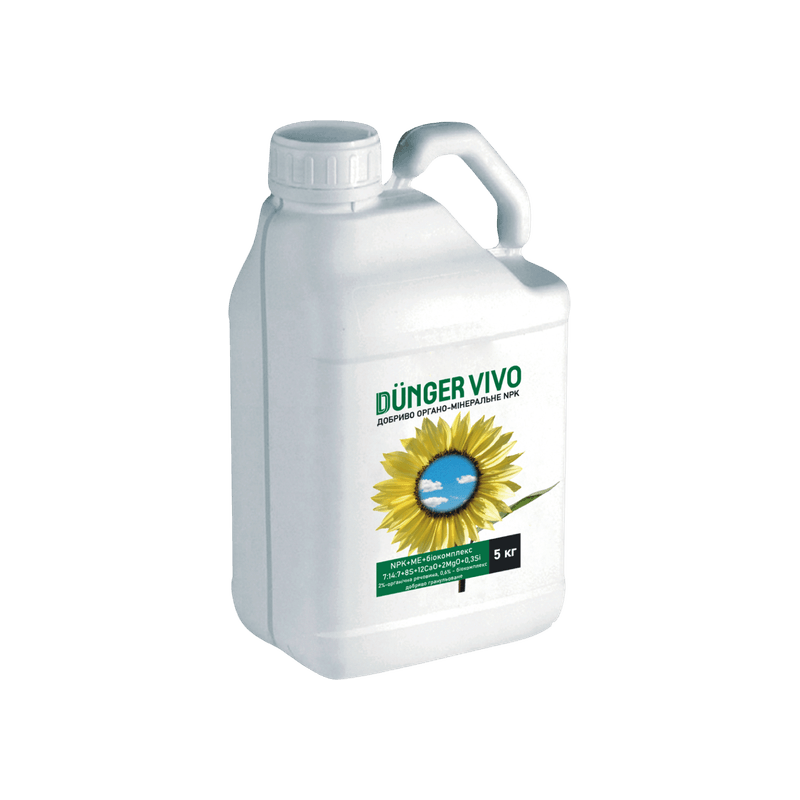
Optimal NPK ratio for potato: N : P : K = 1 : 0.8 : 1.2. Potassium dominates. This balance is built into DÜNGER SKU 14 (N10-P10-K12).
Fertilizer at Potato Planting: SKU 14 in the Hole
Planting is the single most important fertilization moment for potato. The 80% rule: 80% of the season's total nutrient uptake occurs BEFORE FLOWERING. Fertilizer at planting is therefore the foundation of yield.
DÜNGER SKU 14 (N10-P10-K12-S11-MgO0.5%) - 30-40 g per planting hole by hand, 250-300 kg/ha by machine. Mix with soil in the hole before placing the seed tuber - direct granule-to-tuber contact is undesirable.
Why SKU 14 is the ideal potato choice:
- N10: adequate for growth initiation, not excessive.
- P10: phosphorus in the root zone stimulates stolon formation - the underground stems that produce tubers. More stolons = more tubers per plant.
- K12: potassium in sulfate (chloride-free) form - safe for chloride-sensitive potato.
- S11%: sulfur protects against scab (Rhizoctonia and Streptomyces) and improves nitrogen uptake.
- MgO0.5%: magnesium is the central atom of chlorophyll. Potato is a significant Mg consumer. Mg deficiency = brown necrosis on lower leaves in August, premature haulm die-back, yield loss.
Feeding at Hilling: When and What to Apply
Potato is typically hilled twice: when haulm reaches 15-20 cm tall and 2-3 weeks after the first hilling. These are natural fertilization windows.
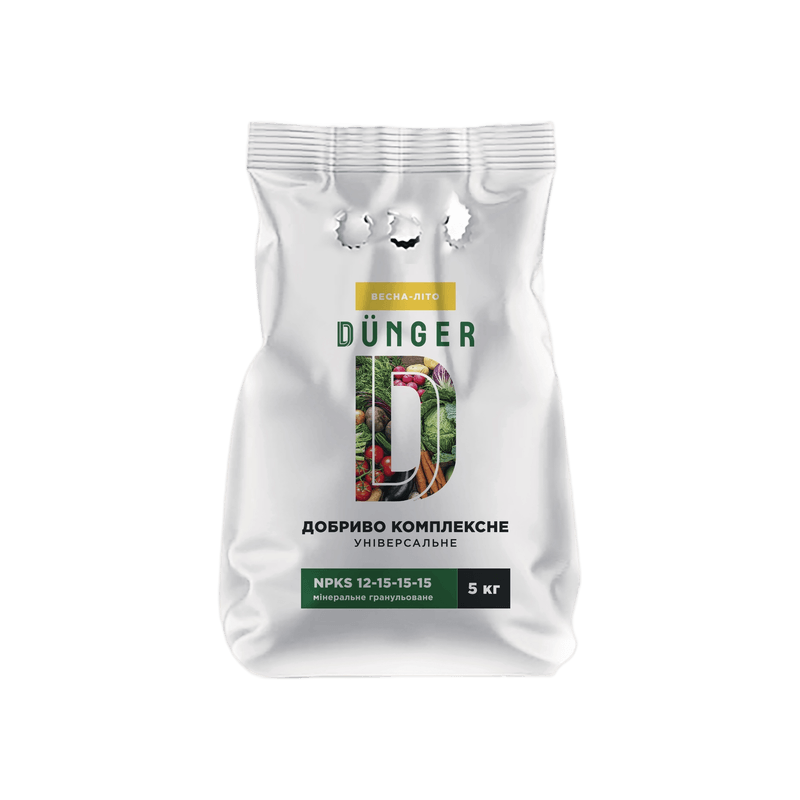
First hilling (haulm 15-20 cm): DÜNGER SKU 14 or SKU 1 - 20-25 g/m² in the furrow before hilling. At this stage the plant is still actively building green mass and forming stolons — N and P remain beneficial.
Second hilling / bud appearance: DÜNGER SKU 19 (P23-K30) - 20-25 g/m². Bud appearance is the signal to switch to nitrogen-free feeding. Zero N: nitrogen after budding continues haulm growth but blocks assimilate flow into tubers. P23+K30 switches the plant into 'tuber-filling' mode.
The Iron Rule: Stop Nitrogen at Potato Flowering
This is one of the most impactful agronomic decisions of the season. The transition moment: first buds appear or flowering begins.
What happens if nitrogen continues after flowering:
- Haulm stays dark-green and actively grows late into the season.
- Assimilates (photosynthesis products) are directed to maintaining leaf mass instead of accumulating in tubers.
- Tubers remain small even with substantial green mass above ground.
- Over-mature haulm = poor storage quality tubers.
The correct sequence after buds appear:
- Stop all N-fertilizers completely.
- DÜNGER SKU 19 (P23-K30) - 20-25 g/m² at budding.
- Repeat SKU 19 in 3 weeks if haulm is still green and active.
- Foliar boric acid 1.5 g/10 L at flowering (stimulates completion of tuber formation and increases tuber count).
Why Potato Dislikes Chloride and What to Use Instead of KCl
Potato is one of the most chloride-sensitive agricultural crops. Chloride forms of potassium (KCl) applied in spring:
- Increase water content in tubers (reducing dry matter and starch).
- Worsen flavor and cooking color (tubers darken).
- Suppress K uptake: chloride competes with K at root uptake sites.
Safe potassium forms for potato: potassium sulfate (K2SO4). DÜNGER SKU 14 (K12) and DÜNGER SKU 19 (K30) contain K in sulfate form - completely safe for potato at any application timing.
If KCl is already in stock: apply it exclusively in AUTUMN before fall tillage. Over winter, chloride leaches to lower soil horizons and by spring its concentration in the root zone drops to safe levels.
Nutrient Deficiency Signs in Potato
- Pale leaves, slow growth, thin stems - nitrogen (N) deficiency. Unplanned dose of SKU 14 or SKU 1 in early growth.
- Purple or reddish tint on the underside of lower leaves - phosphorus (P) deficiency, especially in cold wet early season. P uptake is poor below 10°C soil temperature. Solution: apply SKU 14 before planting and wait for warming.
- Brown necrosis at leaf margins (progressing from bottom up) - potassium (K) deficiency. Leaves curl upward. Unplanned dose of SKU 19.
- Older leaves yellowing between green veins - magnesium (Mg) deficiency. Foliar magnesium sulfate 20 g/10 L twice. More common on light sandy soils where Mg leaches easily.
- Distorted leaf margins, stem cracks - boron (B) deficiency. Foliar boric acid 1.5 g/10 L at budding and again 3 weeks later.
Deliver DÜNGER potato fertilizers across Ukraine: Kyiv, Kharkiv, Dnipro, Odesa, Zaporizhzhia, Lviv, Kryvyi Rih, Vinnytsia, Poltava, Mykolaiv, Chernihiv, Cherkasy, Zhytomyr, Sumy, Rivne, Ternopil, Khmelnytskyi, Ivano-Frankivsk, Lutsk, Uzhhorod, Chernivtsi and other cities of Ukraine.
Small tubers, poor storability or storage diseases? Call us and a Dünger agronomist will build a fertilization plan for your plot. Free consultation.
📞 +38 (097) 671-53-83 - free consultation. Mon-Sun 8:00-20:00. Delivery from 0.5 kg.
Dünger Fertilizer Delivery Regions Across Ukraine
Buy Dünger mineral and organo-mineral fertilizers with delivery to any region of Ukraine. Select your oblast - and get fertilizers direct from the manufacturer for your garden, farm or agribusiness. Delivery via Nova Poshta and Ukrposhta to all cities, villages and district centres. Produced in Rivne Oblast, Dunger LLC.
- Order Fertilizers — Vinnytsia
- Order Fertilizers — Volyn
- Order Fertilizers — Dnipropetrovsk
- Order Fertilizers — Zhytomyr
- Order Fertilizers — Zakarpattia
- Order Fertilizers — Zaporizhzhia
- Order Fertilizers — Ivano-Frankivsk
- Order Fertilizers — Kyiv Oblast
- Order fertilizers — Kyiv City
- Order fertilizers — Kirovohrad
- Order fertilizers — Lviv
- Order fertilizers — Mykolaiv
- Order fertilizers — Odesa
- Order fertilizers — Poltava
- Order fertilizers — Rivne
- Order fertilizers — Sumy
- Order fertilizers — Ternopil
- Order fertilizers — Kharkiv
- Order fertilizers — Kherson
- Order fertilizers — Khmelnytskyi
- Order fertilizers — Cherkasy
- Order fertilizers — Chernivtsi
- Order fertilizers — Chernihiv
Fertilizers from Manufacturer in Rivne Region
Order & Inquiry
Get in touch

Order mineral and organo-mineral fertilizers directly from the manufacturer. We will help you choose the right product for your garden, farm or landscape.
Hello!
Let's get acquainted and help you
Press Enter to continue
By clicking the button, you agree to privacy policy