


Before covering a hydrangea for winter, identify its species, cultivar and growing situation. With bigleaf hydrangeas, protecting last season's stems can matter for next year's flowers. An established panicle or smooth hydrangea suited to its site needs a different assessment. Young plants and shrubs in pots also deserve separate attention. Protection can reduce exposure to cold, but a cover cannot guarantee that every bud will survive. In a Ukrainian garden, the decision should reflect the actual planting site, approaching weather and condition of the shrub.
Which hydrangeas need special attention?
Many bigleaf hydrangeas carry their next flower buds through winter on stems made during the previous growing season. A shrub may produce fresh green leaves after its upper stems are damaged yet flower poorly, or fail to flower. Survival of the whole plant and survival of its flower buds are separate outcomes. Reblooming cultivars may flower on new growth as well, but this does not remove the need to check their suitability for the site. A named cultivar tells you more than the colour of a pink or blue flower head alone.
Panicle and smooth hydrangeas form flowers on the current season's growth. A healthy, established shrub of a suitable cultivar generally does not need the same protection for overwintering flower buds as a bigleaf hydrangea. Recently planted roots, an exposed position and poor drainage remain separate concerns. If the label has been lost, avoid cutting every stem down simply to make covering easier. Compare photographs of the leaves and flowers, then identify the shrub before taking drastic action.
Settle pruning separately from covering. Our guide to hydrangea pruning before winter explains why the plant group matters. A frame should fit the stems you need to preserve. Cutting a bigleaf hydrangea short to fit a small cover can remove the very buds you hoped to protect. Keeping a plant compact and keeping its next flower buds require different decisions.
When should you start in a Ukrainian garden?
There is no single covering date for every garden. Follow your local forecast, the pattern of night frosts and the end of active growth. Put the supports ready while the soil is workable, taking care around roots. Complete the protection as colder conditions develop, with the cultivar's requirements in mind. A long warm period inside a damp, tightly enclosed cover is not a useful substitute for winter dormancy. The structure should allow inspection and ventilation during a thaw.
Two hydrangeas in the same courtyard can have very different exposure. A shrub beside an open passage receives more wind. A roof may discharge water or sliding snow onto another plant. Water may linger around a bed at the bottom of a slope. Look at these places after rain before installing the frame. A nursery hardiness description does not account for every one of these details. A photograph of another gardener's snow-covered shrub is not evidence that the same arrangement suits your cultivar and site.
Prepare the soil and build the protection
- Inspect the shrub. Distinguish broken branches from sound stems carrying buds. Avoid stripping living buds or forcing stiff stems to bend. Clear enough working space to position supports without crushing the plant.
- Check the soil. Beneath mulch, the root zone may still be moist when the surface looks dry. Water only if the unfrozen soil is dry and drains normally. Do not pour water into a puddle or onto frozen ground.
- Arrange the mulch. A loose organic covering over the root area helps moderate soil temperature changes. Keep wet, compacted material away from stem bases and leave a way to inspect the ground underneath.
- Secure the frame. Make it stable and large enough for the stems you are preserving. It should carry the covering without pressing against buds. Do not rest a heavy structure on the shrub itself. Check attachments from each side.
- Use breathable protection. Horticultural fleece or another suitable permeable material allows a protective enclosure without a sealed bag. Plastic wound tightly around the stems is unsuitable. Do not stuff the space with a compressed, wet mass.
- Keep access available. Plan how you will open part of the cover during a thaw and adjust it after strong wind. Fasten loose edges so they cannot rub buds. Keep the structure clear of the walking route beside the bed.
A frame, air space and loose protection do not make an outdoor garden into a heated room. If the cultivar is unreliable in the local climate, another layer may still be insufficient. Ask the nursery about overwintering before planting a new purchase. For an existing shrub, consider how it recovered and flowered after the previous winter, while recognising that the next winter may be different. Check the limits of the plant before investing in an elaborate enclosure.
What changes for a hydrangea in a pot?
An aboveground container cools differently from a large volume of garden soil. Covering the shoots while leaving a small pot exposed on a windy balcony is inadequate protection for its roots. Decide whether the particular cultivar can remain outdoors with suitable root protection or needs a cool sheltered place. Insulating the container walls alone cannot guarantee that the root ball will remain unfrozen. Container size, position and the actual winter temperature all affect the result.
For suitable hardy plants, sinking the pot into well-drained ground before the soil freezes can be an option. Choose an alternative winter location according to cultivar advice and the conditions you can actually provide. A heated living room is not a universal place for winter dormancy. Avoid roof runoff and keep drainage holes clear of insulation. Check the moisture of thawed compost, because both drying out and standing water need attention. A decorative outer pot must not become a reservoir around the nursery container.
Checks during thaws and careful spring uncovering
After strong wind, inspect the fastenings. After wet snow, check the frame and adjust material that has sagged onto branches. Do not strike frozen stems to remove ice quickly. During a thaw, look for water collecting at the base. A covering cannot solve the cause of flooding. Redirect surface runoff without digging around roots in frozen soil. A damaged support should be secured before it can fall across the shrub.
In spring, one warm afternoon is not enough reason to remove all protection permanently. Consider the forecast, thawing ground and developing buds. Take material away carefully and keep it accessible for a return frost. Newly growing tissues can be injured after dormancy ends. If the shrub becomes leafy without producing its expected flowers, review the possible reasons a hydrangea does not flower. Do not interpret every delay as a shortage of fertilizer.
Subsequent outdoor hydrangea care depends on the roots, stems and soil. The flowering period of different hydrangeas also varies. After uncovering, compare the plant with its own species and cultivar rather than a neighbouring hydrangea from another group. Give the plant a chance to show where viable growth remains before deciding which apparently bare stems have been lost.
Plan feeding for the appropriate spring stage
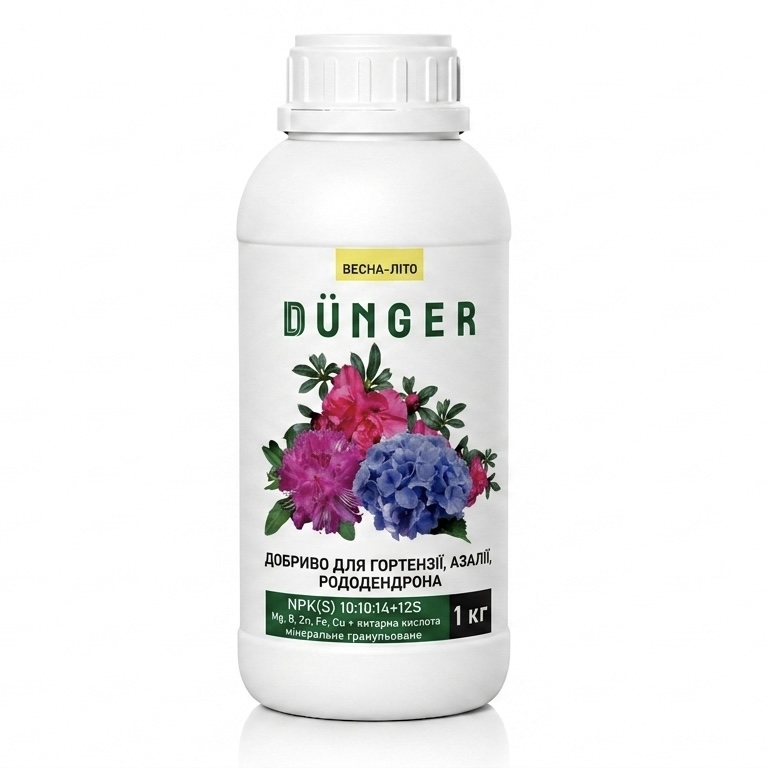
Complex fertilizer for hydrangea, rhododendron, azalea granular
If a healthy shrub needs the nutrients in this composition after growth resumes, consider the DÜNGER complex according to its complete instructions. This product is intended for spring and summer use. During winter it does not replace a cover, drainage or root protection.
Compare the 0.5, 1 and 5 kg packs after establishing the requirement for your shrubs. The product page contains the composition, application rate, method and current price. In My garden, you can save growing zones, crops and measurements, then plan suitable pack sizes for the selected period.
Frequently asked questions
For a bigleaf hydrangea, that may remove buds carried on the previous season's stems. Identify the species and cultivar first. Protecting the base will not restore parts that have already been cut off.
Often a suitable cultivar and a well-managed root zone are enough. Assess young plantings, pots and exposed sites separately. Do not automatically copy a covering scheme intended for bigleaf hydrangeas.
Check the soil, buds and forecast together. Remove protection carefully and keep material available to shield young tissues temporarily if frost returns.


