


Lilac Fertilizers - Buy from Manufacturer Dünger
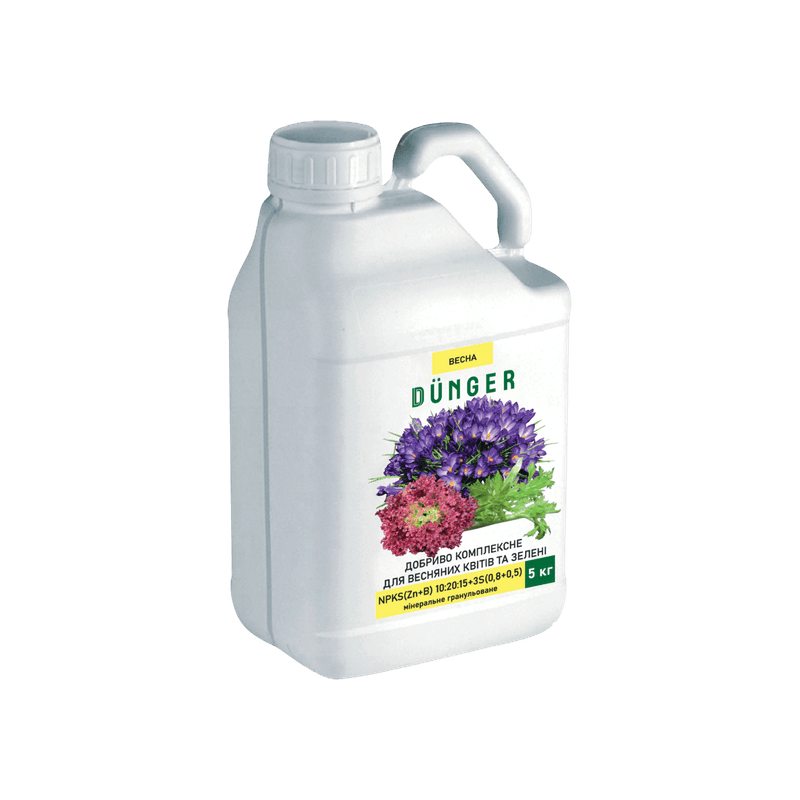
Lilac does not automatically bloom abundantly every year - and the most common cause of poor flowering is not fertilizers themselves, but wrong product choice and timing. Excess nitrogen produces lush dark-green shrubs with minimal flowers. A missed post-flowering P+K feeding means next year's buds will not form properly. The DÜNGER lilac schedule: light NPK in spring, boron before flowering, phosphorus-potassium immediately after flowering, autumn SKU 601 for frost hardiness. DÜNGER mineral and organo-mineral lilac fertilizers - granular, slow release, chlorine-free. Delivery by Nova Poshta and Ukrposhta across Ukraine.
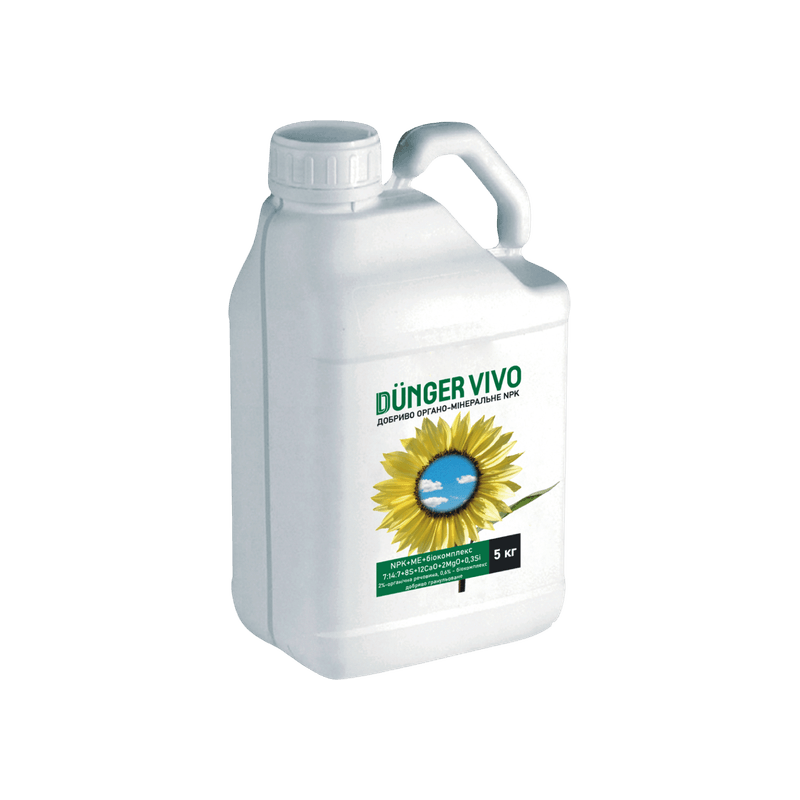
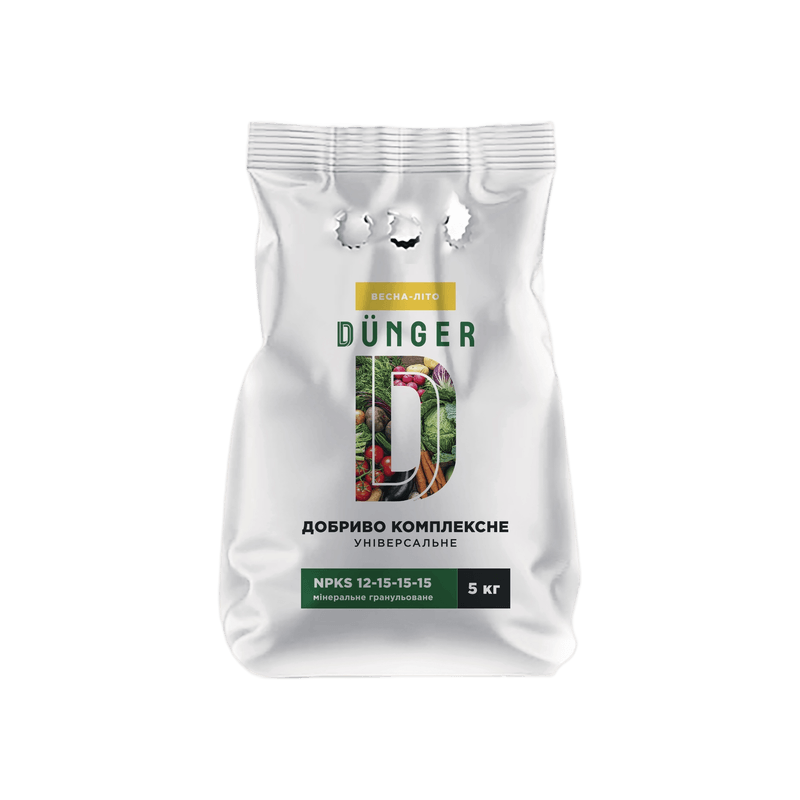
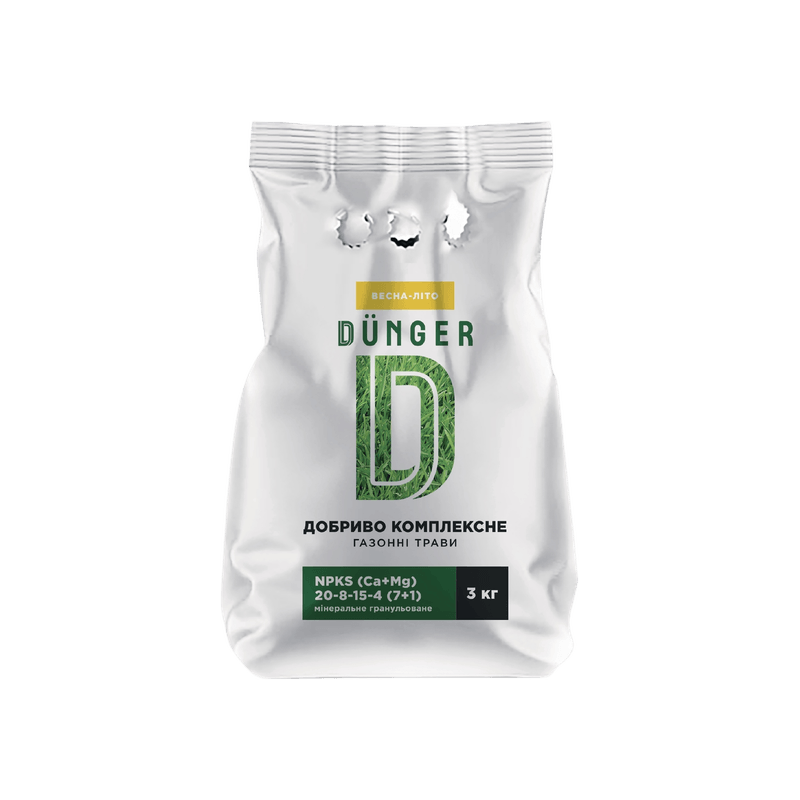
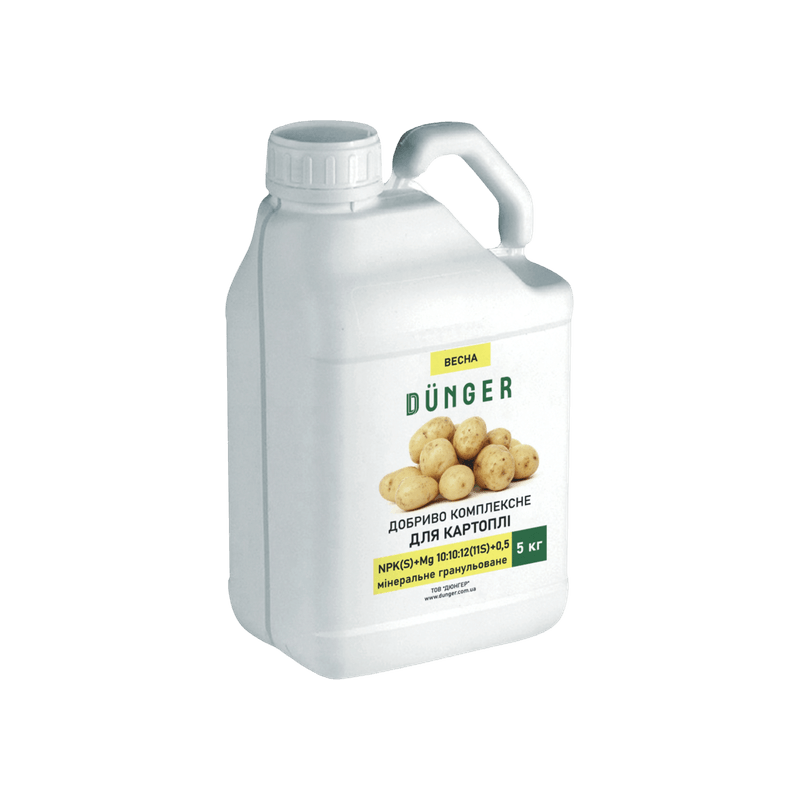
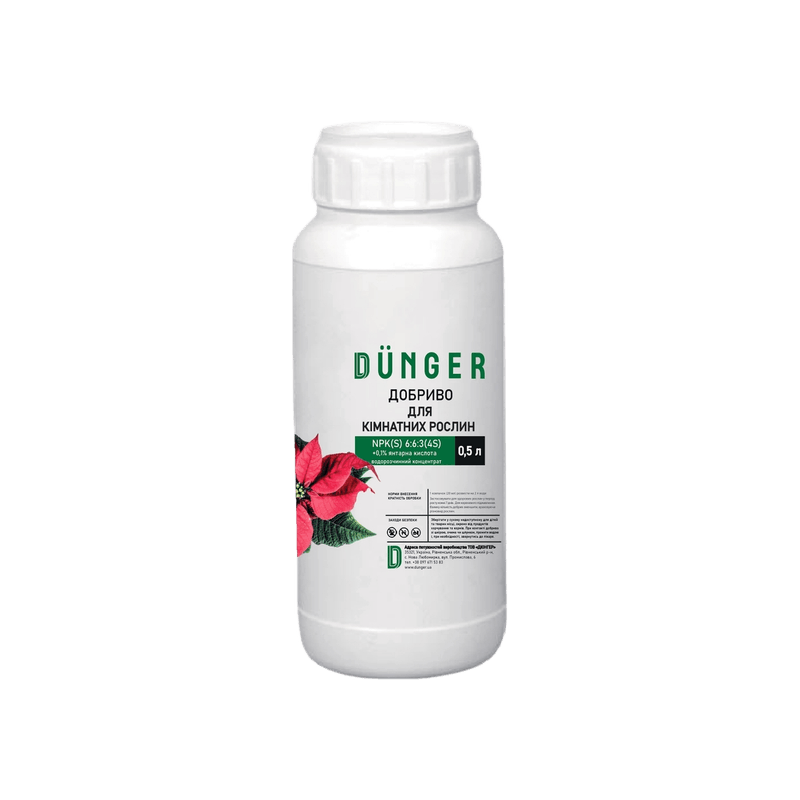
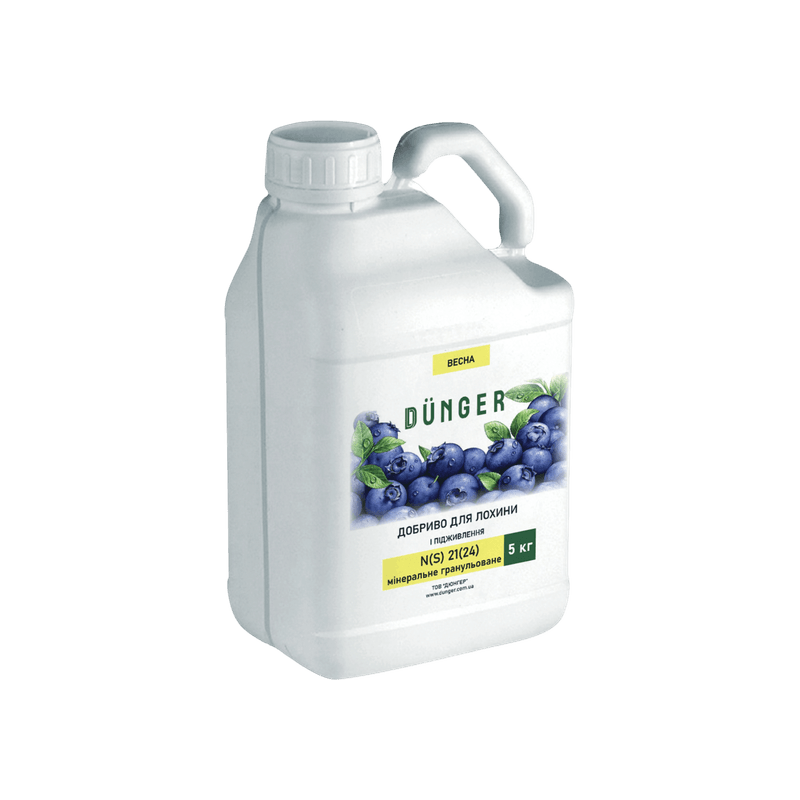
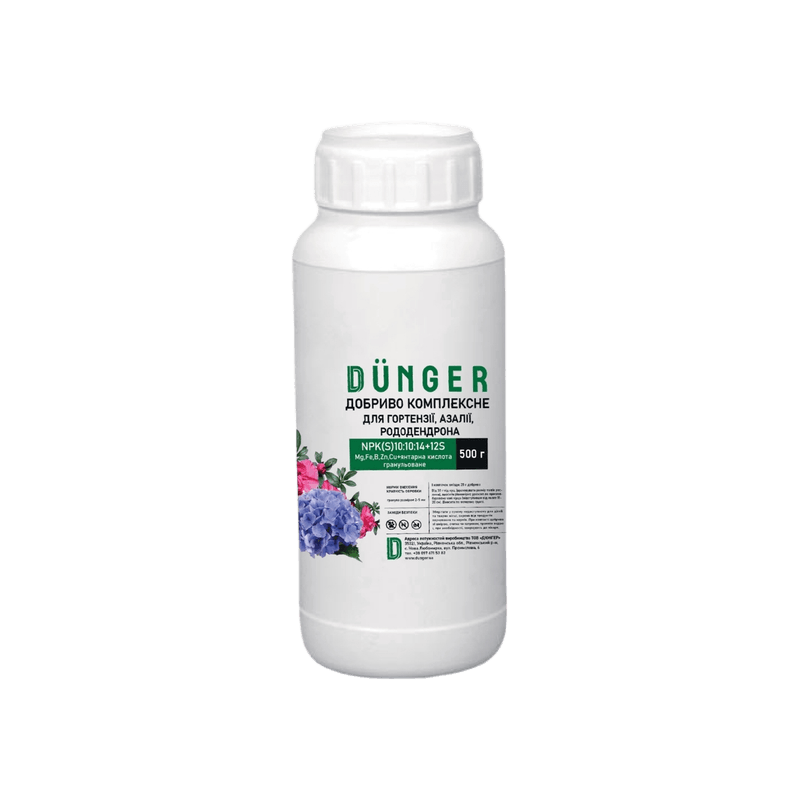
Why Lilac Doesn't Flower: 5 Most Common Causes
Lilac is one of the few ornamental shrubs where poor flowering is caused not by a lack of fertilizer but by too much of the wrong kind at the wrong time. Five reasons why lilac fails to bloom or blooms poorly:
- Excess nitrogen. N drives vegetative growth (leaves and shoots) and suppresses flower bud initiation. Symptom: lush, dark-green shrub with almost no flowers. Typical mistake: heavy spring application of ammonium nitrate or urea.
- Planted too deeply. If the graft union or crown is buried below soil level, the plant sends up suckers and sets no flower buds. Rule: graft union at soil level or 2-3 cm above.
- Pruning at the wrong time. Lilac blooms on last year's wood. Any pruning after July removes next year's flower buds. Safe window: immediately after flowering (May–June), before July.
- Missed post-flowering P+K feeding. Flower buds form June–August, right after the blooms fade. Without P+K at this moment buds form small and abort over winter.
- Acid soil (pH below 6.0). Lilac requires pH 6.5-7.5. In acid soil phosphorus is locked up and bud initiation is blocked. Fix: dolomitic limestone 200-300 g/m², once every 3-4 years.
Spring Feeding: Why a Half Dose Beats a Full Dose
At leaf emergence in spring, lilac needs feeding - but far less than most ornamental shrubs. It is not a heavy feeder.
Rule: SKU 1 (N12-P15-K15-S15) at HALF the standard dose - 10-12 g/m² (not 20-25 g/m²). N12 at half dose supplies enough nitrogen to restore the leaf canopy without triggering excessive vegetative growth. P15 supports root system activity. K15 strengthens cell walls of new shoots.
Important: apply ONCE at first leaf emergence. No second nitrogen feeding before or after flowering. Never use chloride fertilizers - lilac is sensitive to chlorine (use sulfate potassium forms only).
Pre-Flowering Feeding: Boron for Large Fragrant Panicles
When the first flower buds become visible (late April – early May), it is time for the second feeding.
SKU 18 (N12-P15-K15-S15-B0.35%) - 15-20 g/m². Boron B0.35% plays the key role:
- B is required for full pollen formation. With B deficiency: pollen forms but fertility is reduced - panicles are loose, flowers small, fragrance faint.
- B regulates sugar transport into flower tissues - more B = denser, more richly colored panicles.
- B0.35% in SKU 18 is a root-safe concentration, unlike separate high-dose boric acid application.
Pruning timing. Immediately after flowering ends (May–June) - remove spent panicles (deadheading) and shape the crown. After July - do not prune anything: next year's buds are already set at shoot tips.
The Most Important Feeding: Post-Flowering P+K for Next Year's Blooms
Most gardeners feed lilac in spring and forget it after flowering. This is a critical mistake.
Next year's flower buds form in June–August - immediately after the current season's blooms finish. This is when the plant 'decides' how many flower buds to set. With insufficient P and K at this moment:
- Fewer buds form and they are smaller.
- A large proportion of buds die over winter.
- Next spring: sparse, thin panicles or almost none.
DÜNGER SKU 19 (P23-K30) - apply immediately after flowering ends: 20-25 g/m². P23 for flower bud initiation and development. K30 for carbohydrate loading in buds - they overwinter and open next spring. Zero nitrogen - N is completely excluded after flowering.
Autumn Feeding and Soil pH Requirements
Autumn (October): SKU 601 (N5-P14-K21-S6-Si0.3%) - 20-25 g/m². P+K for flower bud maturation and root system hardening. Silicon Si strengthens cell walls - the shrub handles frost and ice loading more easily. N5 at this low level does not trigger growth but sustains root metabolism through autumn.
pH requirements:
- Optimal pH: 6.5-7.5.
- Below pH 6.0: apply dolomitic limestone 200-300 g/m². Once every 3-4 years, in autumn or early spring.
- Avoid: ammonium sulfate, superphosphate with H₂SO₄, peat mulch - all acidify the soil.
Forbidden fertilizers for lilac:
- Potassium chloride (KCl): Cl⁻ damages lilac's fine roots. Use sulfate-potassium forms only.
- Fresh manure near the crown: root burn + excess N.
- Ammonium nitrate or urea in summer: stimulates shoot growth that does not harden before winter.
Nutrient Deficiency Signs in Lilac: Diagnosis and Treatment
- Few or no flowers despite healthy leaves - excess N, missed post-flowering P+K, or wrong pruning time. Stop N, apply SKU 19 immediately after next bloom.
- Small, loose panicles with faint fragrance - B deficiency. SKU 18 pre-flowering + boric acid 1 g/10 L foliar.
- Old leaves yellowing between green veins - Mg deficiency. Magnesium sulfate 20 g/10 L foliar twice.
- Young leaf chlorosis (yellow leaf, green veins) - Fe deficiency or soil too acid. Chelated iron 5 g/10 L + check pH.
- General yellowing, weak growth - N deficiency or soil pH below 6.0. SKU 1 (half dose) + liming.
Deliver DÜNGER lilac fertilizers across Ukraine: Kyiv · Kharkiv · Dnipro · Odesa · Zaporizhzhia · Lviv · Kryvyi Rih · Vinnytsia · Poltava · Mykolaiv · Chernihiv · Cherkasy · Zhytomyr · Sumy · Rivne · Ternopil · Khmelnytskyi · Ivano-Frankivsk · Lutsk · Uzhhorod · Chernivtsi and other cities of Ukraine.
Lilac not flowering or panicles thin? Call us - a Dünger agronomist will recommend a feeding plan free of charge. In most cases one correctly timed post-flowering feeding is all it takes.
📞 +38 (097) 671-53-83 - free consultation. Mon-Sun 8:00-20:00. Delivery from 0.5 kg.
Dünger Fertilizer Delivery Regions Across Ukraine
Buy Dünger mineral and organo-mineral fertilizers with delivery to any region of Ukraine. Select your oblast - and get fertilizers direct from the manufacturer for your garden, farm or agribusiness. Delivery via Nova Poshta and Ukrposhta to all cities, villages and district centres. Produced in Rivne Oblast, Dunger LLC.
- Order Fertilizers — Vinnytsia
- Order Fertilizers — Volyn
- Order Fertilizers — Dnipropetrovsk
- Order Fertilizers — Zhytomyr
- Order Fertilizers — Zakarpattia
- Order Fertilizers — Zaporizhzhia
- Order Fertilizers — Ivano-Frankivsk
- Order Fertilizers — Kyiv Oblast
- Order fertilizers — Kyiv City
- Order fertilizers — Kirovohrad
- Order fertilizers — Lviv
- Order fertilizers — Mykolaiv
- Order fertilizers — Odesa
- Order fertilizers — Poltava
- Order fertilizers — Rivne
- Order fertilizers — Sumy
- Order fertilizers — Ternopil
- Order fertilizers — Kharkiv
- Order fertilizers — Kherson
- Order fertilizers — Khmelnytskyi
- Order fertilizers — Cherkasy
- Order fertilizers — Chernivtsi
- Order fertilizers — Chernihiv
Fertilizers from Manufacturer in Rivne Region
Order & Inquiry
Get in touch

Order mineral and organo-mineral fertilizers directly from the manufacturer. We will help you choose the right product for your garden, farm or landscape.
Hello!
Let's get acquainted and help you
Press Enter to continue
By clicking the button, you agree to privacy policy