


Choose a potassium source for a home garden by looking at the soil test and the crop. If potassium is low and phosphorus is already sufficient, look for a source without added phosphorus. If both are needed, consider a phosphorus-potassium fertilizer. Wood ash, compost and liquids made from kitchen scraps behave differently. First decide whether you need to replenish potassium, adjust pH or add organic matter.
Find out whether the bed needs potassium
Plants use potassium to help regulate water balance, among other functions. Some of the potassium in soil is locked in minerals and cannot supply roots during the current season. Use a test that estimates available potassium when deciding whether to feed. Ask what the result means for the crop you intend to grow. Check phosphorus and pH along with potassium.
A scorched leaf edge alone does not confirm a potassium shortage. Look at young and old leaves, check moisture below the surface and see whether the problem occurs throughout the bed. If symptoms follow a blocked dripper or a period of waterlogging, restore suitable conditions for the roots first. Fertilizer does not fix a damaged root system. If the symptom continues, a soil test and your records of earlier applications can guide the next check.
Separate the areas before sampling
One garden may need more than one sample. A bed that receives compost each year and a new planting in imported soil can have different nutrient levels. Ukrainian soils and growing history vary even within one community. Treat a sandy bed in Polissia and an adjacent raised bed filled with brought-in soil as separate decisions. Start by assessing soil in different parts of the garden.
Sample the soil as your chosen lab directs. Mix small portions only from an area with similar conditions. If one strip was regularly fertilized and another was a path, keep them separate. Label the sample and give the crop, area and previous applications. Ask the lab to explain the units. Milligrams per kilogram of soil on a report and grams of fertilizer per square metre answer different questions.
Compare potassium sources by reading the label
Potassium fertilizers can contain different salts. Potassium sulfate supplies sulfur as well, while potassium nitrate adds nitrogen. Potassium chloride supplies chloride, so check whether the form suits the crop and the method. For a potted plant or a soil already high in salts, do not automatically transfer an open-bed plan. Look at the product form. Do not turn granules intended for soil application into a spray unless the directions specify that method.
Labels often express potassium as K₂O. Compare numbers in the same units and check the whole formulation. An equal potassium percentage tells you little about how much nitrogen or phosphorus each product adds. If the soil needs both nutrients, see how to compare phosphorus-potassium fertilizers by composition and crop. Use the rate on the selected product rather than the label of a similarly named one.
Match the units before you calculate
A percentage on the pack tells you how much of the product's weight the stated figure represents. It does not tell you how many granules a bed needs. If the lab gives a recommendation as elemental potassium and the label uses K₂O, ask to have both figures expressed on the same basis. Note whether a figure is a concentration in the soil or an application recommendation. This matters when comparing reports from labs that use different methods.
Apply the label check to two typical situations
Imagine two beds with the same available potassium reading. The first already has enough phosphorus from earlier applications. The second needs both nutrients. For the first, compare sources without added phosphorus. For the second, compare a compound fertilizer with the lab recommendation. Even for the same crop, those decisions can differ. A single rate across both beds would conceal the difference.
When comparing sources without phosphorus, check whether there is a reason to add the other nutrients they contain. If you have a calcium, magnesium or nitrogen fertilizer from an earlier purchase, read its label too. A compound product may already contain potassium. List every input used on that bed before buying another pack.
What household materials can contribute
Wood ash
Wood ash can supply potassium and raise pH. Its composition varies with the wood and how it burned. A cup of ash is therefore not a measure of a known amount of potassium. Raising pH can harm a bed where acidity is already suitable, or plants such as blueberries and rhododendrons. Avoid ash from rubbish, painted or treated wood and wood of unknown origin. See the conditions for using wood ash for the specific checks.
Compost and kitchen scraps
Use mature compost with the soil's organic matter and nutrient needs in mind. Its potassium content depends on what went into the batch. If you use compost regularly, mention it when ordering a test. Potassium and phosphorus can accumulate in the soil. If you need a known amount of potassium, ask for an analysis of the batch or choose a product with a declared content.
Liquid from soaked banana peels has no known potassium concentration. The number of peels and colour of the liquid do not show how much potassium reaches the bed. Compost suitable kitchen scraps. Assess potassium separately instead of adding repeat applications of an unmeasured liquid to fertilizer.
Plan applications for different parts of the garden
Keep a bed that needs only potassium separate from a planting that needs phosphorus as well. Different crops can stand next to one another, but choose the formulation by the needs of each zone. Low potassium in one sample is no reason to treat the whole garden. Check whether you already used something containing potassium and whether the timing fits the selected product.
Measure the area or count the plants, depending on the rate. If you treat part of a bed, leave out paths and adjacent crops. If the directions give a rate per plant, count plants instead of multiplying by the whole area. Growth stage and soil moisture can change the application decision too. Note where and how much you applied separately, so next season you have a record to check.
Check the bed before an application
Even with a test showing a need, see whether soil and weather suit the method on the label. If water is standing, restore suitable root conditions first. If the soil is dry, follow the product directions on moisture. Rates for spreading granules, placing them in a planting hole and feeding per plant are separate. Keep the calculations separate even if one pack is used for different jobs. That helps you distinguish the amount for one spot from the amount left over after purchase.
If all plants show a problem after you change the watering, check water delivery before adjusting nutrients. If damage appeared soon after an application, keep the label and note how much you used. That gives you a better basis for the next decision than making another application by guesswork.
When the garden needs potassium and phosphorus
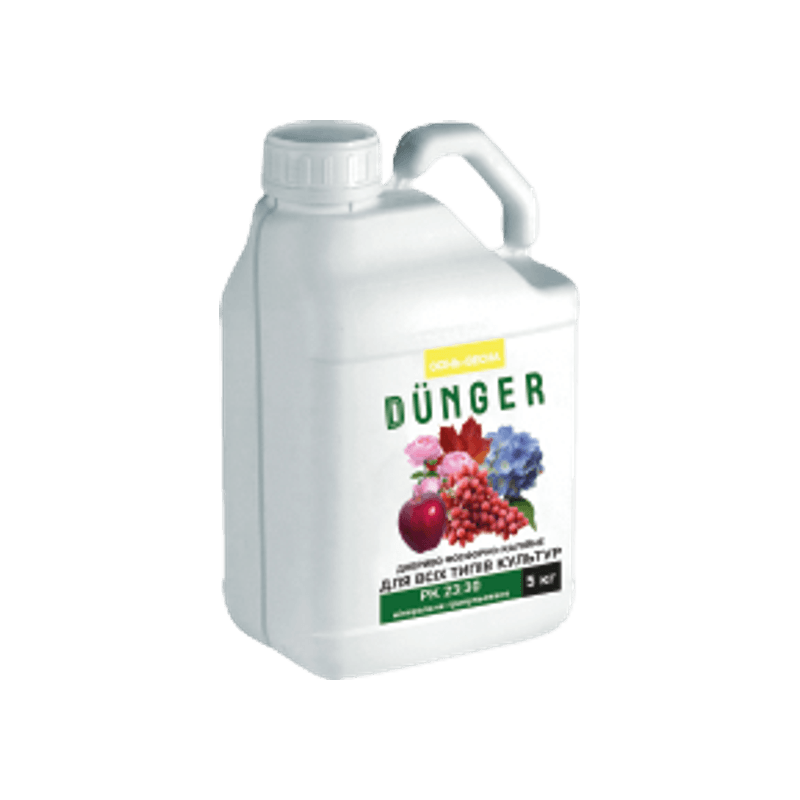
Phosphorus-potassium fertilizer for all types of crops, granules
If testing shows a need for both nutrients, compare the formulation and full directions for DÜNGER PK 23:30. The row below is for berry and ornamental shrubs. In the application directions, check the spring conditions for this group and root-zone moisture.
The pack weighs 5 kg. Count only the shrubs that need an application under this row. Check the relevant instructions separately for planting, digging or other plant groups.
Frequently asked questions
If the test shows a need for potassium, look for a source without added phosphorus, such as potassium sulfate where its directions suit the crop. Consider what else it supplies and whether the application method fits.
Ash varies in composition and raises pH. Consider it only after checking its source, the soil pH and the needs of the site. A measured potassium correction calls for a source you can quantify.
Potassium shortage is one possibility. Start with soil moisture, root condition, earlier applications and how the symptoms are distributed. A soil test tells you more about the choice of fertilizer than a single leaf.


