


Root feeding with urea means applying a nitrogen fertilizer to the soil for the roots to take up. Watering with a solution, incorporating dry granules before planting and spraying leaves are different jobs. Even if the same substance is named on the pack, the directions depend on the crop and how you intend to apply it. Before measuring any fertilizer, identify the crop, review the nitrogen it has already received and check whether the directions allow the method you want to use.
Decide whether the crop needs more nitrogen
Urea is a source of nitrogen. Where a soil needs a different nutrient, supplying nitrogen alone does not solve that problem. Look at how the plants are doing across the whole bed. If they suffer mainly in an area that has been flooded or along an edge that dries quickly, start by checking soil and watering. A single yellow leaf is not enough to establish a nitrogen deficiency. Notice which leaves are affected, how the symptoms are distributed, the state of the roots and any earlier fertilizer applications.
Before adding nitrogen, recall what you applied during bed preparation, at transplanting and later in the season. The words “compound fertilizer” do not tell you how much nitrogen actually reached the crop. Read the analysis and look up the amount previously applied. For unfamiliar soil or a recurring problem, start with soil assessment before fertilizing. Combine the test findings with the input history before purchasing another fertilizer that may supply the same nutrient.
Consider growth stage separately. The needs of an onion that has already started bulbing are different from those of a plant just making its leaves. When working out a programme for that crop, see feeding bulbing onions. A row of directions that fits one crop does not automatically fit the plants next to it, even if they grow in the same bed and are watered together.
Read the units and method before doing any arithmetic
A pre-sowing rate per area and a watering rate during growth are two different instructions. One describes how much dry material is required for the ground before sowing. The other needs the correct concentration and the correct amount of solution per plant. If both options are listed, read the conditions attached to each and choose the one that fits the work. The presence of both does not mean that both are needed.
Fruit trees and bushes can have separate instructions, including a different unit and application pattern. Check that the crop and age named actually fit your plant. A rate for a mature tree is not a rate for a young transplant. A mass per plant is not a mass per square metre unless an applicable instruction explicitly says how to make that calculation.
Understand what happens to granules on the soil surface
As urea dissolves in moist soil, it undergoes chemical changes. Some nitrogen may escape as ammonia if fertilizer remains on the surface for an extended time. Temperature, soil moisture, pH and time at the surface all matter. The risk can be greater in warm conditions and in more alkaline soils. A light shower may wet the granules without moving the fertilizer into the soil.
During bed preparation, follow the incorporation method in the instructions. If the directions call for watering after applying dry granules, make sure water can soak in rather than pond or run off the bed. Avoid placing concentrated granules against seeds or young roots. The small zone around a dissolving granule can temporarily become harmful to them. If the ground is too wet to work properly, wait rather than trying to force the task into the day you planned it.
In a Ukrainian garden, a raised strip may be workable while lower heavy soil is still saturated. At an exposed southern site, wind and heat can dry the surface quickly. Another garden may stay cool and wet for several days after rain. Check soil condition, the ability to water and the crop's stage at your own site. A national calendar date cannot replace those observations.
Measure root-feed solution without changing the concentration
- Find the directions for soil watering for the crop and confirm they match the plants in front of you.
- Count the plants actually being treated. Set aside a row that has already received the needed nitrogen instead of including it in the calculation.
- Use a working scale and a container of known volume. Mass of granules and volume of prepared solution are different quantities.
- Prepare only enough solution for the planned work. Apply it to the soil as directed and keep it off paths and away from drains.
If you need more than one watering can, prepare separate batches of the same correct concentration. A more concentrated can does not compensate for too little water. If some of the plants are at a different stage or growing in a different setting, confirm that the same instruction applies before including them. Check an unfamiliar product before starting rather than trying to read small print after mixing it.
Look at how the soil accepts water. A dry compacted surface may shed it along the row instead of absorbing it. Extra water can also make a saturated bed worse. If you need to improve watering or drainage, do that first. Where a downpour could move the solution off the bed, wait for better conditions instead of applying it just before a storm.
Keep rates specific to the area you actually manage
Write the name of the product and the chosen instruction alongside your measured area or plant count. Measure each part of an irregular bed separately. If the garden has several beds with different treatments, calculate them separately before totaling anything for an order. That gives you a figure tied to the actual work instead of a rough estimate based on the entire garden. Check whether you can use the chosen pack sensibly and store any surplus in the original container according to the label.
Separate a bed with two different jobs
Suppose one half of a bed already holds transplants and has received a compound fertilizer, while the other half is still being prepared for seed. Mark the boundary. For the planted area, review earlier nitrogen and plant condition. For the unplanted area, check whether pre-sowing application is needed and measure that ground separately. If there is a pale strip along the planted edge, compare how deeply plain water reaches the edge and the centre before assigning any additional fertilizer to it.
DÜNGER urea for soil application
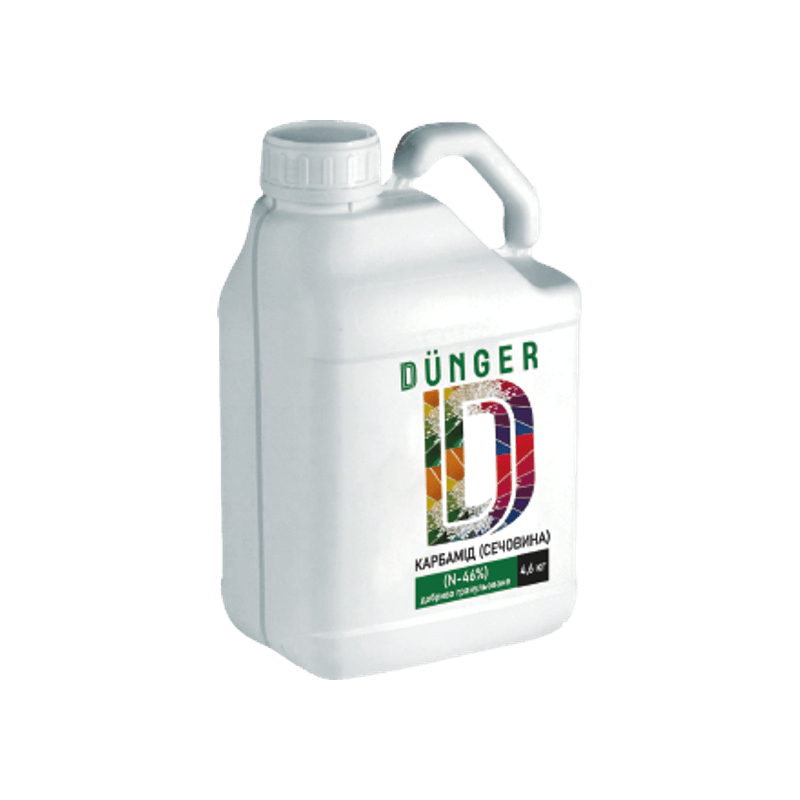
Urea
Urea has a separate instruction for feeding vegetable crops with watering. It is a soil use and is distinct from directions for spraying leaves.
If your crop needs nitrogen, read the full directions for its group. Before ordering, compare the amount required with the 4.6 kg pack.
Questions about applying urea to soil
Choose directions for the intended route. Soil watering can specify a volume per plant; foliar directions are written for spraying leaves. If you are reading several options, write the intended use on your note before preparing anything. Never borrow one method's concentration for another simply because the product name is the same.
Water demand follows soil moisture and weather. Nitrogen demand depends on crop stage, soil and earlier inputs. More frequent watering in heat is not a reason to add more nitrogen. Decide about the fertilizer as a separate step and follow the applicable product instructions.
Measure the surface for a rate given by area, or count the plants and check the required solution per plant when applying with water. Compare the resulting need with pack weight and proper storage for any surplus. The size of the bag does not determine the number of applications.


