


Wood ash can supply potassium and calcium while also raising soil pH. That combination makes it a material to assess before spreading across a garden. The decision depends on the fuel, soil analysis, crops and previous additions. If the soil already has a suitable reaction, or a plant needs an acidic root environment, another layer of ash may create a problem.
Consider only ash from known, clean, untreated wood. A stove bucket containing the remains of mixed household waste does not become fertilizer after sieving. A fine texture and grey colour tell you little about suitability. When the fuel cannot be identified, keep that material away from beds growing food crops rather than guessing from its appearance.
What ash supplies and what it cannot replace
Burning leaves mineral compounds behind, but their proportions vary with the wood, the parts burned and combustion conditions. Similar looking batches need not have the same composition. Household ash therefore cannot be treated as a fertilizer with a defined formula. A cup or bucket measures volume; it does not tell you how much available potassium you are applying.
Ash is not complete nitrogen, phosphorus and potassium nutrition. Most nitrogen is lost during burning. If a plant needs nitrogen, ash alone will not meet that requirement. Equally, the presence of potassium does not establish that every bed needs more. Adding another material without checking the soil does not resolve an existing excess of nutrients.
The feeding and liming effects come together. You cannot select the potassium in ash while leaving its influence on acidity outside the bed. If a particular nutrient is needed without a planned increase in pH, compare suitable fertilizers using their full instructions. Do not assume that ash will sweeten fruit or cure a plant simply because its leaves have turned yellow.
Check the individual bed first
Start with soil testing. Relevant questions include soil reaction, nutrient status and whether any correction of acidity is needed. A pH reading alone does not describe every soil property. The amount required for a correction also depends on how strongly the soil resists a change in reaction. A universal cupful for every plant ignores those differences.
Take samples before the intended addition and follow the chosen laboratory's collection requirements. Represent a reasonably uniform bed with several sampling points. Areas with different uses or conditions need separate samples. Do not combine lawn soil, a blueberry planting and a vegetable bed in one bag. Label the area and tell the laboratory which crop grows there and what was previously applied.
In Ukraine, neighbouring gardens can differ because of imported topsoil, building work, past fertilization or a deliberately prepared acidic planting area. A regional name or the word chernozem does not replace a result for your own bed. Soil beside a building or an old compost heap may also have a different history from the main vegetable plot.
The guide to garden soil and choosing fertilizer can help you prepare the questions. Decide whether you want to change soil reaction, address a measured nutrient shortage or improve structure. These are different tasks. Ash does not provide drainage, replace the management of compacted ground or remove the cause of standing water.
Where to put the ash aside
- Around blueberries, azaleas and rhododendrons needing an acidic growing environment.
- On soil with an already high pH, or an unknown reaction after repeated ash applications.
- Directly around germinating seeds and young seedlings vulnerable to soluble salts.
- On a future potato bed without assessing soil conditions and common scab risk.
- Anywhere that needs neither liming nor an additional potassium supply.
Potatoes deserve particular attention because a rise in pH can favour common scab. That does not mean every mark on a tuber has the same cause. It does mean that automatically putting ash into each planting hole for plant health is a poor decision. Assess feeding separately from seed quality and the investigation of suspicious symptoms.
A container has a limited volume of substrate, leaving less room for an error. Do not transfer a practice used across a large outdoor bed to an indoor pot. If a plant is struggling, first check moisture, drainage, light and roots. Adding an alkaline material of unknown composition is not a reliable diagnostic test for a nutrient problem.
Fuel, storage and careful handling
Exclude ash from painted or pressure-treated timber, building waste, household rubbish, coal and unknown fuel mixtures. Burning does not make their contaminants disappear. Separate suitable wood before lighting a fire. If different fuels have already been mixed, respect that uncertainty rather than trying to establish safety by smell or by removing visible debris.
Ash can hide live embers even when the surface appears cold. Follow the stove manufacturer's directions and fire precautions, using a covered metal container on a non-combustible base away from flammable materials. Garden use requires fully cooled ash. Dry storage also prevents rain from washing soluble compounds out before you have decided whether the material is useful.
The dust and alkaline material require careful handling. Wear gloves, eye protection and suitable protection against fine dust, and choose calm conditions. Do not leave concentrated heaps on bare ground or empty a bucket beside a drain. If testing supports an application, spread only the amount determined for that particular soil and material, evenly rather than in patches.
Do not prepare ash and fertilizer mixtures. Contact between alkaline ash and some nitrogen materials can release ammonia and lose nitrogen. Choosing a fertilizer does not authorize adding ash to it. Making a water extract does not standardize an unknown composition or remove its effect on the reaction of the growing environment.
Does it belong in compost?
A compost pile is not an unlimited disposal route for accumulated ash. Too much can increase alkalinity and soluble salts in the mixture. Where use is appropriate, it means a small addition distributed among varied materials, rather than a thick continuous layer. The original fuel remains just as relevant as it is for direct soil application.
Consider where the finished compost will go. A mixture containing ash should not automatically be used around acid-loving plants. Keep it identifiable so that it is not mistakenly selected for those plants later. If there is no suitable need or way to control its use, do not add ash simply to clear the storage container after winter heating.
Choosing fertilizer separately for the garden
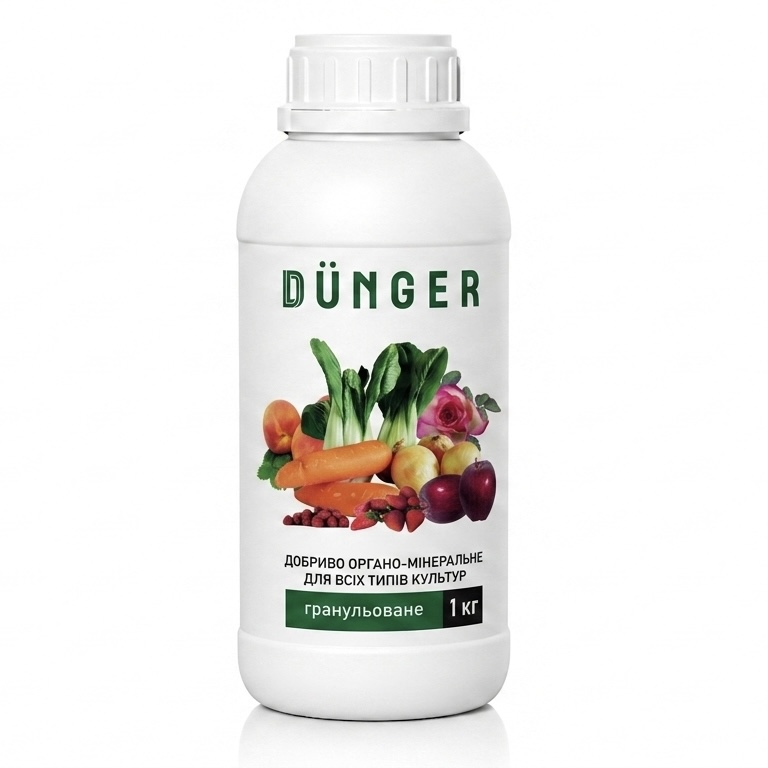
Organo-mineral fertilizer for all types of crops granular
If a crop needs feeding, compare a product with defined instructions. This option serves several plant groups; select it according to the requirements of the individual area.
DÜNGER organo-mineral fertilizer granules for all types of crops. Available pack sizes: 1 and 5 kg. Select a pack, check its price and availability, and place an order for delivery within Ukraine.
The fertilizer is used for the main application for plowing, digging in autumn or spring, as well as for fertilizing plants in the spring-summer period of active vegetation, the fertilizer is also used for laying greenhouse and seedling soils and soil mixtures. Apply the scattering on the site or in the root zone on loose, moist soil, as well as in planting holes when planting plants and seeds. Application rates are calculated depending on the species, characteristics, size and age of plants. Feeding is recommended 2-3 times a season.
This is a separate product, not an ingredient for an ash mixture. Compare the rate for the relevant crop group with previous additions. Choose a pack for the intended area and check ordering conditions on the product page. Do not stack several complete feeding programmes over the same ground.
Plan the next decision
Identify the crop and area, then compare their requirements with the soil analysis and previous additions. My Garden can hold zones, crops and measurements and help you form a product plan. Avoid counting the same area twice when planning a purchase. Preparing in autumn does not mean that a spring feeding should be carried out immediately.
Frequently asked questions
There is no single household ash rate. Its composition and liming strength are uncertain, while soils have different requirements. Use soil analysis and advice for the actual material. A manufactured granular fertilizer rate cannot be converted into cups of ash.
No. Blueberries, for example, need acidic conditions, making alkaline ash unsuitable. Other berries also need an assessment of soil reaction and requirements. The general label berry garden does not establish that the same amendment suits every crop growing there.
Leaf colour alone does not identify the cause. Examine the plant, water, roots, substrate reaction and feeding history. Do not use ash as the first attempted cure, because raising the pH further may make the original problem harder to resolve.
The garden's needs do not depend on how much waste has accumulated. Store it safely and use it only where justified. Do not spread the surplus over beds for disposal; check the locally applicable arrangements for handling unwanted material.


