


Sow garden peas directly outside in spring once the soil has thawed, drained and become workable. The seed can germinate in cool ground, and small plants tolerate a light frost. A cold seedbed that stays saturated gives seeds less air and can delay or reduce emergence. Check the intended row and the local forecast before choosing the date. A raised bed can be ready while a low patch of the same garden is still too wet.
Judge the bed at sowing depth
Open the soil with a trowel in several places along the intended row. If it sticks to the tool in a heavy sheet and smears instead of crumbling, wait. Pressing down a wet furrow can leave a hard surface as it dries. A moist bed that breaks into small crumbs is easier to level and cover evenly. Look for standing water as well as surface dryness. The top can look ready while the layer that will hold the seed remains saturated.
Use a soil thermometer to compare spots and follow the trend. Around 5°C at sowing depth can be a lower practical reference for a workable bed. Emergence often takes longer in cooler soil, so give the row time and monitor moisture. One warm reading on a sunny afternoon tells you less than readings taken at comparable times over several days. Check the forecast for prolonged rain and hard freezes before sowing.
In southern Ukraine a cool spring interval can close quickly as temperatures rise. In a low patch in Polissia or near the foothills, persistent rain can delay work even when neighbouring light soils are ready. A sheltered higher bed and a windy lower bed also behave differently in one garden. Choose the actual spot, then look at exposure throughout the day. Garden peas grow best in a sunny site with drainage.
Choose a pea type and plan the support
Shelling peas are grown for the peas inside the pod. Snow peas are usually picked while the edible pod is flat and the peas are small. Snap peas are also eaten whole, but the pods are generally allowed to fill more. Read the packet so you know which stage to pick. Plant height is a separate trait. An edible pod cultivar can still climb, and a compact shelling pea can sometimes manage with a short support.
Install a net or another stable support before sowing tall peas or while the seedlings are still small. Adding stakes into a dense, mature row can injure roots and tangle the vines. Keep an accessible side for picking. With a short cultivar, plants may hold one another up in a broad row, but a small support can be useful where rain knocks the stems over. Plan for the height on the seed packet and check that the support does not shade a nearby bed.
Sow the row and watch emergence
- Level the working strip and mark the row ends.
- Make a furrow of consistent depth and space intact seeds according to the packet.
- Cover with crumbly soil and firm it lightly, without making a dense crust.
- Water gently if the seed zone is dry. Check it before watering again.
- Label each cultivar and sowing date. Keep later sowings separate in your notes.
A depth of roughly 2-3 cm is a useful starting point for many garden peas. Follow your packet and adjust for the condition of the bed. Clods and wet pockets can lead to uneven contact, even if the depth looks right. If emergence is delayed, open a small part of the row and check what happened. Swollen seed, a developing shoot, a soft rotten seed and a gap with no seed are different findings. Inspect the surrounding soil before assuming that the whole packet has failed.
Compare a good section with a bare one
Check the exposed end, the middle and the wettest part. If gaps follow the edge of a puddle, look at where runoff reaches the bed. If shoots are present under a crust in several places, assess the surface without cultivating deeply around them. If the shallow end emerged first, check whether you changed furrow depth as you worked. The useful comparison is often between two parts of the same row rather than between two different seed varieties.
Re-sow only if there is still time to grow the cultivar in suitable weather. A short gap can be left if taller neighbours would shade new seedlings. If a longer stretch needs sowing again, correct the wetness or crust problem first. Extra fertilizer will not fix poor drainage or excessive depth. Keep pea sowing requirements separate from those of other legumes. For a warm-season example, see the guide to sowing peanuts outdoors.
Plan more than one harvest where spring allows it
A second short sowing can stagger the picking season. Work back from the approximate time to harvest and your likely hot spell. The same gap between sowings can work one year and put the later plants into high heat at flowering the next. Consider two cultivars with different maturity times if they fit the same workable spring period. Label them separately, especially if you will pick one for flat pods and one for shelled peas.
Imagine the raised bed is workable while the neighbouring one is still wet. Sow the first row on the higher bed and recheck the second before opening another packet. If the forecast and the cultivar's maturity suggest that a late row would flower in sustained heat, leave that part for another crop. This is a planning choice based on the bed and stage rather than a missed date. Write down the dates on which the actual picking started and ended. The record is useful when choosing next season's intervals.
Young peas can tolerate a light frost, while flowers and developing pods are more vulnerable. If cold returns, check the crop stage and use a suitable cover when needed. Support the cover so it does not press the vines down. During flowering and pod fill, compare moisture in the root zone before irrigating. If the far end stays dry while water pools at the beginning, correct distribution before changing the amount applied to the whole row.
Make the nutrition decision separately
Check the previous crop and what was already applied to the soil. On an amended vegetable bed, an extra complete fertilizer may be unnecessary. On another part of the garden with different soil and a different management history, take a separate sample and compare the actual results. Use the guide to assessing garden soil before adding nutrients. Decide which bed needs attention and measure that bed, rather than buying fertilizer for the entire garden based on one row.
Fertilizer for peas when the soil test supports it
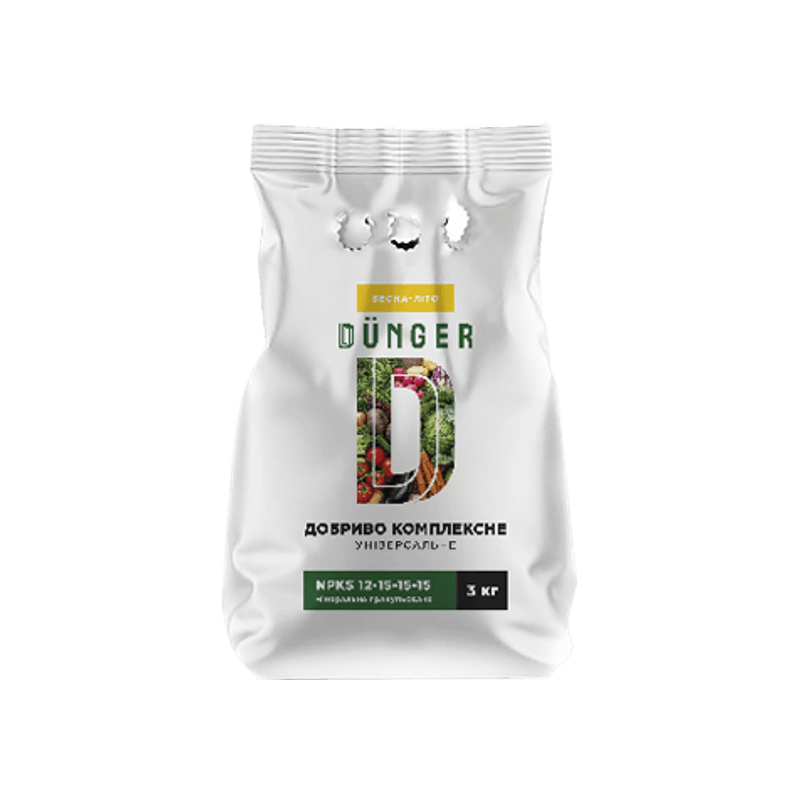
Complex fertilizer universal granular
These universal granules have a separate area-based row for the group that includes legumes. Consider the product only if the soil test and amendment history support the nutrients it supplies. Use the rate for the chosen method. Adding rates from different methods can exceed the amount you intended.
Vegetable, legumes and greens: 20-40 gr/m²
The product page lists 3, 4 and 5 kg packs. Measure the area that actually needs feeding and check the complete directions before choosing a pack.
Frequently asked questions
Routine soaking is unnecessary for direct sowing in a prepared, evenly moist bed. Follow any specific packet instructions and wait if the seed zone is cold and waterlogged.
Pea roots can work with suitable bacteria to fix nitrogen. Excess nitrogen favours leafy growth and can delay flowering. Check moisture, roots and soil history before selecting a fertilizer.
Look for the mature height and growth habit on the packet. Tall climbing peas are easier to pick on a net. A compact cultivar may support itself or benefit from a shorter support where wind or rain causes it to lodge.


