


Foliar feeding tomatoes makes sense when there is a clear nutritional purpose and the chosen fertilizer has instructions for leaf application. It supplements care of the roots and soil rather than replacing watering or treating every unexplained mark. Before spraying, identify what you want to address, assess the plants and check the particular product's application method. Starting with a stronger solution for reassurance is not a sound way to make the treatment more effective.
What leaf feeding can and cannot do
Leaves can absorb some nutrients from a suitable solution. However, this does not automatically meet the full nutritional demand of a large tomato plant. Uptake varies with the plant, conditions and product, while stronger concentrations increase the risk of leaf injury. Treat spraying as a separate, justified operation in a considered programme. It is not a reason to abandon the management of the soil and roots that support the crop.
After transplanting, assess the planting as a whole. For the main programme, see feeding tomatoes after planting out. Our general explanation of foliar feeding sets out the distinction between methods. This guide focuses on the tomato-specific decision: whether your plants are ready for a leaf treatment and how to avoid confusing it with a different operation. A useful purchase starts with that purpose, not with the sprayer.
Yellow leaves do not identify a suitable solution
Examine upper and lower leaves, stems, fruit and soil before shopping. Note whether the problem affects the whole bed or only plants beside a greenhouse door, in one container or in an isolated patch. Do not begin with a collection of micronutrients. The guide to tomato chlorosis and yellowing helps organise observations. A symptom name does not establish which fertilizer is needed or whether leaf treatment is the appropriate response.
Leaf rolling can accompany stressful growing conditions, while herbicide exposure can produce distortion that resembles other problems. Know what your sprayer has previously contained. Residues from an earlier product must not become an accidental ingredient in a fertilizer treatment. If the equipment history is uncertain, choose other suitable equipment rather than testing it on the entire tomato planting. Include earlier sprays in any discussion of damage that appeared after treatment.
Do not mistake nutrition for a fruit treatment
A dark patch at the blossom end of a tomato needs its own assessment. Blossom-end rot involves calcium supply within developing fruit, but it does not necessarily mean the soil lacks calcium. Moisture fluctuations, root condition and other growing factors can contribute. A compound leaf fertilizer should therefore not be presented as a universal remedy for this disorder. Establish what the fruit damage is before deciding whether nutrition needs attention.
Already damaged fruit tissue will not become healthy after feeding. Caring for subsequent fruit requires attention to conditions rather than an increasingly strong spray chosen by guesswork. For advice, show both sides of the fruit and the whole plant. Explain watering, previous fertilizer applications and root-zone conditions. These details help distinguish a nutrition question from another management or plant-health problem and prevent a purchase based only on a photograph of one dark patch.
Assess greenhouse and outdoor conditions separately
For outdoor tomatoes, the actual weather at the bed matters. Inside a greenhouse, also assess temperature, air movement and humidity rather than relying only on the outdoor forecast. A cool morning outside does not prove that conditions under cover are suitable. Ukrainian growing seasons do not provide one fixed month or weekday when every tomato plant should receive a fertilizer spray. Match the decision to the plants and the place where they grow.
Overwatering together with high humidity and poor light can cause edema in greenhouse tomatoes. Unusual blistering or distortion under these conditions is not a reason to add another solution. Check watering and ventilation first. If the cause remains uncertain, seek an identification rather than trying several products at once. A precise description of the greenhouse conditions is more useful than assuming every change on a leaf represents a shortage of nutrients.
Choose instructions for the correct plant stage
Seedlings and mature plants may have different rates for the same product. Do not transfer an adult-plant treatment to young seedlings simply because both are tomatoes. Also distinguish root feeding from leaf application. A product page may contain several rows: select the relevant stage and method rather than the first figure beside a crop name. Keep the instructions available while measuring instead of relying on memory from a previous product.
Do not invent a repeat schedule from the interval given for another application method. An interval between fertilizer drenches does not establish how often leaves should be sprayed. Ask the manufacturer when clarification is needed before repeating a treatment. This matters particularly when several products have already been used or when conditions have changed. More frequent spraying should not become an automatic response to a result that is slower than you expected.
A fertilizer with separate foliar rows
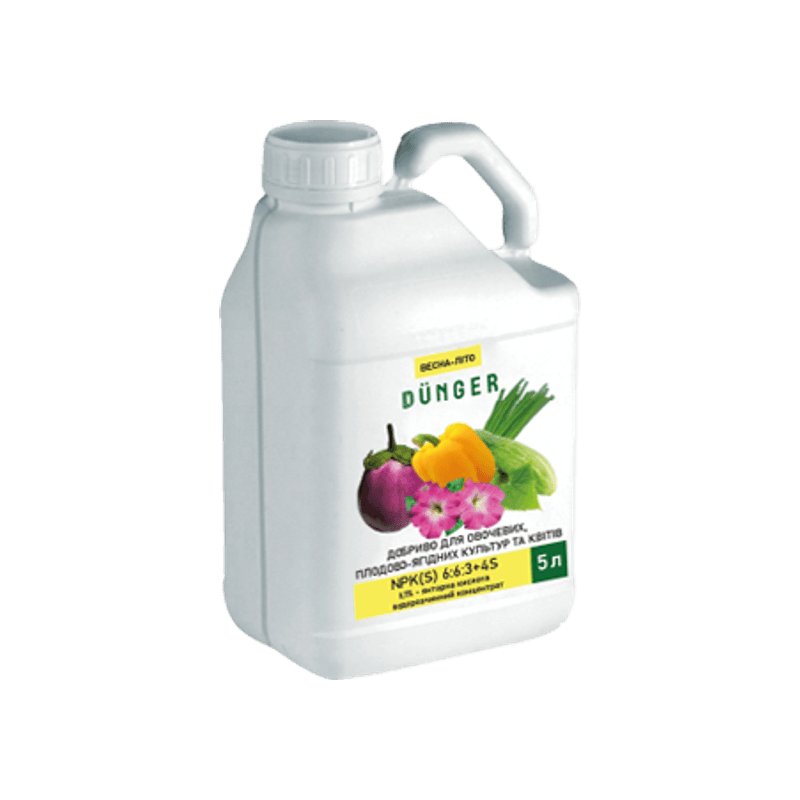
Complex fertilizer for vegetables, fruit and berry crops, and flowers
Tomatoes fall within this product's vegetable group. The product is offered in a 5 L canister. The instructions distinguish mature plants from seedlings in these foliar rows:
- Vegetables of all types, fruit and berry crops, flowers (foliar treatment): 25 ml/10 L of water.
- All types of vegetable seedlings, fruit tree saplings, berry bushes, flowers (foliar treatment): 12 ml/10 L of water.
Use the complete instructions for the selected stage; do not substitute the root-feeding rate. This is a nutrition product, not a way to identify or cure an unknown disease. Check the number of canisters and current order details on the product page before buying.
In My Garden, save zones, crops and measurements and plan products for your growing areas. Decide whether a particular treatment is needed from plant condition and the relevant product instructions.
Prepare without improvised mixtures
Have the packaging, suitable measuring equipment and the required water ready. Confirm the product and instruction row before measuring. Do not substitute a kitchen spoon for accurate measurement, round the concentrate upwards or add more because the liquid looks weak. Colour does not establish concentration. When another person prepares the solution, make sure both of you are using the same product instructions and the same units rather than different remembered recipes.
Do not add soap, oil, another fertilizer or a plant-protection product without established compatibility and appropriate instructions. Two products individually suitable for tomatoes do not automatically form a suitable mixture. If a remaining liquid cannot be identified, do not use it in the next feeding solution. Work with a known product and a clear quantity, following the handling directions on its packaging. Avoid treating the sprayer as a place to combine leftover materials.
Weather, coverage and reassessment
The product memo states: “Feed plants with fertilizer in the morning or evening, avoiding hot weather.” Check conditions immediately before working, rather than relying on the clock alone. Even coverage does not mean flooding foliage until it drips. Follow the indicated method and do not raise the concentration to compensate for the weather or a missed treatment. If conditions are unsuitable, reassess the operation instead of changing the recipe yourself.
If new damage appears afterwards, do not automatically repeat the treatment. Keep the product name, measured quantities and photographs for a consultation. Consider changed conditions, other applications and whether all plants responded similarly. A mark on an old leaf is not the only way to judge the crop, and the wish for an immediate visible response does not justify another dose. Record the operation accurately enough to explain what actually happened.
Common questions
Leaf application is a supplement rather than a complete substitute for root nutrition. The choice depends on the plants and the particular product. A rate for one method cannot be transferred to the other simply because the crop is the same.
No. Establish the cause, root-zone conditions and previous applications first. Spots, distortion or unexplained damage need assessment rather than a randomly selected mixture. Nutrition may be relevant, but colour alone does not establish that a foliar treatment is the answer.
Plant stage affects which instructions apply. Use the row for seedlings instead of the mature-plant rate. If the stage or a proposed repeat application is unclear, ask the manufacturer before preparing a solution rather than improvising a stronger or more frequent treatment.


