


Feeding tomatoes after transplanting starts with assessing the plants and their growing area. An established plant producing new shoots is at a different stage from a seedling just moved outside. During fruit development, available moisture and working roots matter alongside nutrients. Another dose of fertilizer cannot correct every slowdown in growth.
First decide what needs attention: nutrition for established plants, uneven watering or an unexplained loss of vigour. Trying to solve all three with a stronger solution makes the next decision harder. A short sequence of checks helps you choose a product and application method without adding nutrients simply because a date has arrived.
Separate feeding from the transplanting decision
This guide concerns tomatoes already growing in their final position. If plants are still in seedling pots, first assess whether tomatoes are ready for planting outdoors. Weather, root-ball condition and adaptation to outdoor conditions take priority over an attempt to strengthen them with extra feeding.
The separate guide to feeding tomato seedlings covers the earlier stage. Do not transfer a seedling concentration or method to an established planting without checking the actual product instructions. A bed and a container also differ in root space, moisture and the nutrients already present. Keep those distinctions in your plan.
Establish what the soil has already received
Review bed preparation: compost, a base fertilizer, anything applied during planting and subsequent liquid feeds. Record product names, quantities and treated areas in your own journal. If you cannot remember a rate, do not assume the bed has received nothing. Recover the previous information before adding another complex fertilizer.
A soil test helps assess acidity and nutrient supply, particularly where the same problem returns each year. A leaf's appearance alone is not an equivalent test. The guide to soil acidity and measuring it can help you prepare. Match the result to the actual tomato bed, rather than treating an average for the entire garden as a precise description of every growing area.
Excess nitrogen can encourage strong leafy growth at the expense of timely fruiting. If plants are already vigorous and dense, another dose justified only by the idea that tomatoes enjoy feeding is a weak decision. Check previous inputs and fruit development before repeating a familiar routine.
Check moisture and the root zone first
Assess moisture below the surface where roots grow. A dry crust does not necessarily mean the profile is dry; a wet surface after brief watering does not prove water has reached the required depth. Compare soil close to a plant with soil between neighbouring drippers. If one section grows poorly, check water delivery in that section.
Continuously waterlogged soil creates a different problem. Do not add another feeding solution to wet ground merely because the calendar says it is time. Check drainage, the condition after rain and irrigation operation. Roots need a suitable growing environment; fertilizer cannot replace restoring that environment when water management is wrong.
Reasonably consistent moisture is particularly valuable while fruits develop. Avoid treating severe drying followed by a heavy soaking as a normal routine. Mulch can help conserve moisture, but inspect beneath it. A dry upper layer of mulch is not a reliable description of the soil below.
Look at the whole plant and its stage
Inspect new growth, older leaves, flower clusters and fruit together. Note whether the issue affects every plant of one cultivar or only particular spots. A single weak plant beside healthy neighbours deserves a closer inspection before you increase feeding across the entire bed.
At the start of active growth, check whether development has resumed after transplanting. Once fruit is present, consider its progress alongside plant condition and previous nutrition. The presence of flowers alone does not determine a precise dose. Use the selected product's instructions for concentration and application interval.
In Ukraine, outdoor and protected crops may reach these stages at different times. Southern gardens and cooler locations do not share one starting date for feeding either. Plan seasonal work from the actual planting and conditions. Advice for a summer crop is not an instruction to fertilize an inactive bed in autumn.
Choose a clear application method
For a liquid fertilizer, distinguish root feeding from application to leaves. They use different concentrations. Before preparing anything, read the instruction that matches the chosen route. Do not combine the two alternatives into a compulsory double treatment or select the stronger mixture as an extra precaution.
Use a dedicated measure for concentrate and a container with a known water volume. Label garden measuring equipment so it is not confused with kitchen utensils. An unmarked cap is not a dependable millilitre measure. For a smaller batch, work out the proportional quantity first and check that you can measure it accurately.
Do not add other fertilizers or crop-protection products to the same tank without confirmed compatibility in their instructions. Two products suitable for tomatoes individually do not automatically form a suitable mixture. A clear response to one assessed need is easier to manage than a combination whose behaviour you have not established.
A liquid complex for vegetable crops
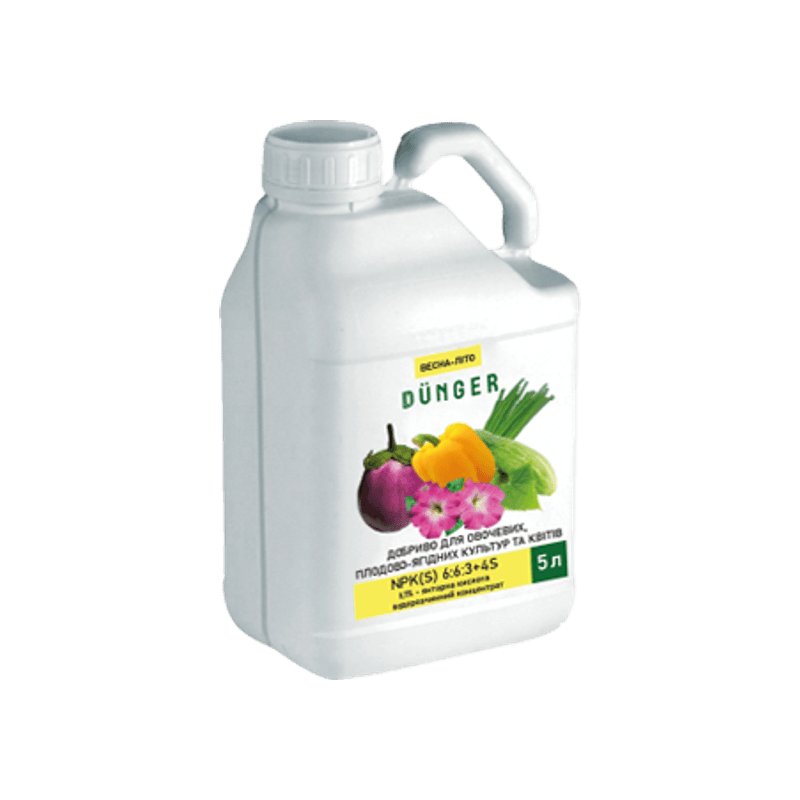
Complex fertilizer for vegetables, fruit and berry crops, and flowers
This liquid complex is an option for tomatoes within the vegetable group. Establish the need and select the application route first. The feeding-solution quantity must not be treated as the plant’s entire ordinary watering requirement.
Used throughout the entire period of plant development and growth. For root feeding into the soil/substrate, dilute 50 ml of fertilizer in 10 L of water (100 ml of solution per 1 plant) and use at intervals of 10-12 days. For foliar treatment (spraying), dilute 25 ml in 10 L of water and apply with a sprayer, ensuring even coverage.
Use My Garden for crop, zone measurements and purchase planning. Keep application dates in your own journal. Check the pack on the product page against your calculated requirement.
A dark fruit patch does not automatically mean add calcium
Blossom-end rot is associated with insufficient calcium reaching developing fruit tissue. Uneven moisture can contribute even where calcium is present in the soil. A dark area at the blossom end therefore does not, by itself, demonstrate that another calcium fertilizer is needed.
Check watering, moisture fluctuations, root-zone conditions and excessive nitrogen inputs. Repeated damage calls for a more precise assessment and, where useful, a soil test. Do not expect another dose of compound fertilizer to restore tissue that is already damaged. Assess subsequent fruits and the conditions during their development.
Beds, greenhouses and large containers
A covered crop does not receive rain in the same way as an open bed. A container holds a limited volume of growing medium, so check its condition separately. Do not copy a neighbouring bed's watering frequency or decide the requirement simply from the number of plants.
For container tomatoes, check the medium's ingredients and any fertilizer it already contains. That initial nutrition belongs in the overall plan. Inspect drainage holes and whether water remains standing in a tray. Consider further feeding alongside these conditions, rather than treating it as an independent routine that always continues unchanged.
A useful check before the next application
- The plants are established in their final position and their stage is clear.
- Previous products and application amounts are known.
- Root-zone moisture has been checked and irrigation works evenly.
- Leaves, new growth and fruit have been inspected together.
- One application method has been selected and its rate read.
- A suitable measuring vessel and plant count are available.
- The planned timing fits the product instructions and actual conditions.
Frequently asked questions
Review previous nutrition first. Excess nitrogen can encourage vegetative growth. Lush foliage is not a reason to keep adding fertilizer automatically, particularly without assessing fruit development and the soil. Decide what the next application is intended to achieve before preparing it.
The two methods have different concentrations in the instructions. Do not use the root-feeding solution on leaves by default or treat both routes as a required combined programme. Establish the need, choose the appropriate route and prepare only its specified concentration.
Nutrition may not be the cause. Review moisture, roots, earlier applications and the pattern of damage. Do not shorten the interval or raise concentration simply because there is no immediate visible change. A repeated unexplained problem needs investigation rather than progressively stronger feeding.
Count plants, select the application method and calculate the requirement from the product rate. Separate areas with different conditions and previous nutrition. Base the purchase on planned applications, rather than assuming every bed always needs the same quantity.


