


Foliar feeding soybeans makes sense when there is a defined nutritional problem and a suitable product with an appropriate foliar application instruction. Flowering, pale leaves or a planned sprayer pass do not, by themselves, establish that another fertilizer is needed. Check the roots, nodules, moisture and earlier applications first. A leaf spray does not replace the crop's main nutrient supply, and it cannot be promised to increase yield simply because it contains several nutrients.
Soybean nitrogen nutrition needs its own assessment
Soybean is a legume and can obtain nitrogen through its association with appropriate bacteria in root nodules. It also takes nutrients from the soil. The shortcut “pale leaves mean add nitrogen” misses this relationship. Establish whether active nodules are present, whether soil nutrients are accessible and whether another problem is restricting root activity before selecting a treatment.
A high supply of available soil nitrogen can suppress nodulation and biological fixation. This does not mean nitrogen fertilizer is forbidden in every soybean situation. It means that its necessity and rate require a field-specific decision, rather than borrowing the nitrogen programme for maize. The guide to nitrogen fertilizers and their uses explains the separate question of fertilizer forms and selection.
Inspect roots as well as the crop canopy
Choose representative places: an area growing normally, a visibly weak patch and the boundary between them. Carefully dig up plants with their roots and wash away the soil. Pulling a stem directly from the ground can remove roots and nodules, leaving a misleading sample. Compare the root systems, soil structure and moisture as well as the structures visible on the roots. A sample taken only from a convenient field entrance may not represent the crop.
A pink interior in a cut nodule indicates active nitrogen fixation. Nodules being present is not enough to show that they are functioning. Interpret their condition alongside plant stage: small developing nodules and old damaged nodules do not carry the same meaning. Do not assign a nitrogen rate from a single uprooted plant or judge an entire field from its outer edge.
Yellowing is a clue, not a complete diagnosis
Record whether the youngest or oldest leaves change first, and whether discoloration appears between veins or along margins. Look for an association with low ground, compacted wheelings, a dry patch or overlap from an earlier operation. These comparisons help distinguish nutrient access problems from other causes, but they do not replace a diagnosis. Photograph the whole patch as well as individual leaves.
For example, iron may be present in soil while the plant cannot obtain enough of it under particular soil conditions. Increasing any general fertilizer is not a precise solution to that situation. Root damage, compaction and moisture stress also affect nutrition. If the cause remains uncertain, give the agronomist representative plants, the field pattern and previous management details, rather than only a close-up of one leaf.
Use soil and tissue tests for the right questions
A soil test describes aspects of nutrient supply in the ground. Tissue analysis describes the sampled plant material at a particular stage. These are complementary observations, not interchangeable instructions. A tissue result does not automatically predict a profitable response to a foliar application. Interpret it with soil conditions, crop appearance, weather and the history of the field.
Before sampling, ask the laboratory which plant part, growth stage and packaging procedure it requires. Clearly separate material from normal and affected areas when a comparison is intended, and identify the collection locations. Tell the laboratory about recent sprays. Do not convert a concentration on an analytical report directly into millilitres of an unrelated fertilizer: the nutrient, formulation and intended route still need to match the problem.
What foliar feeding cannot replace
Leaves can take up certain quantities of applied nutrients, but this does not mean that a spray can satisfy soybean's entire requirement for the major elements. Concentration is limited by the possibility of tissue injury. An operation being convenient to combine with another sprayer pass does not establish a crop need. A granular product intended for soil application must not be turned into a leaf-spray recipe by dissolving an assumed quantity.
The general guide to foliar feeding explains how to distinguish application routes. With soybean, keep correction of a defined problem separate from routine spraying simply to pursue extra yield. A preventative mixture cannot be promised to improve production or grain quality. Likewise, the presence of a nutrient in a product does not prove that it will correct every condition associated with that nutrient.
Use plant stage and local conditions, not one calendar date
Across Ukrainian fields, development depends on variety, sowing conditions, temperature and stored moisture. Identify the actual crop stage instead of using the month alone. Drought and waterlogging can impair roots and nodule activity. A crop under water stress should not automatically receive a stronger foliar solution in an attempt to rescue it. First establish what is limiting growth and whether conditions permit a suitable treatment.
Check the specific label and forecast before starting. Avoid spraying in strong heat, assess wind and drift risk, and follow the product's requirements concerning rain. If those conditions cannot be met, postpone the operation. There is no universal temperature threshold, rain-free interval or repeat schedule that can safely be transferred between all formulations. Do not substitute another product's settings because both containers mention micronutrients.
An option with a legume application row
For justified supplemental feeding, HUMIC has a separate spraying instruction covering legumes. The rate below is the product's group instruction, not a soybean-specific treatment for a diagnosed deficiency. A humate is not a rhizobial inoculant, and a mixture containing micronutrients is not automatically a targeted remedy for every nutrient disorder.
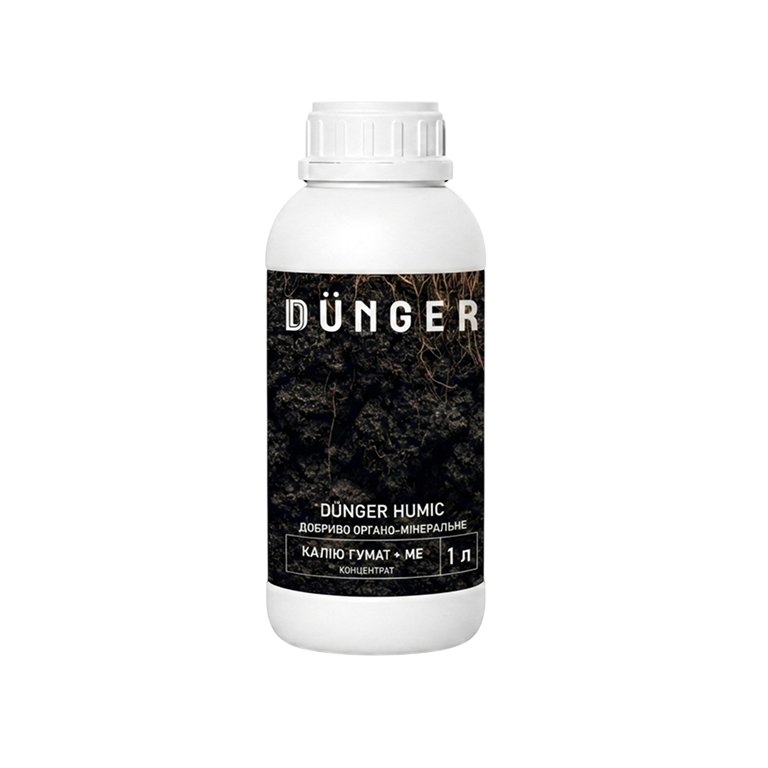
Organic-mineral fertilizer DÜNGER HUMIC (potassium humate, ME)
Concentrate, 1 L. Review the complete composition and application information on the product page before choosing a method.
Vegetables, legumes and greens - spraying: 5-10 ml/10 l of water/100 m²
General conditions: spring-summer; apply in solution; for all soil types and all plant types.
Keep the stated concentrate amount, water volume and treated area together. The row is not simply a dose for a tank of any size. Do not increase concentration to reduce the amount of spray water. For a production field, agree the operational calculation with the agronomist using the exact product and the equipment involved.
For separate areas of your property, My Garden lets you save crops and measurements and plan fertilizer purchases. Keep the field operation plan and laboratory findings separately. The number of packs available does not determine whether the crop needs an application.
Evaluate the result with a fair comparison
Compare treated and untreated areas under similar conditions, rather than contrasting a sprayed strip with a different variety or a drier field edge. Keep boundaries clear and record the product, rate and date. Changing several operations at once makes it difficult to identify the cause of any difference. Leaves becoming greener is not, on its own, evidence of an increase in harvested yield.
Include both product and application costs when assessing the decision. A useful observation in one small trial or season is not a guarantee for every field the following year. Where symptoms continue to spread, return to diagnosis instead of repeating the same product without establishing why the first treatment did not resolve the problem. The practical objective is an appropriate intervention, not the largest possible number of applications.
Common questions
No. The decision requires evidence of need, not just the crop name. Excess boron can injure soybean, so do not add a separate boron product or household mixture to a general fertilizer without a justified, product-specific plan.
No. An inoculant contains suitable living bacteria, while humate is a different kind of product. Effective symbiosis depends on the inoculant, its storage and use, and soil conditions. A foliar fertilizer does not replace that process.
Only where the exact products' instructions permit the combination and their compatibility and use conditions are established. A planned sprayer pass is not a reason to mix products. Do not invent a combination from their separate crop labels.


