


Nitrogen fertilizers supply nitrogen, one of the major nutrients plants need for growth. Urea, also called carbamide, is one example. Compound fertilizers contain nitrogen alongside other nutrients. Before buying, decide whether the task is to supply nitrogen specifically or to provide several nutrients together. That distinction is more useful than choosing the pack with the largest number on its label.
For a home garden, understanding a few principles is more valuable than memorising a long catalogue of names. Distinguish product weight from nitrogen weight, application method from nutrient form, and plant need from the feeding already completed. These differences help prevent transferring a rate between unrelated products or buying several feeds for the same task without a clear calculation.
What the N on the label means
N identifies nitrogen in the nutrient list. The percentage beside it describes nitrogen as a proportion of the fertilizer's weight, not a dose for a plant. Two equally heavy packs with different nitrogen percentages contain different amounts of nitrogen. This matters when comparing products, but the percentage alone does not tell you how much fertilizer your bed needs today.
A compound fertilizer lists other nutrients beside nitrogen. Choosing that product for its N also adds the rest of its composition. If the soil does not need more phosphorus, consider that before ordering. The guide to phosphorus and potassium fertilizers explains a different part of the decision. Products do not become interchangeable simply because both are described as fertilizer.
Nitrogen forms and their practical meaning
Nitrate nitrogen
Nitrate moves through soil with water. This explains why rainfall, irrigation and soil texture matter: nutrients can move below the zone the roots can reach. A sandy site and a heavy soil do not present identical conditions. Selecting nitrate only because someone calls it fast acting overlooks how the product will behave in your particular bed.
Ammonium nitrogen
Ammonium is held by clay and organic matter differently from nitrate. Soil microorganisms can convert it into nitrate. The form named on a label therefore describes a starting point, not a promise that the nitrogen will remain indefinitely where it was applied. Moisture, temperature and soil conditions influence these transformations, so a single application plan cannot fit every garden.
Urea nitrogen
Urea undergoes changes in the soil before its nitrogen passes through subsequent stages. Under certain conditions, some nitrogen from surface-applied urea can escape to the air. Application method therefore has a practical purpose. Do not assume scattering granules anywhere produces the same result. Consider the product instructions, soil moisture and your ability to carry out the required follow-up work.
Does the planting actually need more nitrogen?
Start with the crop, its growth stage and the history of the site. Young vegetables, a mature shrub and a lawn are not one application group because they all have green leaves. Recall planting-time fertilizer, compost, organic amendments and recent compound feeds. Nitrogen contributed by those additions counts towards the same planting; a new product does not reset the account to zero.
Pale colour and weak growth justify inspection, but they are not a laboratory result. Check water, roots, light and the pattern of damage. A stronger nitrogen product will not restore air to roots in a persistently waterlogged pot. Where only one part of a planting changes, compare that area with the rest before applying the same treatment everywhere. The location of a problem is useful information.
Assessing soil before feeding helps organise the evidence needed for a decision. Ask the laboratory which measurements it includes and how it interprets nitrogen supply. A basic test does not necessarily measure every nitrogen form directly. Provide the crop and feeding history. A recommendation belongs to that particular planting, rather than acting as permission to use the same dose throughout the garden.
Timing and method matter
Feeding should match the crop's needs during its development. A calendar can remind you to inspect, but it cannot show actual soil moisture or growth stage. The same date means different conditions in different parts of Ukraine. Examine the site and whether the intended application can be performed properly. A convenient weekend is not sufficient reason to work on a bed whose conditions are unsuitable.
Nitrate can be lost with moving water; waterlogged soil can also allow nitrogen loss in gaseous form. Surface-applied urea has its own loss conditions. None of this is a reason to increase the dose to compensate for imagined losses. The useful response is to select the appropriate method and avoid unnecessary applications. Heavy rain is not automatically an ideal watering treatment after every fertilizer.
Product weight and nutrient weight
If a recommendation is expressed in grams of the product, use that quantity. If an adviser specifies a mass of nitrogen itself, conversion using the selected product's composition is required. Keep those two types of instruction separate. Save the recommendation with the product name and measurement unit. This makes the calculation easier to check and explain to another person who helps care for the garden.
Pack weight does not determine the application rate. A remainder in the canister is not a reason to use more. Calculate the required quantity before comparing pack sizes, and keep separate calculations for different products. Clarify an ambiguous recommendation before application. Correcting a note is much easier than trying to offset an excessive application afterwards by adding a different fertilizer.
When discussing a purchase, take the actual recommendation with you instead of remembering only a number. A figure without its unit can refer to area, one plant, a solution volume or nutrient content. Also specify whether the recommendation is for a single application or a wider feeding plan. Those details allow a meaningful comparison between products and prevent an apparently small change from altering the intended amount.
Urea for a specific nitrogen requirement
Where the task is nitrogen feeding, compare that need with Urea.
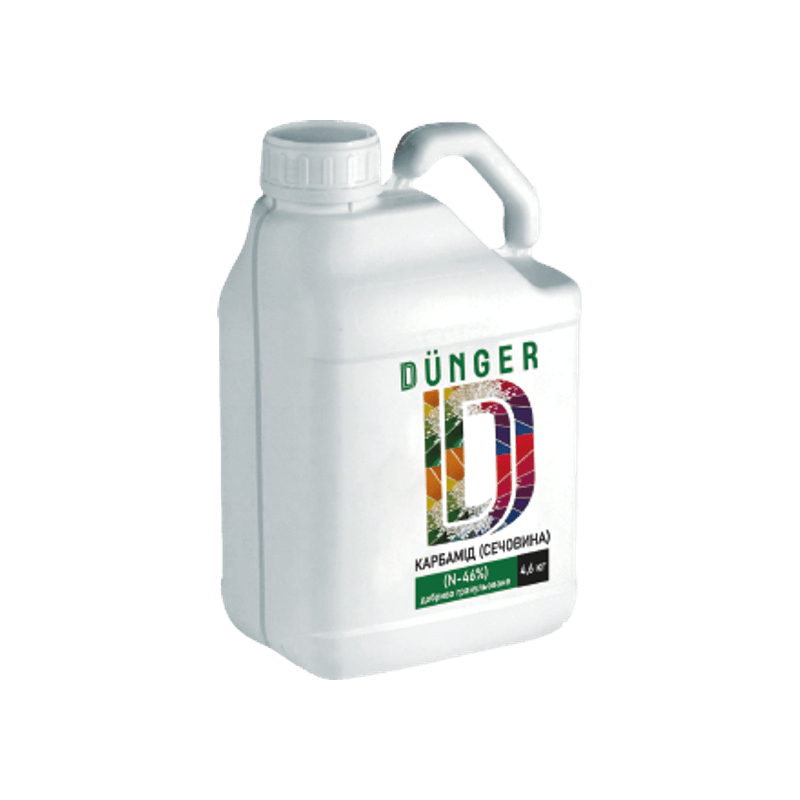
N 46%
This is a granular nitrogen fertilizer in a 4.6 kg canister. The container holds granules, not a ready-made liquid solution. Open the full instructions and select the crop and method: the product has several uses, so one concentration does not describe them all. A tree-spraying instruction is not a vegetable-watering rate.
Prepare the bed area or number of plants according to the relevant instruction. Use My Garden to organise the planting details for a purchase. Calculate packs after choosing the application method. When asking for help, provide the crop, growth stage and earlier additions so the discussion concerns your actual task.
When ordering again, compare the name and weight with your previous pack. Carbamide and urea are names for the same product here. Do not substitute another nitrogen fertilizer by an equal weight of granules: its composition and instructions can differ.
Common questions about nitrogen fertilizers
No. Plants need several nutrients, and extra nitrogen does not correct a shortage of another one. Equally, a compound is not automatically necessary every time: the soil may already contain adequate supplies. The choice between a straight nitrogen product and a compound depends on identified needs and earlier additions, not simply the number of nutrients advertised on the pack.
Only where that specific product provides instructions for the crop and method concerned. A rate for the surface of a bed is not a spray concentration. Find the relevant section and keep methods separate. If the product has several uses, decide which one you intend to perform before measuring any fertilizer or preparing water.
It means a higher nitrogen concentration, but not automatically a better match. Crop, nutrient form, application method and accurate measurement all matter. Compare products for the particular job. Pack convenience can differ between one plant and a large bed even when the composition is suitable for both. Buy enough for the justified work rather than making the work fit a large pack.


