


You can grow a rhododendron in a container, provided you choose a suitable plant and manage its roots carefully. A compact garden cultivar, an acidic potting mix and a sheltered position are a practical starting point. A pot allows you to grow this shrub where the garden soil is unsuitable, but it does not remove the need for reliable moisture, drainage and winter protection.
Before buying a flowering plant for the terrace, think beyond its first display. Who will check it during a summer holiday? Can you move the filled container to shelter before severe cold? Where will surplus rainwater go? These everyday questions help you choose a workable arrangement instead of a beautiful pot that becomes difficult to maintain.
Choose a shrub that suits the available space
A small nursery plant is not necessarily a compact cultivar. Check its eventual height and spread before deciding where it belongs. Compact hybrids are generally more manageable on a terrace than vigorous shrubs that will quickly outgrow the space. Allow room for the canopy beside walls, paths and other pots. Repeated heavy pruning should not be the main strategy for keeping an oversized cultivar in a narrow corner.
The word azalea does not establish winter hardiness. Indoor azaleas, including cultivars of Rhododendron simsii, differ from hardy garden rhododendrons. If you receive a flowering plant without its label, identify it before choosing outdoor winter storage. A garden shrub surviving nearby does not prove that a gift azalea can tolerate the same frosts.
Choose a container you can manage
The pot needs to accommodate the existing rootball with room for further growth. However, surrounding a small root system with an excessive volume of wet compost can make moisture management harder. Match the next container to the actual plant instead of buying the largest one as a permanent solution. Check stability, especially where wind can catch a broad canopy.
Drainage holes must work in the final position. A nursery pot inside a decorative outer container may stand in trapped water even though the inner pot has holes. Check the space below its base after watering and rain. Before filling a heavy container, consider how you will inspect the outlets, remove surplus water and move the shrub if necessary. A decorative cover is useful only if it allows you to manage the growing conditions inside it.
Use an acidic mix that retains its structure
Choose a potting mix intended for acid-loving plants and suitable for containers. Acidity is only part of the requirement: the roots also need moisture and air. A dense, persistently wet mixture presents a different problem from one that dries too rapidly. Ordinary garden soil does not become a suitable container mix simply because you add a handful of pine needles.
Read the compost bag for information about any fertilizer already included. This helps you avoid adding a second feed immediately after repotting without considering the first. Our guide to rhododendron soil explains how acidity, structure and irrigation water interact. In a pot, you also need to consider the restricted rooting volume and how quickly that particular rootball dries.
Do not bury the shrub deeper when repotting. Rhododendrons have shallow roots, and adding unnecessary compost around the bases of the stems does not improve establishment. After watering, check that settling has not left the plant too deep. If you mulch the surface, keep the base of the shrub clear and avoid pressing the covering into a dense layer.
Find suitable light and shelter
Many garden rhododendrons suit a bright position with dappled shade and protection from drying winds. Deep shade and a hot, exposed terrace are not equivalent to that setting. Light requirements differ among species and cultivars, so check the plant label. Advice for a sun-tolerant dwarf species should not automatically be applied to a large-leaved hybrid.
Observe the intended place at different times of day. A cool morning corner may receive prolonged afternoon sun, while a pot under a roof may receive very little rain. Make the decision together with your watering arrangements. The best viewing position for the flowers is not always the easiest place to keep the rootball evenly moist.
Water according to the rootball
Aim for consistent moisture without allowing the rootball to become completely dry or persistently saturated. Check the mix rather than watering automatically on a particular weekday. Warm, windy conditions require closer attention than cool, damp weather. Check after rainfall as well: wet leaves do not prove that sufficient water has reached the roots beneath them.
Collected rainwater is a useful choice for rhododendrons. Repeated use of hard water can alter conditions around their roots. If rainwater runs out, do not leave the plant to wilt while searching for an ideal supply, but review your longer-term water source and the condition of the mix. Avoid adding vinegar or other acidifying ingredients to every watering can according to an unmeasured household recipe.
If water is not escaping, inspect the outlets and compost structure first. Adding more water because the leaves droop can worsen a problem in an already wet pot: impaired roots can also leave a plant looking wilted. When someone else looks after the shrub, show them how to check the mix and where trapped water can collect. A simple demonstration is more useful than a fixed number of watering cans per week.
Review repotting and nutrition separately
Roots eventually fill the available space, while potting media change as their components break down. Unusual drainage, a densely packed rootball or rapid drying after otherwise adequate watering can prompt an assessment for repotting. Planned renewal can be coordinated with the start of spring growth. Do not turn that inspection into routine severe root cutting, especially if the plant is already struggling.
Consider fertilizer already present in the mix and the condition of the shrub before adding more. Yellow leaves alone do not demonstrate a need for a stronger feed; acidity, excessive moisture and root damage can produce overlapping symptoms. The guide to feeding rhododendrons according to their condition helps separate these decisions. Fertilizer cannot replace a correction to unsuitable growing conditions.
Fertilizer for further care
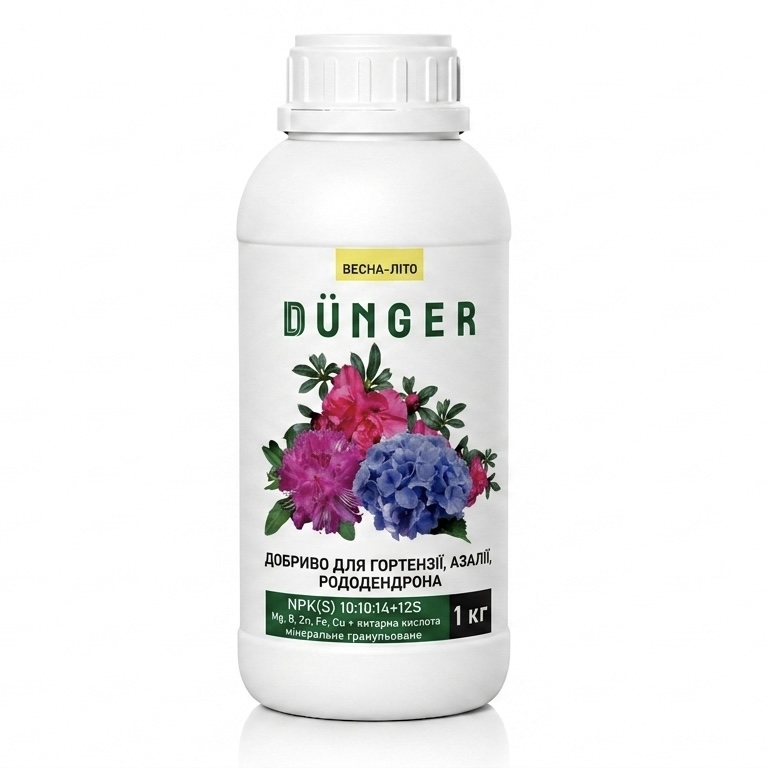
Complex fertilizer for hydrangea, rhododendron, azalea granular
The range includes this complex for the crop in 0.5, 1 and 5 kg packs. Read its full instructions and confirm application for your particular container before use. A rate expressed per shrub cannot simply be converted into grams per litre of potting mix.
The instructions state: “The soil should be moist during fertilization.”
Compare packs and composition on the hydrangea, rhododendron and azalea fertilizer page. In My Garden, you can save growing zones and plant measurements and plan products. Confirm container application against the relevant instructions before calculating a purchase.
Prepare the roots for winter in Ukraine
A shrub's hardiness in the ground does not guarantee the same outcome in a pot. Container roots are more exposed to surrounding air temperatures. Plan a position sheltered from wind, insulation around the container and a clear drainage route. Protection should not block the outlets or turn the outer pot into a water reservoir.
Wrapping alone may be insufficient during severe cold. Choose an overwintering arrangement according to the cultivar, actual exposure and available shelter. Moving a garden shrub into a warm living room is not a universal solution. The guide to protecting rhododendrons in winter considers protection of the canopy and its position as well as the wider growing conditions.
Evergreen shrubs under cover still need moisture checks in winter. During suitable thawed conditions, inspect the rootball and drainage, but avoid watering frozen compost ahead of forecast frost. After winter, brown foliage is not an automatic signal to fertilize. Assess possible winter injury, root condition and the return of growth before deciding what the plant needs next.
Frequently asked questions
A warm room does not reproduce the conditions of a garden shrub. Identify the species and cultivar first. Tender indoor azaleas and hardy outdoor rhododendrons need different winter arrangements.
Choose a size that suits the rootball and its next stage of growth. A large reserve of wet mix is not automatically helpful. Drainage, stability and access for moisture checks matter too.
Check drainage, mix condition, water quality and roots. One symptom cannot reliably separate an acidity problem from waterlogging or root injury. Avoid increasing fertilizer until the cause is understood.
That depends on the cultivar, exposure and root protection. Even a hardy shrub requires separate consideration when container-grown. Do not plan a frosty winter outdoors for an unidentified indoor azalea.


