


Repot a florist's azalea when the old pot or growing mix makes normal care difficult. If the plant is flowering, takes up water evenly and drains freely, wait until flowering finishes. Prepare a slightly wider pot with holes and an acidic mix made for azaleas. Move the root ball intact, keep the plant at its previous depth and check how the old ball and the fresh mix around it absorb water afterward.
Check whether repotting will solve the problem
A flowering azalea bought for indoor display is often a cultivar of Rhododendron simsii. Lift the inner pot out of its cover. Check for open holes and look for water at the bottom of the cover. If the issue is standing water, empty it. If the root ball has dried and pulled away from the walls, water can run straight down the sides. Start by rewetting it gradually and letting it drain. One unsuccessful watering gives too little information to tell whether the roots need more room.
If the root ball repeatedly dries soon after thorough watering, look at the roots. A healthy azalea naturally has many fine roots near the pot wall. A single root in a drainage hole does not mean the whole pot is full. Repotting is more likely to help when a dense root mass lines the entire inside, little mix remains or the plant repeatedly tips its small pot. Inspect it gently and avoid pulling a healthy root ball out repeatedly just to look.
When to wait until the flowers finish
If the plant looks healthy, takes up water and stands securely, schedule a routine move after flowering. It will then be easier to support the bush without brushing against the flowers. While it blooms, photograph the label and see whether any watering difficulty persists. Use the azalea care guide for day-to-day care. After the last flowers fade, the guide to caring for a potted azalea after flowering can help with ongoing care even when you keep the old pot.
If the inner pot has cracked, lacks drainage holes or the plant wilts in mix that stays wet, work out the cause first. Remove standing water, check drainage and examine roots you can see. Soft dark roots or spreading wilt need a closer look. A routine transfer to a larger container can leave a wet core trapped inside. Wait until you know what is happening around the roots before choosing any feed.
Choose a pot and growing mix
Compare the inside width of the new pot with the root ball, rather than the width of the foliage. Leave space for a modest layer of fresh mix around the sides. A much larger pot holds an extra volume of mix without roots, and that mix may stay wet longer. If the bush is top-heavy, a steady outer planter can help, provided you can lift the inner pot out easily to water and drain it.
Choose a mix intended for acid-loving plants grown in containers. It should hold enough moisture while letting excess water escape. Ordinary garden soil can compact in a small pot. Lime-rich ingredients are unsuitable for an acidic mix. Check what the bag is meant for and whether nutrients have already been added. The guide to soil for flower beds and pots explains how container mixes differ from soil for a flower bed.
Set up before taking the plant out
Put the new pot on a steady surface and make sure its holes are clear. Set the growing mix and saucer nearby. If the replacement turns out to be much too large when you compare it with the root ball, put the plant back in its old pot and find a better fit. That keeps the fine roots covered while you look.
Repot an azalea step by step
- Prepare the root ball. Start with a slightly moist ball you can support intact. If the center is dry, rewet it gradually and let excess water drain first.
- Release the old pot. Support the root ball, gently squeeze the walls of a flexible container and slide it away. Avoid pulling on the shoots. If a disposable plastic pot will not release, carefully cut it away with the blade clear of the roots.
- Keep the fine roots intact. Avoid shaking or washing sound mix away from the root ball. The fine roots are delicate.
- Set the depth. Add enough mix below the plant to keep the old surface at its previous level relative to the stems. Leave room below the rim for watering.
- Fill around the root ball and water. Add mix evenly around the sides and press lightly to remove large gaps. Water and allow the excess to drain.
If the fresh mix settles after watering, add a little around the edge. Keep it clear of the stem bases. Check that the pot sits level and that the saucer or outer planter does not block the holes. If the inner pot is difficult to remove, switch to a cover that gives you room to lift it. That makes it easier to empty water and gauge the pot's weight next time.
What to check after repotting
Return the plant to a cool, bright place with filtered light. A sill above a radiator can dry the edge of the mix quickly, while an open window can direct cold air onto the leaves. Check moisture next to the old root ball and in the fresh layer. They can dry at different rates. Water according to the condition of the root zone and empty the saucer afterward.
If your tap water is very hard, use suitable low-mineral water for regular watering. Check your water before adjusting care and avoid adding acid by guesswork. Give the plant time to settle after the move, and check the contents of the fresh mix before feeding. If the azalea wilts while the pot is wet, look again at the drainage and roots before adding water or fertilizer.
Keep a florist's azalea frost-free. Woody stems do not indicate that the plant can overwinter in the garden. A glazed balcony in Ukraine can be cool by day and freeze overnight, so check the temperature where the pot stands. Outdoor garden azaleas are a separate group for care purposes. Assess their species, cultivar and hardiness for your own site.
Feeding a separate established garden azalea
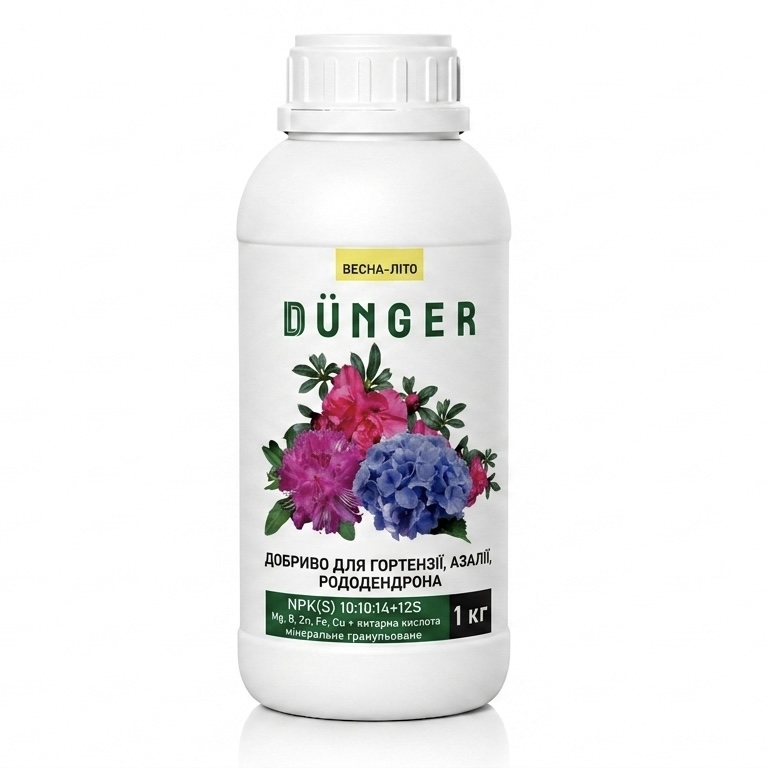
Complex fertilizer for hydrangea, rhododendron, azalea granular
If you have a confirmed garden cultivar already growing in the ground and have established a need to feed it, consider the granular compound. Check the spring and summer timing and the method for moist soil, taking the shrub's size and age into account.
Compare the 0.5, 1 and 5 kg packs according to the needs of the garden shrubs. Keep a florist's azalea in a new pot out of that calculation.
Questions about repotting a florist's azalea
Yes, if the root ball takes up water evenly, the pot drains and sits securely, and the roots still have room. Check the plant as the last flowers fade. Keep caring for it in the same pot if you see no reason to move it.
Pick a container with open holes and a slightly greater inside width. Measure the root ball if it slips out easily, or use the inside diameter of the old pot as your starting point. Make sure you can lift the new container out of its decorative cover to water and drain it.
First check the condition of the plant and whether the new mix already contains nutrients. After moving it, focus on watering the root zone evenly and draining the excess. Plan outdoor shrub granules separately for a known garden azalea established in the ground.


