


This distinction matters when you bring home a flowering pot. Small size and the name “azalea” do not mean the plant can immediately move into a border or remain outside on a balcony through winter. Keep the identification label and check the plant's intended use. Inspect the rootball, pot and leaves, then arrange care for that plant rather than for any azalea you have seen in a photograph.
Indoor and garden azaleas differ
Cultivars of Rhododendron simsii are commonly sold as flowering indoor azaleas. These are frost-tender plants grown in pots. They can remain in a collection after flowering, but need suitable conditions throughout the year. Do not infer their hardiness from the survival of a different shrub called an azalea outside a neighbouring house. The name covers plants with different requirements and growing uses.
Garden azaleas may be deciduous or evergreen and differ in size and suitability for the local climate. Before planting, check the particular cultivar's requirements and mature dimensions. Intended garden use is more useful than flower colour when deciding on winter arrangements. If the full identity is unknown, ask the supplier before transferring the plant permanently into an outdoor bed. Keep the label for later reference.
Light and cool conditions indoors
Choose a bright position for a flowering indoor azalea, away from scorching direct sunshine and prolonged hot, dry air. Avoid placing it directly in the airflow from a radiator or heater. Cool conditions must still be safe for a frost-tender plant. An open window during frost or an exposed unheated balcony does not become suitable simply because the living room is too warm.
Assess conditions through the day. Morning sun, glass heating at midday and evening central heating may affect the plant differently. Do not choose a permanent position from one brief observation. If other pots stand nearby, make sure they do not block the light completely. Leave enough access to check the growing medium and saucer without repeatedly disturbing the plant or losing sight of drainage water.
Water the rootball and allow drainage
Do not let an indoor azalea's growing medium dry out completely. Check it regularly with a finger rather than watering only on a particular weekday. When the surface becomes dry, assess the rootball and water so that moisture penetrates it and surplus can leave through the holes. Afterwards, check the saucer and ornamental outer pot. Excess water should not remain around the roots.
A decorative wrapper or solid outer pot can conceal water beneath the inner container. Remove the growing pot for watering, make sure water can escape and allow it to drain before returning it. A small pot in a warm position and a larger one in cool conditions do not automatically need the same amount of water. Use the actual state of the medium to make the decision.
Rainwater is a suitable option for acid-loving plants when available. Very hard water can affect root-zone conditions. If foliage changes colour, consider the water source alongside the medium and previous feeding. Do not add acid or other ingredients according to a household recipe without knowing their composition and a verified application method. Water quality is a reason to investigate conditions, rather than to improvise a treatment.
Growing medium and care after flowering
An indoor azalea needs a suitable ericaceous growing medium. Check intended use, ingredients and added feed on the bag. Do not replace it with unidentified soil containing alkaline additives. If acidity is uncertain, use a suitable test. The colour of the material cannot establish its pH, and an azalea photograph does not explain the properties of every ingredient in the mix.
When flowering finishes, remove dead flowers and assess whether repotting is needed. This should respond to root and medium condition rather than become an obligatory addition to every purchase. The new pot needs suitable drainage holes; avoid choosing a dramatically larger container simply for future growth. Keep the new mix's details so you can account for nutrients already supplied when considering subsequent feeding.
Longer shoots of an indoor azalea can be lightly shortened after flowering without turning the procedure into heavy cutting of old wood. Check the cultivar's requirements separately for other azalea groups. One calendar month cannot define pruning for every plant: indoor azaleas may be bought in flower at different times, while garden plants follow their own development. Base the decision on the relevant plant and stage.
Summer outdoors and return to shelter
An indoor azalea can be gradually accustomed to outdoor conditions once the risk of frost has passed where you live. Choose a cool, partly shaded position where you can keep checking moisture. Do not move it straight from the room into exposed, scorching sunshine. Consider pot heating and the actual weather rather than treating the start of a summer month as sufficient permission to move it.
Plan the return to protection before frost. Summer outside does not establish that a tender potted azalea can stay in the garden through winter. Prepare a bright, cool protected position beforehand and inspect leaves and shoots before moving it. Another flowering display is possible, but the same timing and abundance as at purchase should not be promised. Continued care involves conditions across the year.
Assessing a lack of repeat flowers
A flowering indoor azalea may have been grown under a specially managed production regime. Home conditions do not necessarily reproduce it. The absence of flowers on last year's date is not proof of a single missing nutrient. Review conditions since the previous display: whether new growth appeared, how light and temperature changed, and whether the medium dried out while buds were developing.
Drought can interfere with flower-bud formation and development. A summer trip during which the pot went unchecked can therefore matter to the next display as much as the latest feed. Do not try to compensate for missed care with several consecutive fertilizer applications. Establish the plant's condition, restore suitable surroundings and follow the selected nutrition instructions without expecting an immediate flowering response.
Care for a garden azalea
Choose a sheltered position with dappled light and acidic, moist but well-drained soil for a garden cultivar. A common guide for this group is pH 5.0-6.0, considered alongside the particular plant and soil analysis. On very alkaline ground, suitable container growing may be worth considering. Do not calculate an acidifier quantity solely from shrub size, or assume that a fertilizer automatically corrects soil acidity.
Azaleas have roots close to the surface, so avoid excessive planting depth and work carefully nearby. Suitable mulch helps manage soil conditions; do not pack it into a hard crust. Check moisture after planting and during dry spells. Winter preparation depends on cultivar, location and weather rather than the broad description “Japanese azalea”. Confirm local suitability before deciding how the plant will remain outside.
Feeding a garden azalea
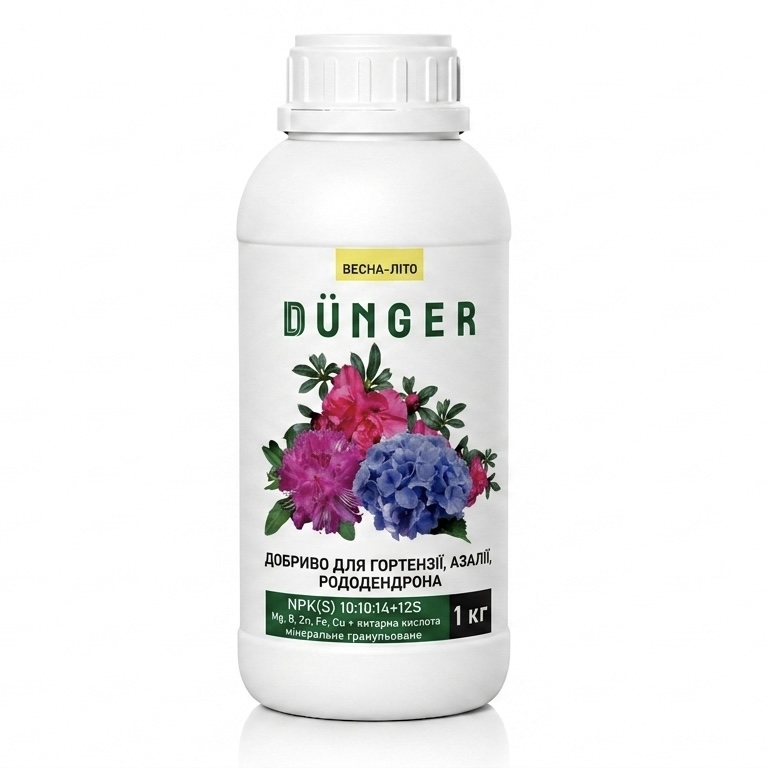
Complex fertilizer for hydrangea, rhododendron, azalea granular
This DÜNGER complex, in 0.5, 1 and 5 kg packs, explicitly includes azalea. For a garden shrub, consider soil, age, size and previous nutrition. Follow its spring and summer application period and complete instructions:
The complex is used in spring and summer, before planting shrubs, as well as for fertilization. The fertilizer is evenly distributed on the soil surface along the stem circle of the plant, departing from it by 15-20 cm or added to the hole during planting. The application rate is determined taking into account the size and age of the bush. The soil should be moist during fertilization. The first feeding is recommended immediately after waking up (after the snow melts), when the shoots appear after spring pruning; subsequent feeding at the beginning of budding.
A short check when care is not working
- Confirm the azalea group and cultivar so that indoor and garden care are not confused.
- Check rootball moisture, drainage holes and water inside the outer pot.
- Assess light, overheating and frost risk.
- Review the medium, water source and earlier feeding.
- Prepare photographs and plant details for a focused consultation.
Notice which leaves are falling. Seasonal leaf loss fits the growth type of a deciduous garden azalea; evergreen plants also replace a proportion of older leaves. Heavy shedding after drought or in a wet rootball still needs investigation. Photograph the whole shrub, a branch and the medium surface to show the distribution of the problem rather than presenting only one detached leaf.
A simple care record can include cultivar, location, purchase or planting date, repotting and recent applications. Add when changes began and what happened with watering. This helps compare plants under similar conditions and ask specific questions. Distinguish products actually used from those simply kept at home; a list of unused supplies is not the plant's care history.
Azalea care questions
Establish the cultivar and hardiness first. Indoor Rhododendron simsii azaleas are frost tender. Summer outside and permanent outdoor planting are different decisions requiring different checks.
Demand changes with temperature, light, pot and plant condition. Check the medium, allow drainage and avoid both complete drying and water left continually around the roots. A calendar cannot describe all these conditions.
Investigate the cause first. Drying, waterlogging and unsuitable conditions can produce similar signs. Choose feeding according to the plant's condition and specific instructions, rather than using leaf fall alone as the reason.

