


Sow mustard as green manure when the previous crop has left the bed, the soil can be worked, moisture is available for germination and there is enough growing time before the next crop or severe cold. An autumn sowing label alone does not establish those conditions. Seed in dry soil may wait for rain, while late seedlings may produce very little cover. Decide where mustard fits in the rotation and how you will end its growth before buying seed.
Identify the mustard you are buying
White or yellow mustard, Sinapis alba, is commonly used for this purpose. Mustard is a name shared by different species, so check the botanical identity on the seed pack. Do not transfer the characteristics of white mustard automatically to brown mustard, black mustard or an unidentified mixture. Choose seed intended for sowing rather than a culinary mixture that may contain other ingredients.
A cover crop occupies otherwise bare ground, takes up available nutrients and returns plant material to the soil cycle. Mustard is not a legume and does not fix atmospheric nitrogen through the partnership associated with legumes and their bacteria. It uses nutrients already accessible to its roots. A thick green canopy therefore does not prove that the bed has received a new supply of nitrogen from the air.
Plan the crop before and the crop after
Mustard belongs to the cabbage family. Cabbage, broccoli, radish, turnip and oilseed rape are related crops. Do not insert mustard between them simply because the cover will occupy the bed briefly: a short interval does not remove shared disease risks. Give this decision particular attention where previous cabbage crops have had root problems.
Write down a simple sequence before purchasing: the harvested crop, the proposed cover and the following vegetable. Include volunteer radishes and other cabbage relatives growing around the edges. If the sequence is unsuitable, choose a cover from another family. Increasing seed density or adding more fertilizer cannot change the relationship between those plants or provide the rotation break you intended.
Choose a suitable window in Ukrainian conditions
A bed cleared after an early vegetable harvest usually offers more opportunity than one occupied until late autumn. However, dry surface soil can be the main obstacle in a southern garden, while a northern site, cool hollow or foothill garden may have less growing time left. Assess actual moisture, workable soil, the forecast and the characteristics of your seed. There is no single reliable sowing day for every Ukrainian region.
A spring cover also requires a genuine gap. If the main crop needs the bed soon, mustard can occupy time needed for that crop and create extra residue management. Do not sow automatically into frozen or saturated ground in autumn. Where normal establishment and growth are no longer realistic, plan a suitable cover for the next usable window rather than assuming that sowing alone provides the benefits of a developed canopy.
Prepare an even seedbed
Remove previous crop material that prevents even sowing and deal with perennial weeds first. Mustard does not replace their removal. Level the surface, break large clods and provide contact between seed and soil. Working wet ground merely to meet a chosen date can leave clods and compacted areas that make the next operation harder.
Use the seed supplier's recommendation for the actual species, cultivar and sowing method. A drilled rate and a broadcast rate are not interchangeable. Measure the bed without paths, divide the seed into manageable portions and distribute it systematically. On a small plot, this helps avoid a dense strip at one edge and a largely empty strip at the other. Do not guess coverage from the apparent size of the bag.
Manage moisture during establishment
Check moisture where the seed lies rather than judging only the surface colour. Dry weather may require watering for establishment; prolonged rain makes drainage more important. Deliver water gently enough to avoid moving small seed into hollows. Repeatedly watering an already saturated bed will not solve a germination problem caused by poor drainage.
After emergence, look for uniformity. A bare patch may reflect drying, a surface crust, uneven seed placement or standing water. It is not automatically a nutrient deficiency. Before sowing again, identify the likely cause and check whether enough suitable growing time remains. Otherwise, the second sowing can encounter exactly the same obstacle, while the next crop loses more of its planned window.
Inspect the developing cover
A well established canopy shades the soil and suppresses some weeds, but does not guarantee a clean bed. Remove plants that could shed unwanted seed and inspect the margins. Where mustard is uneven, compare moisture and soil condition between strong and weak patches before assuming that another fertilizer application is required. Uneven roots and uneven water access deserve attention first.
Do not expect guaranteed control of wireworms, nematodes or all soil diseases. Responses to cabbage family cover crops depend on the organism, plant species and management conditions. Visible damage requires a separate assessment of its cause. Do not add homemade disinfectants or pesticide mixtures in pursuit of a promised soil cleansing effect. Cover cropping remains one part of managing a bed, with its own practical limits.
End growth before unwanted seed develops
Plan cutting while the plants remain manageable and before mature seed is present. In a vegetable garden, watching the approach of flowering is more useful than waiting for the tallest possible plants. Include time to prepare the seedbed for the next crop. A little more green material may offer little practical value if it delays the vegetable you actually want to harvest.
Chop and distribute residues evenly. Do not pile the entire crop into a thick ridge where a row of small seed will soon be placed. After mechanical termination, check for surviving plants and regrowth. White mustard is sensitive to freezing, but identical winter kill cannot be assumed in every Ukrainian garden, sheltered corner or winter. Verify what happened rather than relying on a calendar description.
Assess readiness for the following crop
Freshly cut mustard and a finished vegetable seedbed are different conditions. Allow decomposition to begin and assess residue distribution, soil condition and whether the next crop can be sown evenly. Avoid prescribing a universal waiting interval: cold wet ground behaves differently from warm, loose soil. Small vegetable seed should not be placed straight into a dense layer of freshly killed green material.
Assess the next crop's nutrition against previous applications and the condition of the plot. Start with soil assessment before fertilizing. The guide to nitrogen fertilizers helps distinguish recycling nutrients in residues from adding nitrogen in a product. Avoid stacking complete feeding programmes without accounting for what is already present.
Fertilizer for soil preparation where needed
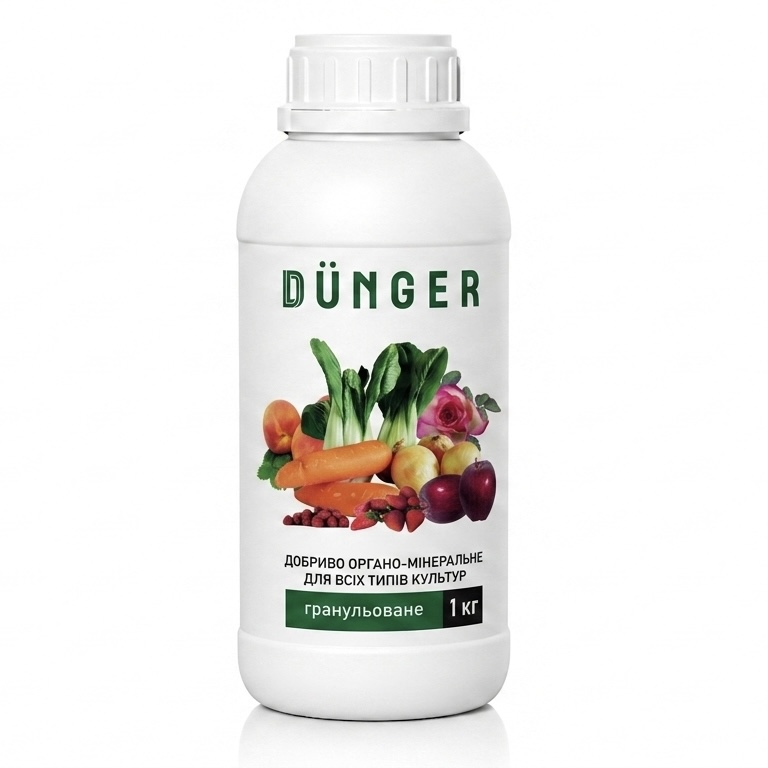
Organo-mineral fertilizer for all types of crops granular
For a main application during soil preparation, consider this organo-mineral product intended for all types of crops. The complete method and general group rate below are not a separate mustard feeding programme. Assess need against soil conditions and previous inputs.
The fertilizer is used for the main application for plowing, digging in autumn or spring, as well as for fertilizing plants in the spring-summer period of active vegetation, the fertilizer is also used for laying greenhouse and seedling soils and soil mixtures. Apply the scattering on the site or in the root zone on loose, moist soil, as well as in planting holes when planting plants and seeds. Application rates are calculated depending on the species, characteristics, size and age of plants. Feeding is recommended 2-3 times a season.
All kinds of cultures: 100-200 g/m²
Available pack sizes are 1 and 5 kg. Select the required mass and check the variant. Do not turn the spring-summer feeding recommendation into additional autumn applications.
Prepare your purchase information
For seed, establish the species, area and intended sowing method. For fertilizer, identify the purpose of application and the area separately. In My Garden, plan the zone, crop, measurements and product. The cover crop area may differ from the area eventually planted with vegetables, so check the measurements before using the same figure for every purchase. Confirm the selected pack and current ordering details on the product page.
Frequently asked questions
Choose a cover from another plant family instead. Mustard and cabbage are related, so this sequence does not provide a break between cabbage family crops. Include radish, turnip and oilseed rape when planning that rotation.
This depends on species, stage and the next crop. White mustard may be killed by freezing, but inspect the actual plants. Prevent seed maturation and do not assume that every type of mustard is reliably winter hardy.
No. It returns plant residues and some nutrients already taken up, but does not create a complete predictable supply for every following harvest. Base fertilizer decisions on the crop, soil and previous inputs.
The options are 1 and 5 kg. Compare the mass required for the applicable use and measured area, then check the selected variant. A pack size is not an application rate for one bed.


