


Successful rose growing starts with a suitable site and the right type of plant. Sunlight, soil that drains, space for the mature bush and access to water matter before the shopping list grows. Choose the rose, prepare the planting place and plan its care in that order. A climber for an arch, a compact container rose and a large shrub need different arrangements from the outset.
Picture the rose on an ordinary day, not only in full flower. How will you reach it with a watering can, pass it when its stems spread, or check its support? A considered position makes routine care easier. Planting in whichever gap remains can leave you trying to rearrange paths, irrigation and neighbouring plants around an unsuitable choice.
Choose a rose group for the job
An arch or wall calls for a rose suited to training on a support. At the front of a border, mature height and spread matter more than the size of the young plant. For a pot, consider suitable compact groups. Ask for the cultivar name, growth habit and expected dimensions so the position does not need correcting a few seasons later.
Find out how it flowers as well. Some roses produce a main seasonal display; others repeat flower. This affects expectations and subsequent pruning. If you want flowers in a particular part of the garden or during a particular period, use the cultivar description. Flower colour does not determine plant size, support requirements or pruning method.
Check sunlight and space before planting
Roses generally perform best in a sunny position. Observe the site at different times, especially beside a building, fence or tree. A bright patch in the morning may spend much of the remaining day in shade. Consider the future canopy of neighbouring plants too, even if they currently look small enough to leave plenty of room.
Use spacing appropriate to the cultivar's growth. A small nursery pot does not reveal the mature width. Mark positions before digging a row, and check that a usable route remains between the planting and nearby features. For a supported rose, plan the fixing points before stems occupy the space.
Assess soil and drainage
A rose needs soil that lets excess water escape while retaining useful moisture. Inspect the position after rain: does water remain, or run into it from a roof or path? Fertilizer cannot correct that problem. First decide whether the root environment itself is suitable and whether the proposed planting position needs changing.
If the site's history is unknown, observations and testing can help. Do not add lime, ash or generous fertilizer simply because roses are described as demanding plants. Establish what this particular soil needs. The guide to assessing soil before choosing fertilizer explains that starting point in more detail.
Bare-root or container-grown?
Bare-root roses are supplied while dormant, and their roots must be protected from drying. Check the plant when it arrives. If the ground is not suitable for planting, arrange temporary protection according to the nursery's guidance. Leaving an unchecked package in a warm place until a convenient weekend is not a useful storage plan.
Container-grown plants offer a wider planting window, but a pot does not remove weather constraints. Avoid frozen or waterlogged ground and drought conditions without appropriate aftercare. Ask whether the rose has grown in its container or was recently potted for sale. Retain the cultivar label and the supplier's planting guidance.
Plant carefully, without rushing the roots
Prepare a hole that allows the roots to fit without forcing them. Check the plant from several sides before final backfilling. Identify the graft union when present, and distinguish a grafted rose from an own-root plant. Set depth using the plant type and nursery guidance for your conditions, rather than an arbitrary mark left by packaging.
Arrange the roots gently and backfill with the prepared soil. Water after planting and check the position once the soil settles. A required support should steady the plant without squeezing its stem. For a standard rose, a stable stake is a planned part of planting, not an improvised addition after the crown starts moving in the wind.
Water according to the root environment
A newly planted rose needs particular attention during dry weather. Do not decide to water solely because a week has passed. Consider moisture, weather and plant condition. A container and a garden bed behave differently, so one identical can of water for every rose is not a general rule.
Direct water to the soil around the roots and check that it reaches the intended area rather than running past it. Access can be awkward beside walls or among established planting. Improve the arrangement instead of repeatedly compensating for hurried watering with an unnecessarily large volume.
Mulch, supports and regular inspection
Mulch helps conserve moisture and cover the soil surface. Keep it clear of stems rather than piling it against the base. Look beneath it during routine checks, as well as inspecting foliage and buds. Record additions of organic mulching materials alongside other soil inputs when reviewing the planting's nutrition.
Inspect ties as stems grow. They should not cut into the plant or cause rubbing against the support. A climber needs room for its developing stems; a standard rose needs a stable supporting structure. Replace a damaged fixing before strong wind makes the loss of support an urgent problem.
Pruning depends on the rose group
Do not cut every rose to the same height. Shrubs, climbers and other groups differ in growth and flowering. Identify the group, inspect dead or damaged parts and then choose an appropriate pruning method. If the label is lost, establish the identity before making major cuts based on a neighbouring plant.
Keep a photograph of the whole bush before pruning, showing the base and main stems. It is more useful for discussing structure than a close-up of one flower. The cultivar record will also help next spring. Pruning should not be expected to solve persistent shade or a planting position that never suited the mature rose.
Fit nutrition into the wider care plan
When additional feeding is needed, DÜNGER granular rose fertilizer is one applicable option. Its instructions include a separate rose-bush rate. Consider the plant's age, size and previous applications before using it. The 0.5 and 1 kg packs contain granules, even though the container resembles a bottle associated with liquid products.
Fertilizer does not replace sunlight, suitable watering or an investigation of leaf spotting. The guide to choosing fertilizer for your roses discusses product selection. Here, establish the basic care first and make feeding a specific response to an identified requirement.
Fertilizer for a confirmed feeding need
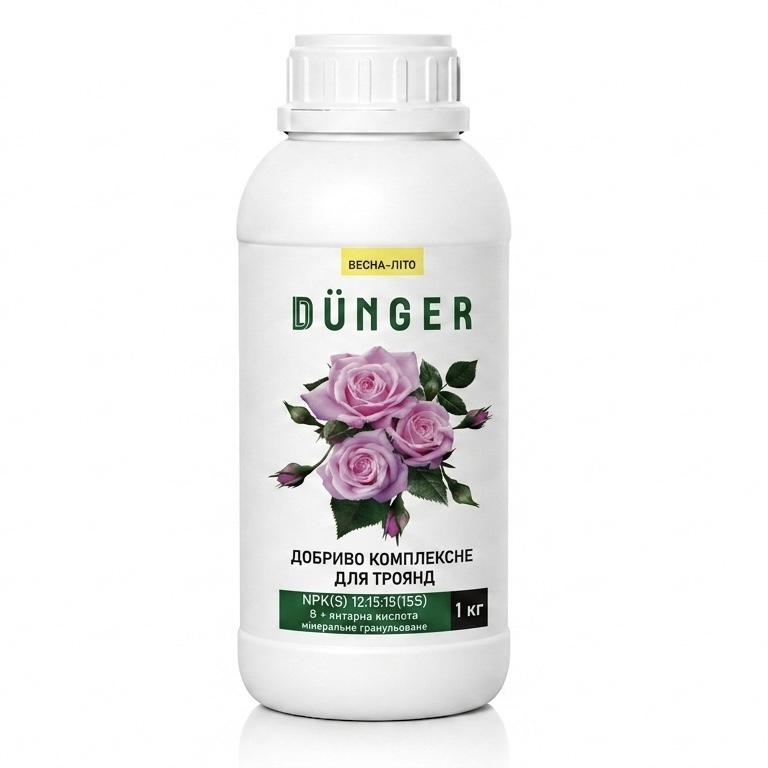
Complex fertilizer for roses granular
Choose a pack for your plants’ requirements. Match the complete instructions, application method and relevant plant group before calculating the purchase.
Roses: 20-40 g under the bush
Save your plantings in My Garden and prepare your calculation.
Frequently asked questions
Yes, suitable compact groups can be grown in containers. Check mature size, the suitability of the pot and drainage. Container care requires its own attention to moisture. Do not automatically transfer a routine intended for a large established bush in a garden border.
Consider soil preparation, plant condition and the particular product instructions. A large amount will not correct badly positioned roots or insufficient water. Keep a record of materials added during preparation so they are not repeated without a reason when someone else takes over the care.
Consider the whole plant, its age, group and growing conditions as well as the flower. Retain the name and photographs when checking cultivar identity. Increasing the fertilizer rate is not a way to obtain a different flower colour or shape.


