


Removing faded flowers in summer and clearing dead stems in autumn are different jobs. Do not schedule both for the day the last petal falls. Ukraine also has no single date that describes every peony's condition. Location, weather and plant type affect the end of the growing season, so the plant itself must be checked alongside the calendar.
After flowering, keep healthy foliage
Once a flower fades, remove it with secateurs without cutting away all the green top growth. This improves appearance and prevents seed production where seed is not wanted. Developing seed uses some plant resources. Ordinary deadheading therefore has a purpose of its own and does not require the same extent of removal as autumn clearance. Look at what is actually being removed.
Healthy leaves continue working after flowering finishes. Cutting herbaceous peonies down too early can reduce flowering the following season. Do not remove green foliage simply because summer flowers are being planted nearby or you want the whole border at one height. Arrange the planting so that the peony can finish its cycle without being prematurely cut down as part of the annual display.
Distinguish a spent bloom from the healthy leaves and shoot beneath it. Inspect the whole plant before cutting instead of removing whichever stems are easiest to reach. If neighbouring perennials have different summer pruning requirements, do not transfer their treatment to the peony. Sharing a flower bed does not mean that every plant should be cut on the same date.
Herbaceous, tree and intersectional peonies
Herbaceous peonies
Herbaceous peony stems die down for winter, with new shoots emerging from the base in spring. For this group, clearing dead leaves and stems near ground level in autumn is routine care. Keep the base visible and avoid damaging renewal buds during the work. Use a controlled cut rather than forcibly pulling stems from the crown or working through material you cannot see.
Tree peonies
Tree peonies retain perennial woody shoots. Autumn leaf fall does not mean that the entire framework has died and should be removed to soil level. These shrubs generally need little pruning. Assess dead shoots separately in late winter, cutting back to a healthy bud where needed. Shaping an older plant is a separate task and should not be confused with annual herbaceous clearance.
Itoh hybrids
Itoh, or intersectional, peonies result from crosses between herbaceous and tree groups. Strong stems alone should not lead you to treat them as tree peony shrubs. Remove dead top growth at the end of the season while accounting for bud position and the particular cultivar's guidance. Where identity is unknown, establish it and inspect the base before deciding where to cut.
Autumn timing follows foliage and weather
Wait for the top growth of a healthy herbaceous peony to die naturally before full cutback. The foliage loses its green appearance, turns brown and dies; a freeze often completes the process. This is more useful than treating one particular weekend as compulsory. In a warmer autumn, one bed may stay green longer than another and should be assessed separately.
Do not transfer another region's calendar without checking the plants. In northern, central and southern Ukraine, actual condition remains the important guide. The start of October alone does not require the removal of healthy green foliage. Conversely, if top growth has already died, keeping it merely until a date in someone else's advice does not provide an additional benefit.
A few stems broken by a storm or another injury do not mean the entire plant is ready for autumn cutback. Inspect what remains healthy and what has actually been lost. Support stems that bend under the weight of their flowers instead of cutting them all away. Cutting and staking address different problems.
Compare several stems before starting. Gradual seasonal dieback throughout the foliage and sudden wilting of a single shoot within an otherwise green plant need different assessment. For a consultation, photograph the affected part before removal, the whole plant and the soil surface. This helps explain where the problem began. Do not decide that a plant is ready for winter dormancy from one brown leaf, especially while neighbouring stems remain green and firm. An inspection should establish the extent of the work before the pruners remove useful evidence.
Organise autumn cutback carefully
Identify every plant's group first, particularly where you inherited the garden. Mark tree peonies separately to prevent a neighbouring herbaceous routine being used accidentally. Prepare a tool and a container for the material. Clear access around the base so that you can see the cutting position instead of working by feel through other plants or a pile of old leaves.
- Confirm the peony group and that the material is dead.
- Inspect the base and bud positions.
- Cut dead herbaceous stems near ground level without damaging the crown.
- Collect fallen leaves and stems from the bed.
- Mark the plant's position and record problems for spring inspection.
Do not impose one cutting height on every plant out of habit. Preserve the living structures of the particular peony. Where buds or uncertain parts remain at the base of an Itoh hybrid or tree peony, check pruning guidance for that cultivar. Accidental removal of living basal parts cannot be corrected by feeding afterwards. Inspection is most useful before the cut is made.
Clear debris and check the bed
Removing dead peony top growth reduces the risk of fungal infection persisting on debris. Collect material particularly carefully from plants that had blotches or wilt. Do not reuse their affected leaves as protection over the same peony. Sanitation nevertheless cannot guarantee that no disease will appear in the following season. It is one part of care and observation.
Check whether water stands around the plant after rain. Peonies need well-drained soil. Cutting back cannot remove a drainage problem, and a tidy surface does not establish that roots are healthy. If problems recur, record the position, weather and type of injury before choosing another action. Consider the whole bed rather than treating every damaged leaf as an isolated event.
Avoid burying the centre of an herbaceous peony under a thick mass of material during cleanup. Excessive depth over the buds can affect flowering, so maintaining the planting level matters after autumn clearance too. If mulching is planned, account for the crown and buds. A protective treatment used for another crop should not automatically be transferred to the peony.
Cutback, division and transplanting are different jobs
Clearing herbaceous stems in autumn does not mean that the plant needs annual lifting and division. Peonies can remain in a suitable position for many years. If relocation or propagation is needed, make a separate plan. Prepare the new site before digging rather than deciding on a move merely because the secateurs are already in your hand.
When assessing poor flowering, review sunlight, planting depth, age and previous care. Cutting at the wrong time is only one possible factor. Photographs of the leafy plant in summer and its base in autumn are more informative for advice than simply saying there were no flowers. Keep cultivar records separately when their sites and treatment differed during the season.
Plan peony nutrition separately
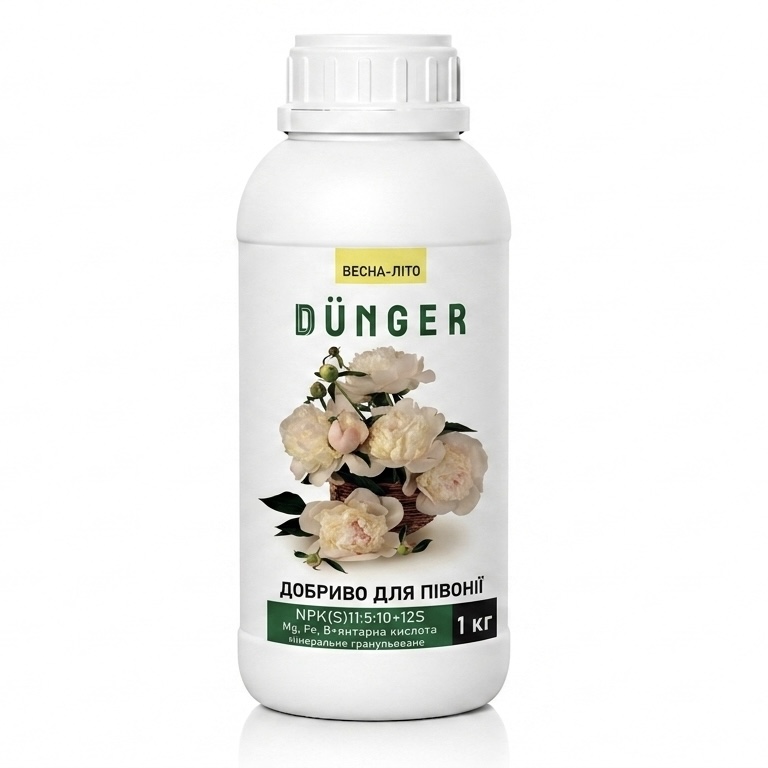
Complex fertilizer for peonies, granules
This DÜNGER granular product, in 0.5 and 1 kg packs, is an option for peony nutrition. Autumn cutback does not extend its spring and summer feeding instructions into autumn. Consider soil, plant age and previous nutrients, then follow the complete application method:
In early spring, as well as before flowering, fertilize at a rate of 20 g/m2. Also fertilize during the flowering period of the bushes - in summer 20 g/m2. Apply the fertilizer in a scattering around the circumference of the bush, avoiding contact with leaves and flowers. The application rate can be increased depending on the size of the bush.
The quoted method belongs to this product. Do not transfer its rate to a liquid fertilizer or another composition. Compare fertilizers for peonies and choose a method that fits the actual care plan.
If green foliage was already cut too early
Do not compensate with a double fertilizer dose or further cutting of the crown. Retain any remaining healthy leaves and provide appropriate care. Record when and how much was removed so that this can be considered when assessing the following season. A lack of rapid replacement foliage is not, on its own, a reason to add more products.
Common questions
For a healthy herbaceous peony, deadhead after flowering and retain the leaves. Full removal of dead top growth belongs in autumn, guided by plant condition rather than the final flower date.
No. Their perennial woody framework remains. Dead or problem parts need separate assessment. Applying the herbaceous routine to the entire shrub would remove structures that should be retained.
The cut itself does not establish nutrient need. Follow the particular product's season and method, considering soil and previous applications before selecting further feeding.


