


Established herbaceous peonies are generally moved and divided in autumn. Choose the opportunity according to seasonal growth, workable soil and local weather, rather than a month alone. Prepare the new position first, lift the plant carefully, inspect its roots and decide whether division is needed. A healthy peony flowering well with adequate space does not require moving simply because it is old.
This procedure mainly concerns herbaceous peonies. Tree peonies with permanent woody stems and intersectional hybrids require separate identification. Do not begin by cutting everything down if you do not know the group. The guide to when to cut back peonies explains why handling stems correctly is a different decision from moving a root system.
Decide what moving will actually improve
A change in growing conditions provides a clear reason to move a peony. A neighbouring tree may now shade the border, alterations may direct water towards the roots, or a planned path may cross the plant. Division can also provide more plants from a healthy named cultivar. A large clump alone does not prove that it has exhausted its position.
If poor flowering is the only concern, review the previous season before digging. Check sunlight, bud depth, leaf condition and recent work around the plant. Moving should solve an identifiable problem rather than reproduce it in another hole. Write down the intended improvement: more sun, better drainage or enough room between mature plants, for example.
When construction makes a move unavoidable, ideal timing may not be available. The immediate task is then to preserve the plant and its roots as well as circumstances allow. Prepare its destination beforehand, and do not combine emergency relocation with unnecessary division into many small pieces. Expectations for the next flowering season should remain cautious rather than becoming another reason to intervene.
Prepare before lifting the clump
Autumn division of herbaceous peonies belongs with the end of their seasonal growth. In Ukraine, the practical timing depends on local conditions and whether the ground can be worked. Do not turn a date used in another region into a rule for every garden. Frozen soil or ground that sticks together as a saturated mass calls for reconsidering the working day.
Have a spade or fork, a clean sharp dividing tool, cultivar labels and a place to inspect the roots. Decide where each resulting plant will go. Several similar peonies lifted together are easy to confuse, especially when flowers are absent. Attach the identity before moving the roots, rather than attempting to reconstruct the names from memory after everything is mixed together.
Moving one plant does not mean rebuilding the whole border. Sketch its proposed position and check it on the ground. Leave access for watering, supports and inspection. Established neighbours may occupy much more space in summer than they appear to need after autumn cutting back. Plan around the full border, rather than the apparently empty soil visible on the day of planting.
Choose a position for roots and mature growth
Herbaceous peonies flower best in sun and soil that does not remain waterlogged. Inspect the area after rain and consider runoff from roofs and paths. A small hole filled with loose growing material does not remove a wider drainage problem. Assess the planting area as a whole and where excess water can go, rather than judging only its surface.
Understand the existing ground before planting. The article on assessing garden soil helps separate physical structure, moisture and nutrition. Do not fill the hole with fertilizer because an established plant is being moved. Preparing a suitable root environment and supplying extra nutrients are different tasks, and any organic materials already added belong in the record.
Establish the finished ground level before positioning the roots. If the border will later be raised or covered with more soil, today's planting depth will change. A straight piece of wood across the planting position provides a simple reference. This avoids carefully placing the plant and subsequently burying it beneath an additional layer added during unrelated landscaping work.
Lift and divide with the roots in view
Work around the clump and gradually bring the tool underneath it. Do not pull it out by the remaining stems. Retain as much root as possible, then gently remove enough soil to see the growth buds and connections. Washing off obscuring soil can help with inspection. The important point is to see the structure clearly before deciding where to cut.
Division is optional when the purpose is relocation. Consider moving a whole healthy clump if you do not need extra plants. When dividing, choose sections with living growth buds and their own roots. Do not create numerous fragments merely to increase the count. A small piece with inadequate roots is not equivalent to a well-formed division just because one bud is visible.
Inspect tissues before replanting. Damaged, rotting or suspicious material should not be distributed around the garden without assessment. Photograph unfamiliar damage and seek identification before sharing the plant. Fertilizer does not disinfect roots or treat rot. For healthy material, use a clean, sharp tool that allows a controlled cut rather than tearing the clump apart.
Planting depth and the first period of care
Excessively deep growth buds can prevent herbaceous peonies from flowering well. Keep their position close to the surface in accordance with the group and planting material. Do not transfer grafted tree-peony planting rules to a herbaceous division. Check the position again after filling, particularly where loose soil settles noticeably, so the reference level remains meaningful.
Water after planting to settle soil around the roots, then monitor moisture. Rainfall and site conditions determine the next watering, so one fixed timetable will not suit every border. Already wet ground will not benefit from another calendar-based watering. During later checks, look at the planting area as well as the plant rather than responding to foliage alone.
Do not judge success solely by flowers in the following spring. A moved peony may take time to regain its previous flowering performance. Observe shoot emergence, leaf development and whether the plant remains stable in the soil. Avoid lifting it again simply to inspect hidden roots without a specific reason: that repeats the disturbance from which it is recovering.
Where fertilizer belongs in this plan
An autumn move does not automatically call for a spring-and-summer fertilizer in the planting hole. DÜNGER offers a granular peony product for later care, but its use belongs to the appropriate period and soil conditions. Read all its directions, including the note about young plants in rich soil, before adding feeding to the plan.
Fertilizer for your planned care
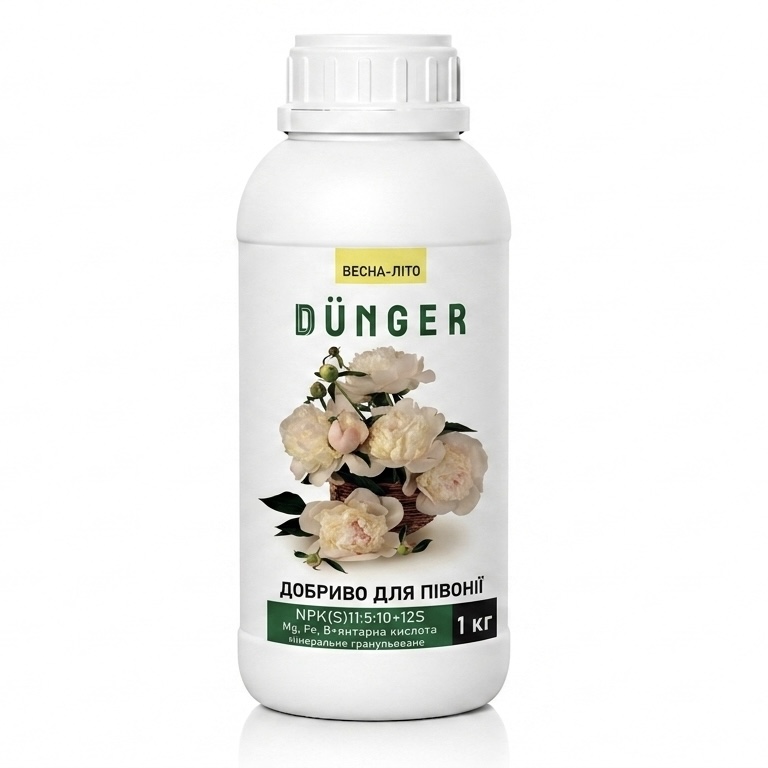
Complex fertilizer for peonies, granules
For later spring and summer care, read the peony product directions and compare 0.5 and 1 kg packs. Planning a purchase does not mean a newly moved plant needs an immediate fertilizer application.
Add your plants to My Garden and prepare your purchase calculation.
For a future purchase, record the area you expect to feed and what was added while preparing the new position. This product's 0.5 and 1 kg packs can then be compared with the calculated mass. Do not apply fertilizer just to empty a partly used pack. Further related care information is available in the flowers and ornamentals section.
Frequently asked questions
There is no compulsory interval for every plant. Healthy peonies can remain undisturbed for many years. Base the decision on site conditions, propagation needs or a particular problem that moving can address. Age alone does not explain whether the current position is suitable.
For a planned move, wait for a suitable season. If work on the site makes waiting impossible, prepare the destination first and preserve the roots as carefully as possible. Avoid adding unnecessary small-scale division to an already unavoidable relocation.
Consider time since the move, planting depth, sunlight and plant condition. Lack of flowers is not proof of a fertilizer deficiency. Do not automatically increase feeding; identify which limitation matters and whether the plant needs further intervention or simply time to establish.


