


Garden azaleas generally flower in spring or early summer, but their exact timing depends on species, cultivar, weather and position. Identify the plant and look at its buds before choosing a date. A neighbouring shrub flowering first does not prove that yours needs fertilizer. Compare cultivar, exposure and surviving flower buds before changing care. This guide concerns azaleas grown outdoors, rather than a florist plant prepared to flower indoors.
Start with the identity of your azalea
Azaleas belong to the genus Rhododendron. Some lose their leaves and others are evergreen; flowering season and cold tolerance vary within these groups. A cultivar label is more useful than flower colour alone. Before buying, ask whether the plant suits outdoor conditions in your part of Ukraine, what its eventual size will be and what winter conditions it tolerates. A flowering specimen displayed in a warm shop does not demonstrate that it can spend winter in your garden.
Keep the name, purchase information and a photograph together. If an unidentified azalea came with the property, observe its flowers and foliage before comparing it with another shrub. Two pink azaleas may have different seasonal habits. A florist display can also reflect controlled growing conditions rather than the natural outdoor season. Its sales date should therefore not become the expected flowering date for a shrub that has spent the whole winter outside.
Why there is no single flowering date for Ukraine
Judge the season from the actual winter and spring experienced by your plant. A sheltered garden, an exposed slope and a cold hollow can give different conditions even within the same district. Buildings, shade and wind change the site further. The practical comparison is between plants of the same cultivar in similar conditions. A slow spring does not call for a stronger feed simply because photographs from a warmer place already show open flowers.
When planning a display, choose an intended succession of earlier and later cultivars using their descriptions. Check their hardiness and mature spread as carefully as their colour. Treat the sequence as a planning aid rather than a promise that every plant will open on schedule. If the cultivar is unknown, take photographs of the whole shrub, leaves and flowers for identification. Guessing its identity from the week it flowered can confuse an unusual season with a different plant.
Flower buds connect two growing seasons
Many spring-flowering azaleas make the following year's flower buds during the preceding summer. Their spring performance therefore reflects more than the care given immediately before bloom. Clipping shoot ends late in the season can remove future flowers while leaving a tidy, green shrub. Before taking out the shears, remember when the plant last flowered and when it was cut. An azalea does not need a routine hedge-style haircut to produce a useful garden display.
If shape correction is necessary, assess it soon after the relevant cultivar finishes flowering. Give each cut a purpose, such as removing dead or damaged growth or addressing an awkward branch. Avoid shortening every stem equally just to make the outline symmetrical. With an inherited shrub, observing one season is often more informative than an immediate makeover. The existing azalea care guide covers the wider growing conditions; here the priority is preserving suitable shoots and their future buds.
Separate a delayed display from lost buds
Inspect several areas of the shrub. Are buds present and developing, or have they dried out? Is there healthy new growth elsewhere? Did this same plant flower last year? A healthy shrub with developing buds may simply need time. Widespread wilting, damaged tips and failed buds require a broader assessment. Check the root environment before buying a product to solve the absence of flowers. Feeding supplies nutrients; it does not reveal why a particular bud failed.
Review the previous summer's conditions
Flower bud formation needs light, so permanent deep shade differs from bright, filtered light. Meanwhile, an exposed position beside paving may become hot and dry. Consider the conditions when the next season's buds were developing. Nearby trees may have grown enough to change the site since planting. Watch light and moisture through the day before deciding that the shrub needs moving. Match the actual exposure to the requirements of its cultivar rather than applying one rule to every azalea.
Azaleas have shallow roots and need moisture with good drainage. Move a little mulch aside to check the soil instead of judging only from the dry top of the bark. After rain, check that water drains away. In a drier Ukrainian garden, reliable access to watering matters; in a heavy, wet site, drainage may be the more pressing issue. Do not give every shrub a fixed number of litres regardless of size, soil or recent weather. Check the root zone and respond to what you find.
Soil reaction also matters, but measure it before trying to alter it. Yellowing leaves alone cannot identify a particular nutrient shortage: root problems, waterlogging and excessive feeding can produce similar concerns. Avoid improvised household mixtures intended to acidify soil. The guide to assessing soil before fertilizing provides a useful starting point. Improving the growing environment and supplying nutrients are separate decisions, even when both need attention on the same plant.
Feeding azaleas in the appropriate season
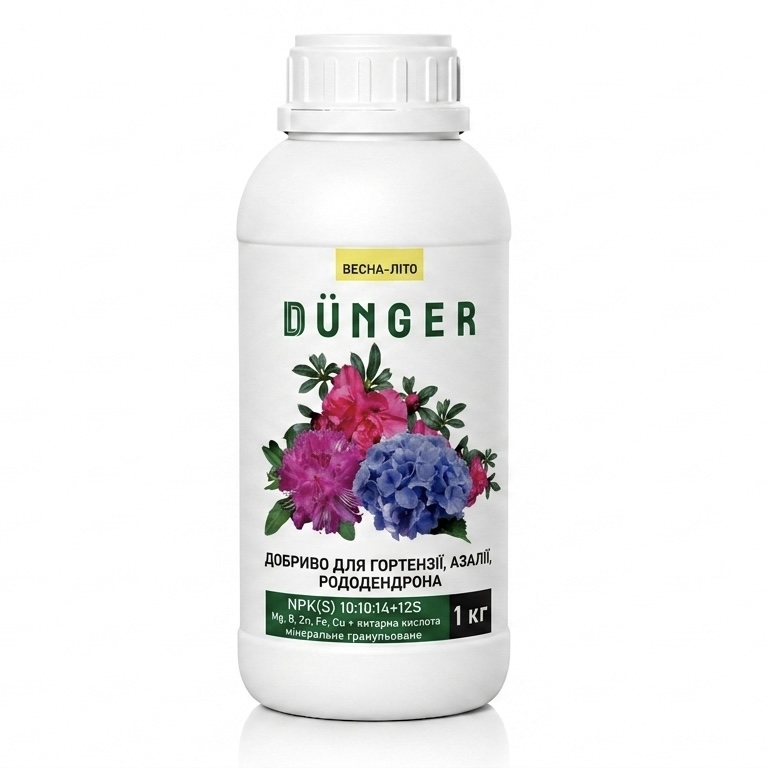
Complex fertilizer for hydrangea, rhododendron, azalea granular
This granular complex covers azaleas for spring and summer use. Choose among 0.5, 1 and 5 kg packs according to the plants and the amount required. Read the complete instructions, clarify the appropriate rate for your shrub and account for fertilizer already applied. Feeding cannot restore flower buds damaged by cold.
Feeding should be carried out in the morning or evening, when the sun is not so active, or during the day in cloudy weather. If a good rain has passed recently, the ground is quite wet, then there is no point in watering. In general, it is desirable to shed the earth at least a couple of hours, and even better the day before fertilization.
It is important not to overfeed the plants, as they can actively increase the vegetative mass, and flowering will not be long, abundant and bright.
Use My Garden to organize a zone, crop, measurements and product plan. Check the selected pack and current purchase terms on the product page. Planning in November does not change this complex's spring and summer use.
After flowering and before winter
Keep healthy new growth and continue checking moisture during warm, dry spells after the flowers finish. The end of the display is not the end of care. Before winter, review cultivar suitability and exposure to drying winds rather than trying to force fresh growth. In November, assess the shrub before winter and plan nutrition for the appropriate growing stage. Use a spring and summer fertilizer during the period specified in its full instructions. Cold damage to buds depends on the plant, its condition and the actual weather.
Frequently asked questions
There is no identical promise for every plant. Consider the cultivar, the condition in which it was bought, its existing buds and how well it is establishing. Give a weak shrub suitable growing conditions instead of increasing fertilizer merely because it has not flowered yet.
Some groups can flower again. Check the characteristics of your own cultivar before treating this as a problem. A description of repeat flowering in a warmer climate does not guarantee an identical outdoor performance in every Ukrainian garden.
It cannot restore buds that were physically cut off. Preserve healthy shoots and reconsider pruning timing for the following cycle. Choose a fertilizer according to the plant's needs, the appropriate season and the product instructions, rather than as an emergency replacement for missing flowers.
Find more practical guides in Acid-loving plants.


