


Foliar feeding can be useful in maize when there is evidence of a specific nutrient need, the crop can respond, and the product directions cover foliar application to maize at the observed stage. Start with a field walk. Pale stripes and slow growth may appear after a spell of cold, wet weather, on compacted ground or where roots have been damaged. A spray pass will leave those underlying problems in place.
Walk from the healthy crop into the affected area
Stop where the plants look typical for the hybrid. Record the stage and identify the fully expanded leaves. Walk to the boundary of the patch, then into its centre. Compare the size and stage of the plants, and look for colour changes on older versus younger leaves. If the pattern follows a low spot, a wheel track or the end of an equipment pass, check soil moisture, compaction and application history first. A single photograph without an unaffected plant for comparison can make several causes look alike.
Roots may struggle for air in a low-lying Western Forest-Steppe field after cold rain. In the field next door, last autumn's traffic can leave compacted strips visible the following spring. On a light slope in a drier part of the Ukrainian steppe, moisture can disappear faster than it does along the lower margin. These are possibilities you can investigate on foot. Choose follow-up timing by hybrid, crop condition and the local weather, because no one spray week fits all of Ukraine.
What pale stripes can tell you
With zinc deficiency, pale bands between the veins can start near the base of younger maize leaves. Several other problems produce a similar appearance. Check soil pH, cold weather since emergence and the condition of the roots. If practical, carefully dig one typical plant at the patch edge and another from an unaffected area. Compare root spread, soil moisture and anything that might stop roots from growing down. Use the guide to assessing soil before choosing fertilizer to record the differences between the two areas.
Collect comparable samples
Speak to the laboratory before collecting. Ask what tissue and growth stage it requires for the nutrient you are investigating. A young leaf and a leaf near the ear come from different sampling stages; they cannot be compared using one set of interpretation limits. Use the laboratory's staging convention. If it uses leaf collars, exclude the leaves at the top that have not yet formed visible collars. Ask about the sample size, packaging, delivery conditions and information to include.
Keep the affected patch and the comparison area of the same hybrid in separate bags. Follow the same protocol in each area. Do not combine growth stages or draw conclusions from an average for the entire field. Tell the laboratory about recent sprays or dust on the leaves, since surface residues can affect the reading. If it also needs soil samples, collect them separately from the corresponding zones, following its instructions for soil.
A tissue test describes the sampled part of the plant at the time of collection. Drought, uneven growth or root damage can change the result between neighbouring zones. Ask whether the lab has a suitable interpretation range for that stage. Compare the tissue result with the soil test and what you saw in the field. If they point in different directions, recheck when the weather changes or discuss the evidence with your crop adviser.
Four decisions after scouting
- Address water or traffic damage. If the symptoms track water or wheel marks, investigate drainage, compaction and roots, and mark the area for another visit.
- Wait for more evidence. When there is no confirmed deficiency, compare new leaves and growth with an unaffected patch. A routine pass can add a cost without giving a useful result.
- Match the product to a confirmed need. Verify that its directions allow foliar application to maize and specify the crop stage, plant condition, weather and product rate.
- Keep a comparison strip. When the likely benefit is still unclear, discuss a small strip trial with an adviser and leave a neighbouring untreated area under the same conditions.
Suppose two patches show pale leaves after a cold spell. In the first, the pattern stops where water drained, the roots are shallow and the newest leaves look healthier after the ground warms. That calls for another root and moisture check. In the second, a persistent pattern occurs where the soil test and matched tissue samples support a particular nutrient issue. There is a reason to consider an appropriately labelled foliar product for the second patch. Even there, the exact product and stage determine whether an application makes sense.
Foliar treatment can supplement the baseline nutrient programme where there is a demonstrated need. The field plan still takes account of soil nutrient supply, the previous crop, attainable yield and how nutrients can be applied. In either decision, identify the element first. A higher leaf reading after spraying does not prove a change in grain yield. Comparing a vigorous strip on high ground with a weak strip in a hollow gives little evidence of a treatment effect.
Before preparing a spray solution
Match the directions to the exact product, crop and foliar use. A soil application rate and a spray solution rate serve different purposes. Check the weather and wind, even operation of the equipment and the stated use conditions. Avoid trial runs with improvised mixes. Review the intended use, carrier volume and any compatibility requirements separately. The guide to foliar feeding explains the distinction between application methods; the field decision still depends on the specific product and what the crop check showed.
If you keep comparison strips, mark adjoining strips with the same hybrid, growth stage and starting condition. Record the check, the sample results and any weather changes. Return to the same location and pay attention to the new leaves. Compare harvest observations only when you use the same measurement method. In a small garden, recheck several matched plants rather than drawing a conclusion from one unusually vigorous or weak individual.
A granular option for a separate soil nutrition plan
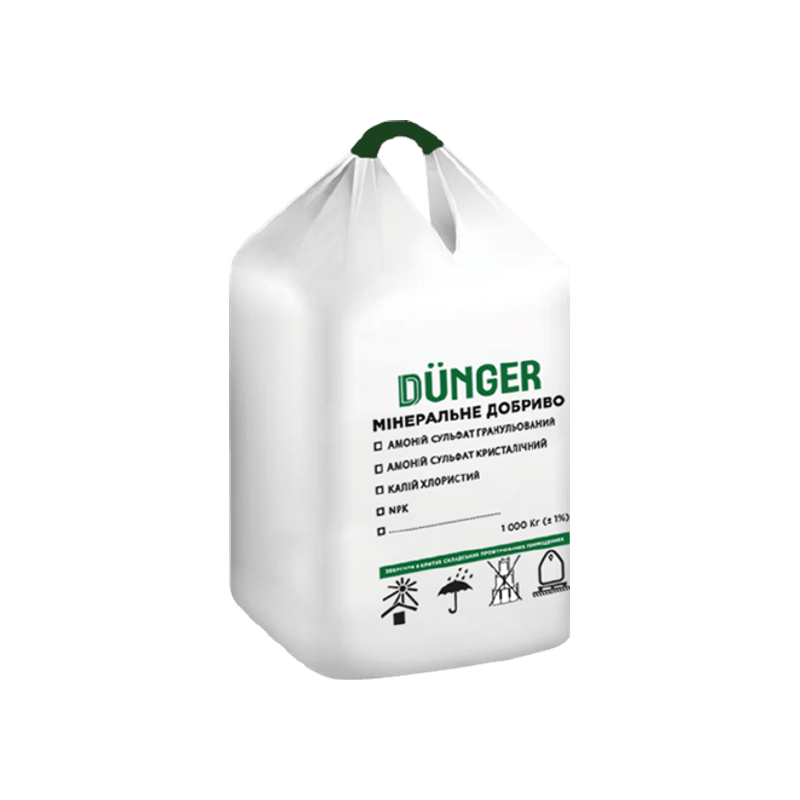
Mineral complex fertilixers NPKS
Where the field assessment confirms a need for baseline nutrition, the DÜNGER range includes the field grade NPKS(CaO+MgO) with a row covering maize. Discuss this granular product as part of the soil plan, separate from any foliar decision. Keep these granules out of the sprayer.
Have the field area, soil test, previous crop and applications ready. Agree the precise grade, pack, quantity and delivery with the sales team before ordering.
Frequently asked questions
The growth stage matters for sampling and for matching product directions. Leaf count on its own cannot tell you whether the crop needs treatment. First assess the plants, likely cause and root conditions.
They are one clue. Compare which leaves are affected, roots, moisture, soil pH and the shape of the patch. If testing is needed, arrange properly matched samples with the laboratory.
Use a field granule according to its own purpose. Choose a spray only if its instructions cover foliar application to maize. Do not dissolve a soil fertilizer using a rate you calculated for another method.


