


Foliar feeding makes sense for established sweet peppers when you can identify the nutrient need and the product is labelled for foliar use on the crop. Begin by checking water, roots and the pattern of symptoms. The roots are still the main route for feeding the crop. A well-chosen spray can supplement nutrition when a deficiency is identified. Wet soil, damaged roots and pest or disease symptoms call for their own checks.
Inspect the crop and the root zone first
Look at several plants of the same variety and growth stage. Note whether a change starts on older leaves or near the growing point, whether it repeats on neighbouring plants and whether it stays in one part of the bed. Turn over a few leaves to check for insects, sticky surfaces, spots or visible damage. Photograph a whole plant and an affected leaf in consistent light. The colour is a useful part of the record, but many conditions can give similar appearances.
Move mulch aside and check the soil where the roots are growing. A plant that wilts on a hot afternoon may look different in the cool of the next morning. If the leaves remain limp, inspect the root ball and the soil beside it. See whether the drip line is working, whether water stands anywhere and whether one end of the row is particularly dry. Plants near a door, a greenhouse wall or a wet low point can be experiencing different conditions.
Record what went into the soil and when. Cold or saturated soil can make it harder for roots to function, even when nutrients are present. For peppers that have only just moved outdoors, start with the guide to transplanting peppers and check establishment. For root-zone nutrition over the season, see the guide to feeding peppers after planting. Foliar application is a separate choice for a diagnosed need.
Confirm the need before choosing a product
A soil test describes conditions and nutrient availability in the root zone. A leaf tissue test can help show what the pepper actually contains at that stage. If the problem continues, ask the laboratory which leaves to take and how to label them. Give the variety, stage and details of any recent applications. Keep samples from contrasting areas separate when the laboratory asks for them. A result is more useful when it can be matched to a specific group of plants.
Tell the laboratory about any previous sprays. Material left on the leaf surface can affect interpretation, and the sampling procedure matters. Keep the question specific: are you trying to understand a patch that looks different, or check the nutrient status of a whole bed? Samples from different growth stages should be identified separately when the laboratory requests it.
If a specific element is missing, check that the intended product contains it in a form labelled for the way you plan to apply it. A broad fertilizer is only relevant if its own composition matches the need. Adjust irrigation or root conditions where those are the underlying problem. Use the guide to reading foliar feeding instructions to compare foliar and root application instructions before working out a plan.
Similar-looking leaves can lead to different decisions
Imagine pale leaves near a low end where water stands after rain, while the same variety elsewhere looks vigorous. Check drainage and the condition of those roots first. In another bed, several established plants show a pattern that does not follow the irrigation line, and a properly sampled leaf test identifies a deficiency. You can then consider whether the crop is a candidate for a specific foliar correction and compare suitable labels. Both cases start with observation and finish with different actions because the evidence differs.
Prepare a foliar application carefully
- Find the foliar row for the crop and stage in the current product directions. Check the stated units and water volume.
- Use a clean sprayer and test its spray pattern with plain water. Check whether it can reach the plants evenly.
- Measure product and water according to the label. Apply the solution on its own and follow the stated safety directions.
- Choose a cooler period with suitable weather and little risk of drift. Wet the leaves evenly without letting the solution run off.
- Record the area, product, date, reason and plant condition so you can make the next decision from observations.
A uniform coating is different from large droplets running off the leaf tips. Check the nozzle with water before adding concentrate. If you cannot reach part of a plant from the aisle, improve access rather than spraying repeatedly from one side. Avoid increasing the concentration to make up for poor coverage. Stop if wind is carrying the spray beyond the target plants.
In a Ukrainian greenhouse, the air at plant height can warm quickly after sunrise even while the yard feels cool. Check the crop area before mixing a solution. In an open southern plot, dry wind and heat can close a suitable period earlier than expected. In wetter weather, check for rain or condensation still on the leaves. Use the product conditions and what you observe in the garden to choose the moment.
Review the response before considering another spray
Return to the same plants and check them under comparable light. Note whether earlier damage is spreading and look separately at new growth. Compare plants of the same variety and stage in a similar part of the bed. If new scorch, spots or persistent wilting appear, check the application conditions, previous treatments and root zone. Changes in water, heat and spray application can happen close together, so a short log helps distinguish them.
Do not use the condition of one leaf as the reason for a second application. Where the underlying problem persists, review the diagnosis. If a laboratory helped identify the nutrient need, ask how to interpret the response and whether a new sample is useful. Keep the follow-up decision tied to that specific treatment and label. A root-feeding interval does not set a schedule for spraying.
A liquid concentrate with foliar directions
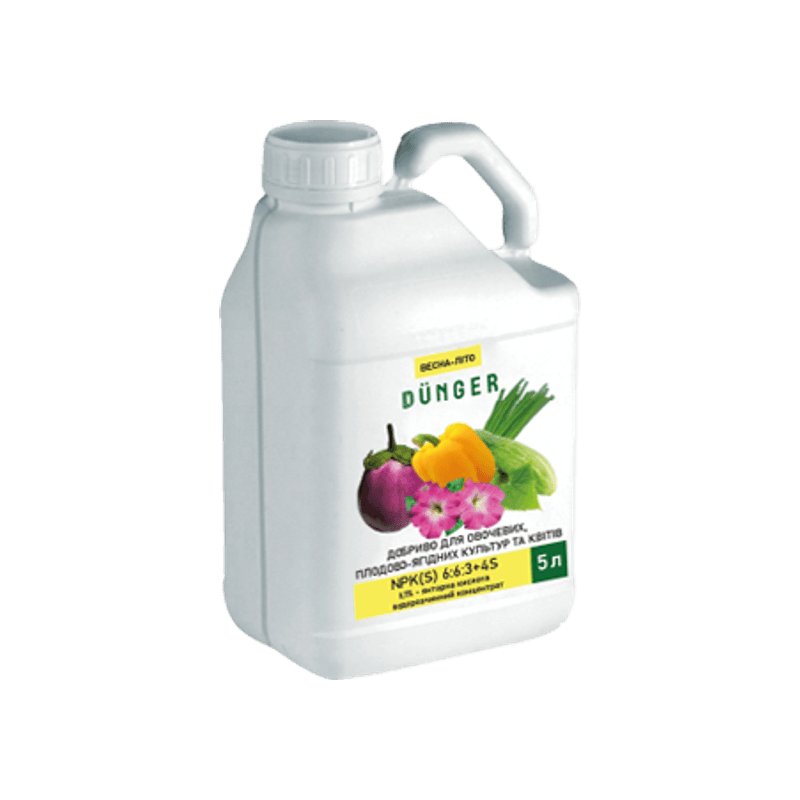
Complex fertilizer for vegetables, fruit and berry crops, and flowers
This concentrate has a separate foliar row for established vegetables. Consider it for rooted sweet peppers only when its composition matches the diagnosed need. The row below applies to leaf treatment. Keep the separate root-feeding and seedling rows out of this application.
Vegetables of all types, fruit and berry crops, flowers (foliar treatment): 25 ml/10 L of water
Follow the complete instructions for spray coverage and conditions. The product page lists the composition and 5 L pack. Identify the area that actually needs treatment before choosing a quantity.
Frequently asked questions
The roots are the main route for nutrient uptake and need suitable water and air. Foliar application can complement the feeding plan where a specific need and an applicable product have been confirmed.
Check the crop's response and the instructions for the foliar method. An interval printed for root feeding should be kept separate. If the problem continues, confirm the cause before deciding on another treatment.
Check water delivery, drainage, exposure, roots and signs of insects in that section. If you plan a leaf test, ask the laboratory whether it wants separate samples. Decide on treatment after checking why that part differs.


