


About 30-45 cm between plants is a starting point for a vertical row of greenhouse cucumbers trained to one leader. Set the final spacing after checking the variety, the support, available light and the greenhouse's width. Measure the row centres separately from the space that will remain clear once the leaves spread. You need room to pick low fruit, reach both sides of a plant and operate the doors and vents as the crop grows.
Measure the greenhouse where you will work
Record the internal width, the width of each bed and the length actually available for planting. Exclude the swing of the door, the space beside a tank, and corners the irrigation line cannot reach. With a sloping wall, measure the available width at canopy height as well as at the soil. A transplant may fit next to the covering while mature leaves would touch it. Mark obstructions now rather than cutting back foliage later to get the door open.
Draw the doors, roof or side vents, drip line and planned trellis supports. Identify which end you need to reach to flush the line. Walk along the proposed aisle with a bucket or harvest basket. Can you turn around and reach down to the base of a plant? A walkway that feels tight before planting will be harder to use when mature leaves extend from both sides. Think about access for the person who will actually pick and tend the crop.
Design for the number of stems
Single row, one vertical leader
A single row is easier to inspect and tie in a narrow bed that you reach from one side. Read the variety's training guidance and see whether it suits a single leader. Some plants produce long side shoots or broad leaves. Set a temporary string along the proposed centre line and mark the positions under the support. A 30-45 cm starting range is useful only for the single-leader vertical setup in suitable light. Increase room if the cultivar and the actual structure call for it.
Two rows or more stems per plant
A broad bed can take two rows if you can reach them, hang a separate support line and leave light between the canopies. Staggered plant positions can help keep nearby leaves from lining up in the same plane. Offsetting the plants cannot create an aisle or supply light when rows are too close. Check that you can reach the rear row without pulling on the front one. If tying and harvesting require stepping into the bed, start with fewer rows.
When you train two stems per plant, count the leaders at the support as well as the roots in the ground. One root can support two upright stems that will share the same space with the next plant. Use the variety's guidance to decide how to handle side shoots and set up supports for those leaders. Avoid a tight one-leader layout if the chosen crop needs room to branch.
Mark two possible layouts before planting
Imagine a 3.6 m usable bed and one upright row. Put the first marker 20 cm from an end and mark every 40 cm. A ninth marker lands at 3.4 m. For another layout start 30 cm from the end and mark every 50 cm. That gives seven markers, with the last at 3.3 m. This is a worked example, not a recommended plant count. Compare both sets of markers with the doors, where the overhead line hangs and which sections the drip line serves. You may prefer the extra space for two fewer plants.
Move the markers while the bed is empty. Check whether a low roof edge leaves enough headroom for the growing leaders. If a marker sits directly in front of a vent, think about where its leaves and string will be at the top of the crop. Do another walk-through with a container you use for picking. Once the layout works, refer to the guide to sowing and planting cucumbers for when to set the plants out.
Allow for light and airflow as the canopy fills
An unheated spring house in northern Ukraine and a tall greenhouse with roof vents in a sunny southern garden behave differently. In cloudy conditions, check which bed stays shaded for longer and how one row might shade another. Lower light can favour a wider layout. During a hot spell, see whether doors and vents open freely and whether the intended planting lines leave a path between them. Check the situation after growth starts, because bare soil and small plants give a misleading view of how air can move.
When vines reach the support, look for leaves overlapping heavily between neighbours, areas that stay damp, and places where leaves touch the covering. Check whether you can see the lower stem and pick without bruising shoots. Train the plants according to the variety and keep vents accessible. Avoid stripping a large share of healthy leaves in one go to rescue a crowded layout. Mark the tight places and adjust the plan for a subsequent planting.
Record where the layout becomes crowded
Write down plant spacing, how many leaders you kept, and where you had to push leaves aside to pick. Compare plants at the same stage. A spring row of small transplants says little about the working aisle during summer picking. If one corner was blocked while the rest worked well, adjust that corner first. If two entire rows overlapped along their length, consider a single row or more separation next time. You can improve access without making changes to a section that already works.
Water supply and nutrition depend on crop stage and root conditions. If a dense, shaded strip is weaker than the rest, first look at light, water and the available root zone. Use the guide to feeding greenhouse cucumbers for separate decisions on feeding an established greenhouse crop. A net above an outdoor bed presents another setup, covered in the guide to growing cucumbers on an outdoor net.
Root feeding after cucumbers establish
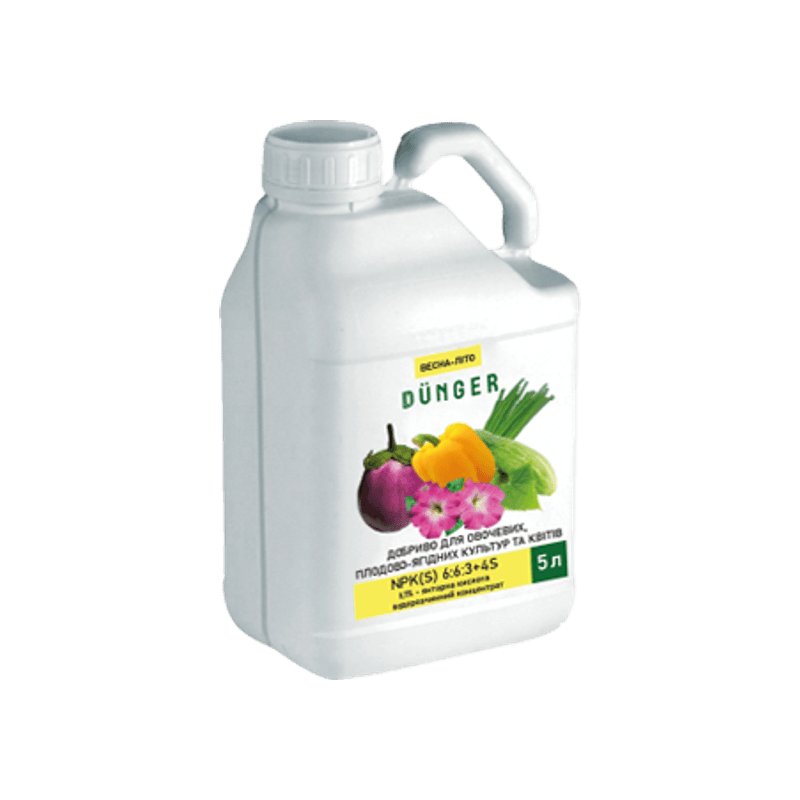
Complex fertilizer for vegetables, fruit and berry crops, and flowers
Consider this concentrate separately from the planting layout when your cucumber roots have established and soil and crop checks show a need for the nutrients it provides. For an in-ground bed, check the vegetable root-feeding row. Keep it separate from the directions for seedlings, foliar use and other growing systems.
The product page lists the 5 L pack, composition and complete instructions. Count the established plants eligible for the chosen method, rather than treating every planned marker as a feeding need.
Frequently asked questions
Vertical training can make better use of space. Check how the cultivar grows, how many leaders you will keep and whether the mature canopy still leaves enough light and access. A shaded or low edge may need wider spacing.
Row distance runs from centre line to centre line. Aisle width is the space you can actually use after the plants grow into it. Plan both before planting.
Use a second row only where there is access for tying and harvesting, an adequate support and room for light to reach both rows. A single row is a practical choice if the back of the bed is hard to reach.


