


When an azalea starts losing leaves, resist watering, repotting and feeding it all at once. Leaf drop can follow drought, prolonged waterlogging, unsuitable indoor conditions or normal leaf replacement. First establish what kind of azalea you have, which leaves are falling and what is happening inside the root ball. Those observations help you choose a useful next step instead of applying a collection of treatments without a clear reason.
Indoor and garden azaleas need different expectations
A flowering shop-bought azalea may be a tender florist type. You cannot assume that it will tolerate frost simply because some garden azaleas grow outside. Moving it to a freezing balcony to provide cooler conditions can make matters worse. Garden azaleas include both deciduous and evergreen forms. Seasonal leaf loss is expected in a deciduous variety; extensive defoliation of a florist plant requires a closer look at its conditions.
Even an evergreen azalea does not keep every leaf permanently. Older leaves are replaced periodically. Consider the whole plant: are healthy leaves remaining, or are shoots wilting and dying as well? Do not decide that shedding is normal purely from the month, because the plant type and growing environment matter. The broader azalea care guide explains the differences between indoor and garden plants.
Normal replacement or a developing problem?
A few older leaves towards the centre may change colour before falling. If younger foliage and shoots look healthy, observation may be more useful than an immediate treatment. However, normal replacement can occur alongside stress. Calling it seasonal should not replace checking moisture and the plant's position.
Look more closely if whole shoots lose their leaves, young tips become bare, the plant wilts noticeably or its mixture stays wet for a prolonged period. Photograph the entire plant and a few representative leaves. Remove fallen leaves from the tray so you can see what drops subsequently. This provides a clearer comparison than relying on your memory of how the plant looked when it was purchased.
Check the root ball before watering again
Drought can cause azalea leaf drop, but so can roots remaining in saturated conditions. Damaged roots may fail to replace water lost from leaves even when the surrounding mixture is wet. Wilting therefore does not, by itself, prove that the plant needs more water. A brown leaf edge is not enough to distinguish the two situations either.
Lift the nursery pot out of its decorative outer container. Check the drainage holes and look for trapped water below. Assess moisture beyond the surface without repeatedly dismantling the root ball. A light, dried-out pot and a heavy, wet pot can both support wilted foliage, but the next action should differ. Record which condition you actually find rather than simply increasing the frequency of watering.
If the mixture has genuinely dried out
Restore moisture without leaving the pot soaking indefinitely. If a dry root ball resists ordinary watering, a brief immersion can help it take up water; afterwards, allow excess water to drain fully. This is different from keeping the plant permanently standing in a filled tray. Continue checking moisture so that care does not alternate between complete drying and prolonged flooding.
If the mixture remains wet
Empty standing water from the outer pot and do not add more on a fixed calendar. Check that the container drains and that the plant is not kept in an excessively dark position. If wilting worsens or shoots begin dying, the plant and its roots need closer assessment. Fertilizer cannot restore drainage or establish the cause of root damage.
Light, cooler conditions and indoor heating
A flowering indoor azalea benefits from a cool, bright environment rather than prolonged hot, dry conditions. Assess the position immediately around its pot, not just the room's general temperature. A radiator below a windowsill, strong sunshine through glass and cold air during ventilation can expose the same plant to quite different conditions during one day.
Move it away from direct hot airflow while retaining sufficient light. A cooler position should not mean a dark cupboard or freezing balcony. In Ukraine, this distinction matters during the heating season and sudden weather changes. Advice to put a plant outside must account for the actual forecast and the hardiness of that particular plant. Do not plant a florist azalea outdoors merely because hardy garden varieties overwinter there.
Yellowing leaves, watering quality and acidity
When leaves turn yellow but their veins remain greener, investigate more than the quantity of fertilizer. Azaleas need a suitable growing medium, and alkaline materials or very hard water can interfere with nutrient availability. Similar yellowing can also accompany root damage or poor drainage. Leaf colour alone cannot identify an exact nutrient deficiency.
Find out what mixture was used at repotting and consider the water used for irrigation. If acidity is uncertain, measure it rather than adding vinegar or other home-made mixtures at random. Use a suitable medium for acid-loving plants when a change of growing mixture is justified. Feeding should not be an attempt to hide an underlying root environment that remains unsuitable.
When the foliage needs a closer examination
Turn over leaves from several parts of the shrub. Sticky deposits, fine stippling, coatings, visible insects or localised shoot dieback deserve separate investigation. Photograph both leaf surfaces and the affected shoot. Finding an insect does not prove that it explains all the leaf loss, so keep your observations about moisture and growing conditions alongside those photographs.
Seek experienced plant advice if decline is rapid or the cause remains unclear. Avoid mixing several treatments without an identified target. If the container or the structure of its growing mixture is genuinely unsuitable, read about repotting a florist azalea while protecting its fine roots. Repotting should address a specific problem, rather than becoming an automatic response to every fallen leaf.
Plan feeding after checking the growing conditions
Do not feed an azalea solely to stop leaf drop. Establish the condition of its roots, restore appropriate moisture and assess whether additional nutrition is needed. For garden azaleas in the appropriate growing period, a specialist fertilizer can be planned with soil conditions and the shrub's size and age in mind.
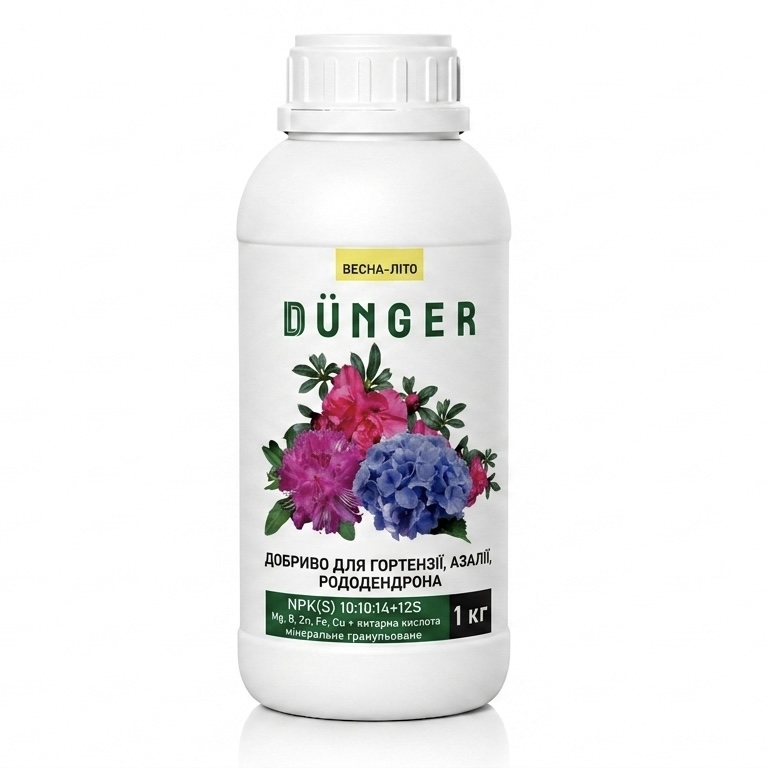
Complex fertilizer for hydrangea, rhododendron, azalea granular
Complex fertilizer for hydrangea, rhododendron, azalea granular comes in 0.5, 1 and 5 kg packs. Its instructions state:
The complex is used in spring and summer, before planting shrubs, as well as for fertilization.
The soil should be moist during fertilization.
Read the full application rate, distribution method and memo on the product page before use. Do not independently convert a shrub application rate into a watering solution for a small indoor plant. This is planned nutrition, not a treatment for damaged roots or a promise that fallen leaves will be replaced.
What to observe after adjusting care
Look beyond the number of leaves on the tray. Watch the remaining foliage, the condition of the shoots and how the mixture behaves after watering. A damaged leaf may not regain its former appearance. Do not increase fertilizer simply because the plant has not turned green the next day. Recovery depends on the underlying cause and the extent of the damage.
For a garden group of azaleas, My Garden lets you create a separate zone, specify its crop and measurements, and plan products. Keep it distinct from planting with different requirements. Buying products for several garden areas together does not mean every plant needs feeding at the same time.
Questions about azalea leaf drop
No. Deciduous varieties shed seasonally, and evergreen plants replace older foliage. However, wilting, bare young shoots and prolonged waterlogging need investigation, even when the season is changing.
Prolonged saturation can damage roots and reduce their ability to supply the leaves with water. That is one possible explanation, not a diagnosis from a brief description. Check drainage and plant condition before watering again.
There is no such guarantee. Heat, drought and damaged roots require attention to their underlying causes first. Choose nutrition according to the plant's actual needs and the complete instructions for the appropriate product.


