


Choose houseplant fertilizer after checking growth, light and root condition. A healthy plant producing new leaves may need feeding when the nutrient supply in its potting mix has been used. A plant sitting in wet mix beside cold glass first needs its growing conditions assessed. Inspect each pot, account for previous fertilizer and then prepare a solution using the directions for the particular product.
What fertilizer supplies
Plants use light in photosynthesis to produce the organic materials needed for growth. Fertilizer supplies mineral nutrients. It cannot replace light, water or air around the roots. An extra dose will not correct stretched shoots on a shelf far from the window. Check whether the position suits the species before changing the feeding programme. Observe the actual plant rather than assuming every slow-growing pot is short of nutrients.
Read composition, intended use and application method on the pack. The largest number on a label is insufficient for choosing a product. A concentrate, a ready-to-use solution and a controlled-release fertilizer work differently. Compare their own directions instead of judging by bottle volume or liquid colour. In a varied collection, also identify the plants that have particular requirements.
Inspect the plant before feeding
- New growth. Look at young leaves and shoots. Compare a plant with its earlier condition rather than with a different species growing beside it.
- Moisture. Check the mix and saucer. Drooping can occur with dryness or with damaged roots in a wet pot.
- Light and temperature. Assess the position of the container. Behind a curtain near glass it may be colder, while air above a radiator can be much drier.
- Previous nutrition. Find the potting-mix bag and check products already applied. A starter nutrient charge in new mix belongs in that assessment.
- Damage. Examine leaf undersides, shoot bases and visible roots. Insects, rot or a mechanical injury require a separate response.
One yellow leaf does not identify a particular nutrient deficiency. Note which leaves have changed, whether growth continues and what happens to water in the container. If deterioration followed a move or repotting, include that event in the history. For an unexplained decline, provide a specialist with photographs of the whole plant, its mix and location, together with details of recent applications.
Separate the collection into useful groups
A full watering can is not a reason to feed every pot. A large fig beside a bright window and a small plant deeper inside the room can grow at different rates. Identify each species, its current condition and whether the product covers it. Check orchids, succulents and other specialist groups against their individual needs. A general routine cannot be assumed suitable for all of them.
For practical work, group only the pots that need water at the same time and fit the same directions. Leave the others for separate inspection. A temporary label can identify a plant with unexplained symptoms. This helps avoid repeating an application or watering an already wet root ball simply to deliver fertilizer. Keep the original containers easy to identify while working with several products.
Follow growth as well as the season
Short winter days in Ukrainian homes often slow growth even when rooms remain warm. Water and nutrient use can differ from the bright season. A radiator does not make up for insufficient light. If there is no new growth, avoid trying to restart it with a stronger solution. Check lighting and the species' resting requirements before deciding whether feeding is appropriate.
Some plants continue growing with supplementary light. Assess that growth and the lamp's operating guidance. Having a lamp does not by itself justify frequent feeding. Relate seasonal changes to the selected product's own instructions. Read the winter qualification for the concentrate below alongside the complete directions. It belongs with the requirements to feed healthy plants and check moisture before application.
Read the potting-mix bag too
After repotting, check whether the fresh mix contains fertilizer and what the bag says about it. Visible pellets or information about starter nutrition affect the next decision. Avoid combining several products without knowing what has already been added. The guide to choosing houseplant potting mix explains the broader properties of mixes. For feeding, the immediate task is to identify the nutrient supply already present before preparing another solution.
If a pot dries unusually quickly, inspect whether roots have filled it. If it stays wet for a long time, assess drainage, volume and structure. The same extra dose cannot resolve both situations. The guide to deciding when to repot houseplants can help assess a change of container. In a new pot, first monitor root condition and moisture beside the old root ball before choosing further nutrition.
Prepare and apply the solution carefully
- Confirm that the plant is healthy, growing and within the intended group.
- Read the complete directions for the product you bought, including precautions and seasonal qualifications.
- Measure water and concentrate with suitable equipment. A cap from another bottle is not a substitute for the specified measure.
- Check moisture and follow the pre-watering requirement. This concentrate must not be used on a dry root ball.
- Use the stated application method, allow surplus water to drain and inspect the outer container.
- Return fertilizer to storage in its original labelled pack, following its conditions and keeping it away from food and children.
A small pot needs a different volume of liquid from a large one. Reducing the volume is not permission to make a stronger solution. Concentration and the amount delivered have different roles. If preparing a smaller batch, use an accurate measure and the stated proportion. Estimating a tiny quantity of concentrate by eye can create a large error.
What to monitor afterwards
Old damaged foliage will not necessarily recover its appearance after feeding. Look at subsequent growth, the root environment and the overall trend. Avoid adding another product merely because changes are not immediately visible. Recheck position, moisture and the time since application. If the plant deteriorates sharply, stop experimenting with fertilizers and investigate the cause.
A white deposit on the surface or pot rim can be associated with salt accumulation. Its origin needs assessment alongside the water supply and previous nutrition. Dry leaf tips also have several possible causes. Adding fertilizer may make matters worse if nutrients are already excessive. Check drainage and obtain advice for the specific plant rather than repeatedly soaking a container without holes.
Before a holiday, avoid increasing the dose to build a reserve. Arrange suitable water and light, with someone to inspect the plants if necessary. If using a watering device, consult the guide to automatic watering for houseplants and test it on your own containers ahead of departure. Leave a simple labelled instruction for a helper covering only what each group actually needs.
Fertilizer for healthy houseplants in active growth
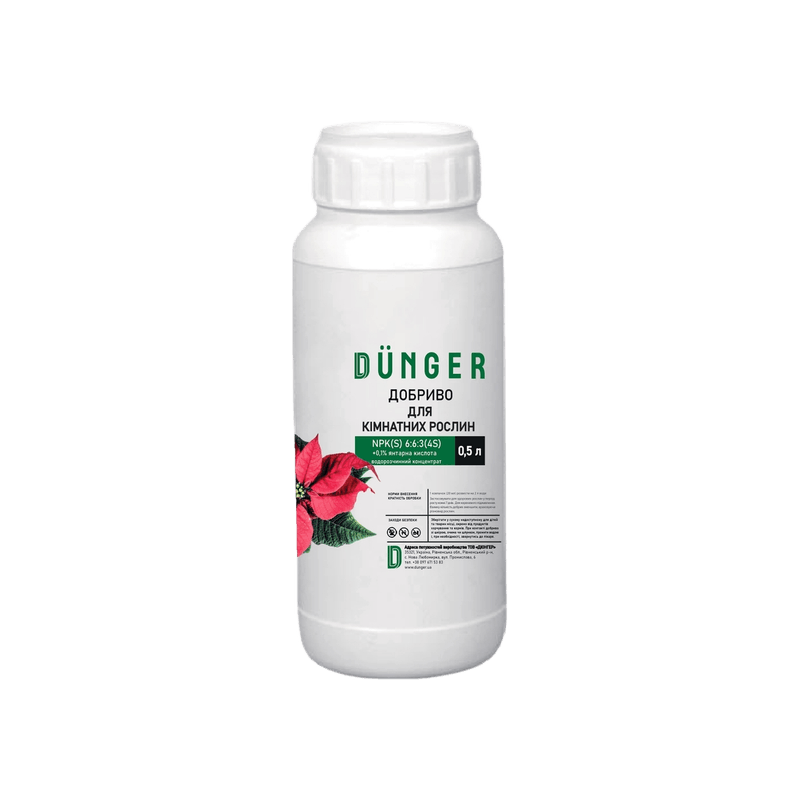
Complex fertilizer for house plants
For ficus, dracaena and other houseplants covered by the intended use, consider this concentrate when they are healthy and growing. First check light, moisture and existing nutrition. It does not replace a correction to a cold position, damaged roots or excess water. Check the full name against the previous product when ordering again.
The product description specifies a 0.5 L bottle. It is a concentrate, not one ready-made portion for a pot. Account for plants meeting the conditions and measure each preparation accurately. Garden areas, measurements and a product plan can be kept separately in My Garden. Do not transfer bed dimensions to the liquid volume for a houseplant pot.
Questions about feeding houseplants
First identify the species, root condition and nutrition already in the mix. A healthy recently purchased plant may have an adequate existing supply. Buying it does not establish the next feeding date.
Only when each plant fits the intended use, stage and conditions. Assess different species, recent repotting and wet containers separately. Leftover solution is not a reason to feed the remaining pots.
Check light, temperature, roots and moisture. Fertilizer cannot remove every limit to growth. Establish the cause before increasing concentration, and assess new leaves once suitable conditions are in place.


