


Choose automatic houseplant watering around the actual plants, pots and growing media, then test it before leaving. A water reservoir alone cannot guarantee suitable moisture throughout an absence. Delivery may be insufficient for one plant and excessive for another. Before buying a system, establish whether you can test it in the same position and with the same plants that will depend on it while you are away.
Separate plants by water needs
Do not connect every pot to the same supply simply because they stand together. Cacti and many succulents tolerate a drier interval, while other houseplants need more even moisture. Species, active growth, plant size and roots matter. Matching leaf colour or decorative outer pots does not establish a suitable watering group.
Start by separating plants that usually dry rapidly in your conditions from those whose soil stays moist. Check actual conditions before each decision. Two differently sized ficus plants in different media do not necessarily need the same portion. If you do not yet know a plant's ordinary needs, automatic delivery cannot establish them without observation.
The pot and medium are part of the system
Check drainage holes in the inner pot and establish where excess water goes. A closed outer container can hide accumulating water. Remove any old standing water and check whether you can inspect the bottom or safely lift the pot. The system should supply the plant rather than fill a decorative container unnoticed.
Clay and plastic pots can dry at different rates, as can small and large containers. The growing medium matters too: dense soil, an open potting mix and bark do not move water identically. Do not assume a new wick suits all of them. Test it with the actual pot and medium you will use, rather than judging it from another plant's result.
When a wick may be useful
A wick links stored water with the growing medium. One end remains in water while the other makes suitable contact with the medium according to the chosen method. For a manufactured product, follow its requirements for material, preparation and reservoir position. Do not copy cord thickness or height from someone else's pot without checking your own result.
Look for a wick that has slipped, bent or lost contact with water as the level falls. A wet cord does not prove that moisture has spread through the required part of the pot. During testing, inspect both the medium and the water remaining. If soil stays too wet or too dry, change the setting or method before leaving instead of hoping it will regulate itself later.
Capillary matting for several pots
This method requires compatible pots and contact between their bases and the wet mat. Drainage material or base shape can interrupt uptake. Placing any collection on a wet sheet is therefore insufficient. Use a water-tolerant supporting surface and test every container, including those near the edges. Apparent contact viewed from above may not show what happens beneath a raised pot base.
Do not confuse capillary delivery with permanently immersing an ordinary pot in water. Standing water in a saucer is not a universal care method for common houseplants. Check for excessive saturation. Plants with different needs do not necessarily belong on the same mat even if it has enough physical space for all of them. Grouping by convenience cannot replace checking their root conditions.
A pot with a built-in reservoir
A self-watering container is a growing system with its own water level and medium requirements. It is better introduced well ahead of time than used for an urgent repot immediately before travel. Not every plant suits continuously available moisture. Check the actual product's intended plants and growing method before treating the reservoir as an improvement for the whole collection.
If you already use such a pot, compare its normal operation with the planned absence. An indicator does not remove the need to inspect the plant. Do not fill beyond the permitted level for extra reserve or alter the construction just before departure. Where a plant has not settled after repotting, judging the system's reliability becomes harder because both the roots and watering arrangement have changed.
Indoor drip systems
For tubing and emitters, check indoor pot suitability, adjustment options and the manufacturer's requirements. The number of outlets does not equal the number of plants receiving a correct portion. The same operating period may overwater a small pot and undersupply a large one. Test every outlet rather than only the emitter nearest the reservoir.
If a pump, timer or electrical supply is involved, test starting and normal operation, and check the instructions for behaviour after a power interruption. Do not assume that every system restarts automatically. A Ukrainian home where power interruptions are possible needs a verified scenario for that particular kit or a different arrangement during the absence. A feature should be confirmed rather than inferred from the word automatic.
A test that reveals the actual result
Start ahead of time with plants in their intended positions. Use ordinary water, check initial moisture, mark the reservoir level and inspect pots during the trial. Observe more than the first delivery: the arrangement must also work as the level falls. An emptied container does not prove that all its water reached the intended roots.
Check separately for leaks beneath connections, inside outer pots and on the supporting surface. Look for tubing movement and a reservoir that could topple. Avoid unstable shelves over electrical equipment and unprotected furniture. Choose capacity from observed use, while recognising that canister volume alone cannot guarantee a particular absence duration. A test with overwatered pots is not successful merely because the reservoir still contains water.
Position and season change demand
Moving away from a scorching window can reduce drying, but does not mean placing a light-loving plant in darkness. Retain suitable light and temperature for the species. Avoid leaves against cold glass and pots in direct hot air from heating. Dry heated air and a cold windowsill can occur close together in winter, so room temperature alone may not describe the plant's immediate environment.
Consider each plant. Compare the requirements in the begonia care guide with the separate guide to peace lily care. Do not make one watering habit a rule for the whole collection. After changing position, test again: the previous result described different conditions. A system set beside a bright warm window may behave differently after the plants are moved.
Keep feeding separate from the reservoir
Automatic water delivery is not permission to add any fertilizer to the reserve. Directions for a separate root feed after watering do not establish wick use or continuous delivery. Assess the needs of a healthy, actively growing plant independently. Do not increase concentration before travel to provide an imagined advance supply, or assume a prepared solution can be stored for the whole absence.
Ordinary root feeding separately from automatic watering
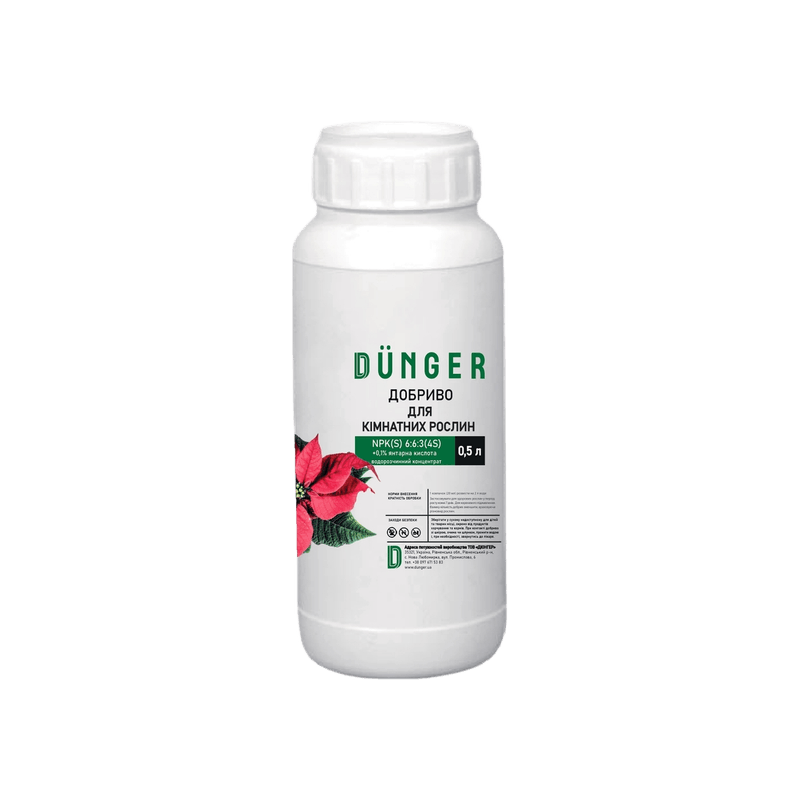
Complex fertilizer for house plants
This concentrate is for a separate root feed of healthy growing houseplants. Follow the complete directions after watering. Do not add it to a reservoir or wick: the quoted method establishes neither that use nor extended solution storage.
It is used for healthy plants during the growing period every 7 days. Dilute 20 ml of concentrate (1 cap) in 2 liters of water, feed the plant after watering, taking into account the size and age. In winter, reduce the concentration of fertilizer.
Dieffenbachia, philodendrroton, ficus, palm, yucca, asparagus, arrowroot, eton, dracena, cc: 1 cap (20 ml)/2 litres of water
The 0.5 L bottle contains concentrate. Select it for the relevant stage of ordinary care, rather than as a compulsory pre-travel addition. Do not invent a numerical winter dilution from the instruction to reduce concentration.
When a person should check
If the system has not completed a successful trial, a plant is unwell or the absence exceeds the tested reserve, arrange an inspection. Leave clear instructions for the actual groups rather than asking someone to water everything daily. Use My Garden to plan zones, crops, measurements and products. Compare houseplant fertilizers by their own directions separately from choosing watering equipment.
Frequently asked questions
Not automatically. Plants needing a drier interval should be assessed separately from those needing more even moisture.
Test with your plants, position and system. Volume alone establishes neither correct delivery nor the absence of leaks.
Introduce that system in advance. Last minute repotting leaves little opportunity to assess the plant, medium and actual water supply.
The quoted method is a separate root feed after watering. It does not automatically permit a wick, reservoir or continuous fertigation.


