


When a ZZ plant develops yellow leaves, first check where the colour changed and whether the potting mix is still wet inside the pot. The oldest leaf can decline naturally. Several yellowing leaves in a pot that stays heavy and wet call for a closer look at drainage and the roots. Leaf colour alone gives too little information to decide that the plant needs fertilizer.
Why ZZ plant leaves turn yellow
What looks like a stem on a ZZ plant is often the stalk and axis of a compound leaf, with individual leaflets along it. Look at whether one of those leaves is yellowing as a unit, or whether affected leaflets are scattered throughout the plant. If just the oldest outer leaf slowly changes colour while the other leaves look healthy and their bases remain firm, give it time. Mark the affected leaf in a note and compare it during the next check.
When older and younger leaves turn yellow together, leaflets fall from several stalks, or the plant becomes limp while the pot is wet, look at the growing conditions. The fleshy rhizomes of a ZZ plant store water, so it can tolerate a gap between waterings. Roots and rhizomes may rot if the mix stays wet for a long time. A dry-looking surface tells you little about the centre of a large root ball.
When pale new leaves are normal
Check the cultivar name on the tag. New leaves of 'Chameleon' can open yellow and turn dark green as they mature. 'Raven' opens green and darkens later. If you do not know the cultivar, compare the new leaf with older ones and watch how it changes as it unfolds. Check the potting conditions separately if yellowing spreads through older leaves or if their bases become soft, even if your cultivar has unusual colouring.
Check leaflet undersides and stalks for small fixed bumps, sticky traces or fine webbing. If you see these signs, separate the pot from other plants and look more closely. Yellowing alone cannot identify a pest.
How to check watering and drainage
- Lift the pot and compare its weight with its weight after watering. If you have never felt this pot dry, use weight as a clue and also check the mix.
- Check carefully below the surface near the edge. If the mix is still damp and the pot feels heavy, wait before watering.
- Take the inner pot out of its cover pot. Empty the saucer or cover pot and check that the drainage holes are open.
- Once the mix has dried and the plant needs water, water evenly and let the excess drain. Empty the saucer again afterwards.
Compare two pots in the same room. A smaller pot in a bright spot may dry at a different rate from a large cover pot set away from the window. Adjust how often you check each one. A fixed watering day for both can keep one pot damp between waterings. Small splashes over the top can also make it difficult to judge the moisture around the roots in a dense mix.
A prolonged dry spell can matter as well. If the root ball is genuinely dry and light and the leaflets have lost firmness, water and let the excess drain. Check whether the mix took up water or whether most of it ran straight down the sides. Repeated watering will do little for an already damaged yellow patch. Look instead at the firmness and appearance of the rest of the plant during later checks.
When to look at the roots and rhizomes
Inspect the root ball if fresh areas are yellowing, a leaf base goes soft, or a wet pot barely gets lighter. Gently slide the root ball onto a work surface, supporting it underneath. Avoid pulling on the leaves or tearing roots to inspect them. Ask someone to help with a heavy pot. Firm rhizomes and intact roots look and feel different from soft, dark tissue that falls apart. Dark colour alone gives too little information to tell you the cause.
If most of the roots feel firm and the holes are clear, allow the mix to dry and correct the watering routine first. If the mix has compacted or the container holds standing water, prepare a clean pot with drainage holes and fresh, free-draining mix. Match the pot to the root ball so there is little extra mix staying wet around it. For the container and drainage decision, see the guide to choosing potting mix for houseplants.
If most rhizomes are soft, the leaf bases are collapsing, or the damage is spreading rapidly, separate the plant from the rest of the collection and ask a houseplant specialist for help. Keep old mix and drained water away from other pots. Fertilizer has no role in treating rot. Clean the tools and work surface after inspection.
What changes near a window between winter and summer
Winter days in Ukraine are shorter. A pot farther from the window may dry slowly even in a heated flat. Conditions on a sill next to cold glass or an open window differ from those on a shelf nearby. Choose a spot with stable warmth and indirect light. Use the mix, pot weight and appearance of the plant together. Warm air from a radiator tells you little about moisture in the middle of the pot.
After a move into stronger sun, check whether pale patches are concentrated on the exposed side. They may later dry and turn brown. Move the plant into bright indirect light and watch for new patches. If the pot is well away from a window, move it closer gradually and avoid a sudden switch to direct sun. Review the watering routine as the drying rate may change.
What to check if two leaves yellow after a move
Imagine you moved the pot from a window to a bookcase, then noticed yellow on two older leaves. Start with what changed. Has the pot dried at the same rate? Have you kept watering on the old schedule? Does water collect at the bottom of the cover pot? If the mix remains wet, empty any trapped water and postpone watering. If it dries and the leaf bases stay firm, look at how much indirect light reaches the new spot.
What to record before the next check
Take a photo from the same angle and note which leaves remain green. Record the last watering, whether the mix was wet below the surface and whether the cover pot held water. If the yellowing spreads, those details help you tell what happened after each change. If only the old patch changes, judge the plant by the rest of the foliage and any new growth. For one yellow leaf on an otherwise healthy plant, avoid repotting, moving and feeding it all on the same day.
Check a neighbouring ficus separately. A plant on the same shelf can have different roots, mix and watering needs. Use the guide to choosing a ficus pot and mix for that plant.
Feeding healthy plants in your collection
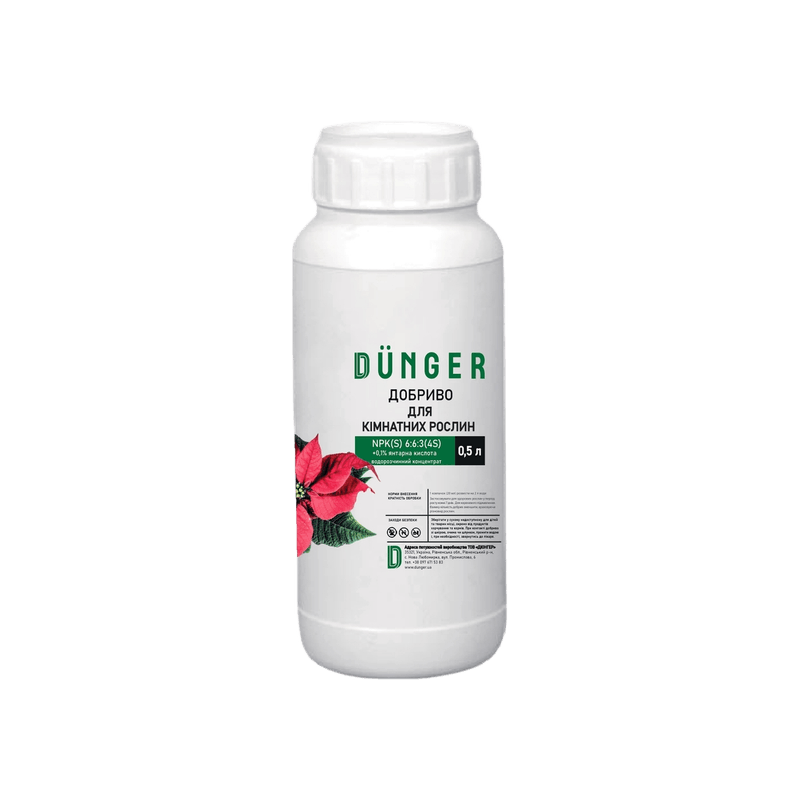
Complex fertilizer for house plants
While the ZZ plant shows yellowing, check its growing conditions and inspect the roots if needed. For a separate healthy ficus or dracaena in active growth that needs feeding, consider DÜNGER indoor concentrate. Its label includes both plants for root feeding after watering.
The bottle holds 0.5 L of concentrate. Check the full product name, pack size and directions for your plant on the product page before buying.
Frequently asked questions
Yellow areas caused by ageing or damage may stay yellow. Look for spreading symptoms, firm leaf bases and a potting mix that dries normally. These give a clearer picture than the old patch.
If it is the oldest leaf, the rest of the plant is firm and the pot dries between waterings, observe it first. Inspect the roots if the pot stays heavy and wet, several leaves turn yellow or their bases soften.
While the plant settles, focus on stable conditions and suitable watering. Revisit feeding once the plant has healthy roots and active growth, and you have confirmed a suitable product and method for the species.


