


Tomato leaves can curl because of growing-condition stress, root injury, pest feeding, a virus or herbicide exposure. One rolled leaf cannot identify the cause. Avoid starting with stronger fertilizer or a mixture of several treatments. Inspect the whole plant, check the soil and recall recent weather and work around the bed. These observations help distinguish a need to adjust routine care from a pest investigation or a problem requiring specialist diagnosis.
Collect the signs before treating
Compare older lower leaves with young leaves at the shoot tip. Establish where curling began and whether the leaf remains green or shows spots, mosaic patterns, bronzing or unusually narrow leaflets. Inspect stems and fruit too. Is the plant still growing, or falling behind neighbouring plants of the same cultivar? This information is more useful than describing all distorted foliage as the same problem.
Look at the distribution of affected plants. A single tomato on a dry bed edge, a row beside weed treatment and plants from one transplant batch suggest different lines of enquiry. Note when symptoms appeared and whether heavy rain, heat, wind, transplanting, deep cultivation or substantial shoot removal preceded them. Photograph the whole plant and both leaf surfaces in clear light, rather than taking only a close-up of one curled tip.
- Is the root zone dry or wet, rather than merely the surface?
- Is curling even throughout the plant or stronger on one side?
- Are new leaves normal or becoming distorted as well?
- Are insects, colour changes, poor growth or unusual fruit markings present?
Physiological leaf roll and water stress
With physiological leaf roll, edges often turn upward and inward; foliage may become thick and leathery. This appearance can follow drought, heavy rain, root disturbance or severe pruning. It is a reason to check conditions, rather than proof that all other causes are absent. Inspect particularly carefully if young growth also changes colour or the whole plant begins developing abnormally.
Base watering on actual moisture. A dry surface does not establish that the entire root zone is dry, while a wet top after a brief watering does not prove that the root ball has been reached. Check water delivery to the individual plant, container drainage and places where rainwater collects. Avoid alternating prolonged drying with attempts to compensate using excessive water. Equally, do not pour more into already wet soil simply because a leaf is rolled.
If symptoms followed deep cultivation or heavy pruning, stop unnecessary disturbance. Do not repeatedly excavate the roots to check whether they are intact, and do not strip off every curled green leaf. Provide steadier conditions and watch new growth in particular. An older leaf need not immediately regain its earlier shape, so changing products daily in response to that leaf provides little useful information about the plant's progress.
When to investigate pests
Inspect leaf undersides, tender tips and places where insects gather. Large aphid colonies can accompany curling and reduced growth. Finding one insect does not establish that it explains the entire symptom. Compare parts with and without insects, obtain a clear photograph and identify the pest before selecting protection. A general spray “against everything” does not replace identification and may obscure what was originally happening.
Some mites are so small that they can be difficult to see even with magnification. Severe distortion of tender growth without visible aphids does not exclude pests, but neither does it confirm mites automatically. Examination of a sample may be necessary. Avoid transferring random houseplant recipes to tomatoes or mixing household substances with fertilizer: another injury makes it harder to understand the original problem and choose an appropriate response.
Signs that need diagnosis
Light and dark mosaic areas, narrow distorted young leaves, marked stunting and unusual rings or patches on fruit need particular attention. Viruses can produce such symptoms, but other injuries can look similar. Photographs help describe the case; they cannot establish a particular virus. Confirmation requires suitable laboratory diagnosis rather than attaching a disease name to a single image of a curled leaf.
Until the cause is clarified, do not take propagation material from a suspect plant. Avoid transferring sap from damaged plants to healthy ones on hands and tools, and maintain cleanliness during work. A confirmed virus infection cannot be cured with complete fertilizer. Further action should reduce pathogen spread, so discuss removal of affected plants and handling of the material after the problem is assessed instead of relying on another feeding.
Check possible herbicide injury
Recall nearby weed treatment, wind direction and sprayer use. Twisted, cupped or distorted leaves, especially on the side facing possible exposure, justify checking this route. Residues of certain herbicides in brought-in organic material are another possibility. Ask about the origin of new mulch or compost, but do not declare it responsible without comparing the timing, affected plants and pattern of symptoms.
Keep the product name, application date and exposure circumstances for advice. Fertilizer is not an antidote and cannot restore already deformed tissues. Do not decide whether fruit is suitable to eat solely from how the plant looks: possible chemical exposure needs assessment of the actual product and its use. Prevent further exposure, then make decisions about the plants once the circumstances are understood.
Where nutrition fits
Assess nutrition separately: what has entered the soil or growing medium, what stage is the plant at, and is there evidence of a nutrient need? If yellowing dominates, use the separate material on yellowing tomato leaves. For routine planning for healthy plants, consider feeding tomatoes. Curling alone is not an instruction to double a concentration or add a new complete feed over a previous one.
Liquid nutrition for a separately established need
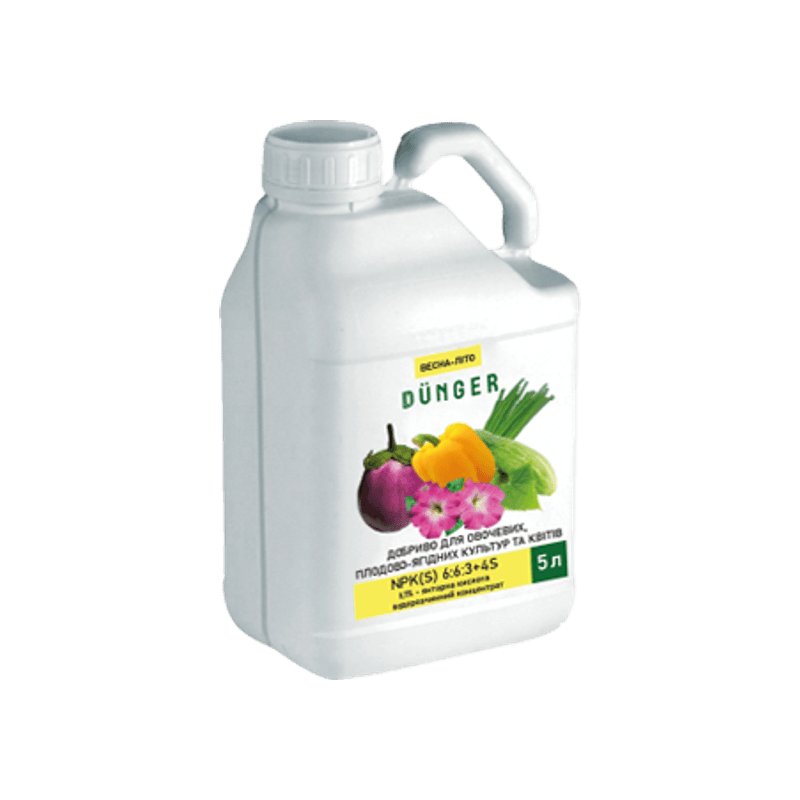
Complex fertilizer for vegetables, fruit and berry crops, and flowers
The product covers vegetables. The quoted group rate concerns root feeding of mature plants; do not treat seedlings or foliar application as the same use. The complete method includes separate instructions for those cases.
Used throughout the entire period of plant development and growth. For root feeding into the soil/substrate, dilute 50 ml of fertilizer in 10 L of water (100 ml of solution per 1 plant) and use at intervals of 10-12 days. For foliar treatment (spraying), dilute 25 ml in 10 L of water and apply with a sprayer, ensuring even coverage.
For treating seedlings, halve the concentration of the working solution!
Vegetables of all types, fruit and berry crops, flowers (root feeding): 50 ml/10 L of water (100 ml of solution /plant)
Pack: 5 L canister. This feed does not treat curled foliage, virus infections or herbicide injury, or replace pest identification. Choose root nutrition only for a relevant need with appropriate root-zone conditions; the instruction interval is not a treatment schedule for curling.
For the next planting, choose transplants of known origin without obvious distortion or stunting. Ask the seller for the cultivar name and resistance to specific diseases; this does not mean protection from every virus. Avoid bringing a suspect batch into the greenhouse expecting fertilizer to correct it. Inspect new plants before placing them beside healthy crops, particularly where similar problems have occurred previously.
Questions about curled tomato leaves
No. Shape alone is not enough reason. First check whether leaves remain green, whether other injury is present and what is happening to new growth. Severe shoot removal can itself accompany physiological rolling. Suspected infection requires a different plan based on assessment, rather than indiscriminate stripping without understanding the cause. Keep useful foliage while working out which problem is present.
A regular schedule does not guarantee appropriate moisture. Check that water reaches the roots and excess can drain. Recent work, weather, pests and other injuries remain possible explanations. Compare older and younger foliage, inspect the whole plant and look at its neighbours. Do not automatically increase irrigation if the ground is already staying wet; first establish what the root zone actually needs.
Fertilizer supplies nutrients; it is not a treatment that changes the shape of damaged foliage. It does not remove a virus, pest or herbicide injury. Where a separate nutritional need is established, use the correct method for the plant's stage and account for earlier inputs. Choose the 5 L canister for planned feeding, rather than as emergency treatment for curling.
The possible causes overlap, but conditions differ. In a greenhouse, check the actual microclimate, water supply and new transplant batches; outdoors, account for rain, wind and nearby work. Towards the end of a crop, do not begin a new feeding cycle for plants already being finished. For an actively growing crop, its condition and stage determine the decision rather than the month alone.


