


Summer pruning of grapes mostly concerns green shoots and leaves. Arrange the shoots on the trellis first so you can see where they genuinely crowd the vine. Then decide whether to remove an individual shoot or a leaf beside a cluster. Avoid exposing every shaded bunch at once or cutting all the tips to one height. The right action depends on stage, trellis, vigour and the sunlight that actually reaches the fruit.
Arrange green shoots first
A current-season shoot carries leaves, tendrils and, where fruitful, flowers or clusters. Handling it in summer differs from cutting woody canes. If the vine needs structural work, see the guide to when to prune grapes. In summer, focus on how to place the growth already present instead of replacing permanent arms.
On a vertical trellis, guide pliable shoots between the wires if the system is designed for that. On a high wire with trailing growth, spread the shoots into gaps at the sides. Do not pull them all into one direction regardless of the trellis. Very young shoots can break at the base, while longer tendrils may already be attached to neighbouring shoots. Do not pull them by force. If a shoot needs tying, leave room for it to thicken.
Stand back after positioning. If you can inspect the clusters, there is no solid mass of leaves and the shoots no longer cross, another cut may do little. Check after wind that the shoots have stayed in place and the ties are not constricting them. These checks matter more than making the whole row look even.
Which shoots can be thinned?
Once flower clusters are visible and late frost risk has passed, look for points where several shoots emerge together. Keep a sound, well-placed shoot with a visible flower cluster or a useful role in renewal. A small weak or surplus unfruitful shoot in a congested patch can be a candidate for removal. Keep a nonfruiting shoot if it is needed to renew part of the vine. If you are unsure where fruit develops, see how grapevines flower and set fruit.
Remove an unwanted soft shoot without damaging its neighbours. When the base has hardened and its tendrils have caught other shoots, avoid twisting it away by hand. Free the part you intend to remove so it does not pull a fruiting shoot with it, and use clean sharp snips if necessary. A young vine still establishing its framework and a mature vine carrying fruit need different decisions.
What to do with laterals and growing tips
Side shoots, called laterals, grow from leaf axils on the main shoot. If several fill the same tight space around a bunch, select those that genuinely need shortening or removal. Keep a lateral growing in an open gap or providing needed shade. If a main shoot extends beyond the trellis, first see whether you can guide it, tie it or move it away from the path.
Shortening the tip does not automatically expose the fruit. It helps when tips extend into an adjoining row, hang into a path or pile up above the same part of the vine. Avoid cutting a weak and a vigorous row to the same line. Repeated hard tipping can encourage side growth. After a light adjustment, check that the vine retains enough healthy leaves for continued growth.
Open the fruit zone while preserving shade
Look for a leaf lying directly on a cluster or a congested patch that stays wet longer after rain. Where suitable, remove an individual leaf after fruit set to create space and make inspection easier. Look from both sides. Avoid stripping a band of foliage or suddenly exposing clusters that have developed in shade, especially before hot weather. Abrupt direct sun can damage the berries.
In a wetter foothill garden in Ukraine, note where moisture lingers after rain. On an exposed Steppe site, check the side that receives direct rays during the heat of the day. Consider walls, row direction, airflow and other shade. Morning sun may appear gentler, but the temperature around a cluster also depends on wind. Look at the real conditions and keep some protective leaves.
Try one short section of trellis
- Mark the shoot or leaf causing a problem. Identify the cluster and the useful growth nearby.
- Spread the neighbouring shoots or tie them into available spaces first.
- If crowding remains, remove only the surplus lateral or one leaf in that spot.
- Inspect the cluster from both sides and check its shade during the hottest hours.
- Stop once the bunch can be examined and the rest of the canopy remains protected.
Suppose three long shoots overlap at one end of the row, and a lower leaf presses against a bunch. Spread the upper shoots first. If the leaf no longer presses against the berries, leave it. At the other end, a weaker vine may have little foliage and a bunch that is already exposed. Checking a tie can be all it needs.
Inspect the changed area under different light or after wind. If dry pale or brown patches appear on the exposed sides of berries, avoid exposing more clusters in the same way. Several conditions can cause berry damage. Compare where the patches appear, the moisture and the condition of nearby leaves. If damage continues or suggests a disease, identify the cause. Assess nutrition separately, with the guide to spring grapevine feeding if it is relevant.
Change the task as the crop develops
Around flowering, do not use the same approach as you would on ripe fruit. Removing a substantial amount of foliage at that stage can change fruit set. If your immediate problem is crowding, arrange the shoots and avoid stripping leaves around every flower cluster. After fruit set, look again at space around the clusters and how shade changes through the day.
Near ripening, note which clusters have been in shade. The benefit of opening them for inspection may not justify sudden strong exposure. Tie a shoot so it no longer presses on the fruit while retaining some shade. Cultivars and positions in one garden can reach these stages at different times. A picture of the shoot you moved makes it easier to judge that particular change on the next visit.
A separate early spring potassium decision
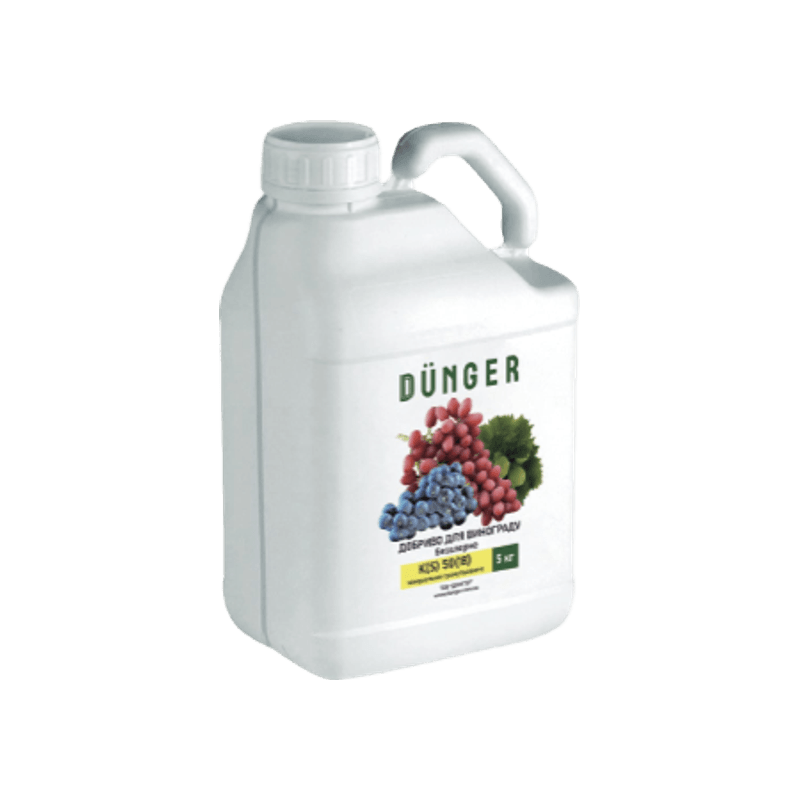
Complex fertilizer for grapes
Summer cutting does not establish a potassium need. If test results and earlier feeding show a separate requirement, see the DÜNGER chloride-free granules for grapes. The grape directions call for application to the root soil and identify early spring before the leaves open as the appropriate window. Plan it separately from green canopy work.
Measure the grape-growing area with a confirmed need and read the full directions before ordering. Compare the original 1 and 5 kg packs on the product page. In summer, first decide whether the vine needs better support, shade or watering. A cut is not a feeding trigger.
Frequently asked questions
No. A shoot without fruit can be useful for renewal, and its leaves can protect clusters from sun. Remove surplus shoots only where they cause crowding and have no other useful role.
Inspect the cluster after fruit set. If a leaf obstructs inspection or presses against berries in a damp spot, see whether repositioning it is enough. Avoid abruptly exposing shaded fruit in hot conditions.
Soil, vine growth, previous applications and stage determine nutrition. A pruning cut does not establish a reason to feed.


