


A standard rose resembles a small flowering tree, but treating it as an ordinary young tree misses some important details. Its crown is formed by a named rose grafted high on a stem. This brings the flowers closer to eye level while changing the requirements for support, pruning and winter protection. Start by identifying the graft, the cultivar forming the crown and how the plant will cope with wind and winter in your particular garden.
How the standard form differs from a bush rose
The tall stem and the cultivated crown play different roles. Flower characteristics, growth habit and the main pruning approach depend on the cultivar grafted at the top. It may be a floribunda, hybrid tea or another rose type. In a weeping standard, long shoots naturally hang down. The word “standard” therefore describes the plant's structure, not a single pruning programme for every crown. Keep the nursery label or record the cultivar name as soon as you buy it.
Do not try to turn a weeping crown into a tight ball simply because a neighbouring standard has that shape. Different shoot habits need different treatment. Likewise, a taller stem does not prove the plant needs more fertilizer than a bush rose. Root development, age, growing conditions, crown health and the product instructions matter. It is useful to think of support, crown care and root care as three connected but separate parts of the routine.
Choose light, space and shelter from strong wind
A standard creates a clear focal point beside a path or above lower planting, but appearance should not be the only deciding factor. Choose suitable light, well-drained soil and protection from strong gusts. A leafy, flowering crown places a substantial load on the tall stem. A narrow wind channel between buildings can be a more demanding position than an apparently open but sheltered part of the garden. Observe the site before committing to it.
Allow room for the crown's eventual spread, people using the path and access to the support. Flowers and thorny shoots should not constantly catch clothing. Other planting beneath the crown should not conceal the stem base or prevent a soil check. The general guide to growing roses in the garden covers site selection and planting principles. For a standard, add a specific assessment of wind exposure and the winter arrangements you will actually be able to provide.
Support is not only for a newly planted rose
A standard rose needs dependable permanent support. A thin temporary cane supplied in a transport pot may not be suitable for a mature crown. The stake must be securely anchored and support the stem rather than move with it. Plan its installation at planting so that later driving of a stake does not unnecessarily damage roots. Check stability at soil level as well as the visible length above ground; an apparently sound stake can still be loose.
Use soft ties that do not cut into the bark. Support is needed close to the crown and farther down the stem, with protection against rubbing on the stake. Do not bind the plant with wire or thin rigid cord. As the stem thickens, an old tie can become restrictive. Inspect it during seasonal work and after strong wind, replacing damaged parts. A support should hold the plant securely without squeezing its tissues or scraping the bark every time the crown moves.
Shoots on the stem and around the roots
Growth below the upper graft may come from the rootstock rather than the named rose in the crown. First trace where the shoot begins: on the stem below the graft, in the root area or within the cultivated crown itself. Do not decide from leaflet number alone. This matters particularly on a young plant, when its structure may be unfamiliar and a vigorous new shoot can look like a welcome sign of strong growth.
Confirmed rootstock growth should be removed carefully at its point of origin while preserving the main stem and roots. Do not leave a long stump merely because cutting at soil level is convenient. If the origin is hidden, expose it gently for inspection rather than digging roughly. A doubtful shoot in the crown should not be removed at random. Photograph its position and clarify the structure of the particular plant before making a cut that cannot be reversed.
Prune the crown according to its cultivar
Inspect the crown from several sides. The aim is healthy, balanced growth while respecting the cultivar's natural form. Assess dead, damaged and problematic parts individually. Main shaping should follow the rose group, not a universal instruction to shorten everything by half. Long healthy shoots may be central to the appearance of a weeping standard. With a compact crown, the priorities may instead be preventing excessive congestion or a strongly one-sided framework.
Do not cut through the main stem in an attempt to make the entire plant shorter. Removing the upper cultivated part is not ordinary crown pruning. After flowering, deadheading also depends on whether the cultivar repeats and whether you want to retain hips. Separate autumn preparation from the main spring shaping; rose pruning before winter offers useful context. Make the final decision from the plant's condition, local weather and the winter protection method rather than applying the same cut to every standard in the garden.
Watering and fertilizer belong to root care
An elevated crown does not mean water should be aimed at it. Check the soil and direct water to the root area. A recent planting is still extending roots into the surrounding ground and cannot be assessed like a long-established specimen. A container may dry more quickly than a border, but waterlogging is still possible. Check the drainage openings and avoid leaving the pot permanently standing in water inside a decorative outer container.
Before feeding, consider previous applications, plant condition and the available root volume. Do not multiply a rate just because the stem is tall or the photograph shows many flowers. If leaves wilt, assess moisture and the roots first. A sensible purchase starts with the fertilizer name, its application method and the relevant plant measurements. Fertilizer supports nutrition, but it cannot mechanically strengthen an unstable stake or replace winter protection for a graft held above the ground.
Fertilizer for a considered care plan
Select feeding for the rose group using the complete instructions. Match plant measurements and previous applications to the intended method, then choose a pack. Stem height alone does not determine the rate.
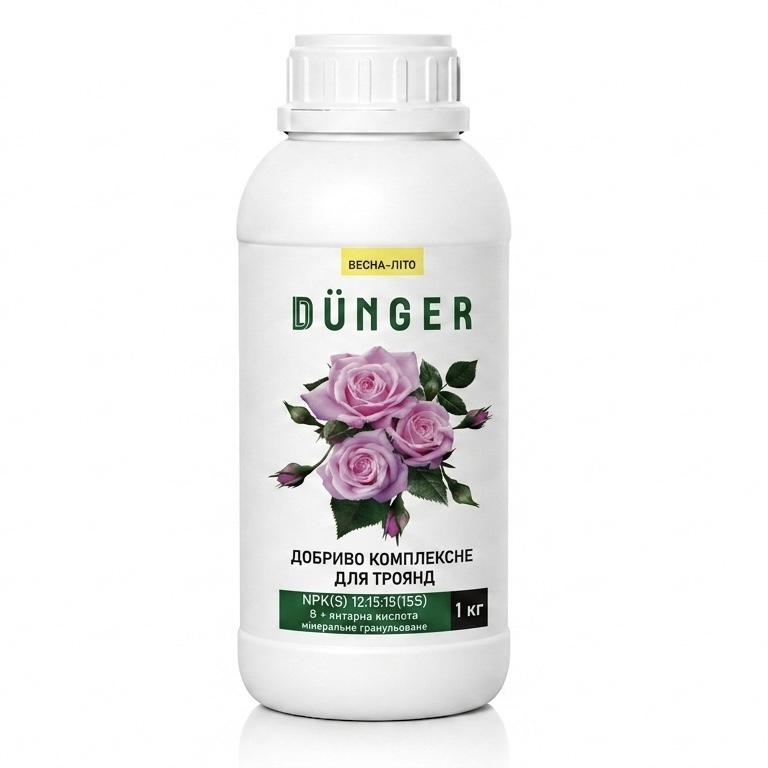
Complex fertilizer for roses granular
DÜNGER compound granular fertilizer for roses in 0.5 and 1 kg packs. Select the pack weight, check the price of that option and review the composition and instructions.
To plan packs for a shrub group, save a supported zone and measurements, then match the calculation to the intended application in My Garden.
Plan winter care before freezing weather arrives
The upper graft on a standard is above ground, so mounding material around the stem base does not protect the whole vulnerable structure. Protection needs depend on the cultivar, rootstock, exposure and local winter. When buying, ask how that particular plant should be overwintered. A general description such as “hardy rose” does not explain every risk associated with its standard form. With a container, consider root protection and whether the heavy plant can be moved safely.
Do not force a mature rigid stem to bend according to a generic illustration. Laying a standard down may require specific preparation and assessment; an unsuitable movement can break the stem or damage the graft. For a container-grown plant, a suitable cool, protected storage space may be an option if it supports winter dormancy. A heated living room is not an equivalent alternative. Check the intended storage conditions in advance rather than improvising during the first freezing night.
Protection also needs inspection during thaws and after strong wind. Materials should not injure shoots or create a permanently wet, airless enclosure. In spring, coordinate removal with the weather and the start of growth, and check the stake and ties again. If the position proves unsuitable, plan transplanting established roses as a separate operation. Avoid combining a move, severe pruning and an experimental winter arrangement without a clear need and a realistic way to care for the plant afterwards.
A manageable seasonal inspection
During each inspection, work from the ground upwards: soil moisture, stem base, unwanted shoots, ties, graft and crown. This takes little time and helps you look beyond the flowers. After wind, stability comes first; in heat, moisture deserves attention; before cold weather, review winter readiness. Plan purchases for the actual task, whether that is a support, replacement ties or justified feeding. Buying everything at once is less useful than knowing which part of the plant needs attention.
Common questions
A standard still benefits from permanent support because its crown loads the tall stem. Rather than removing the support completely, check its strength and replace tight or damaged ties. They should hold the plant without rubbing or constriction.
They may belong to rootstock growth below the upper graft. Trace where the shoot starts rather than relying only on leaf shape. Remove confirmed unwanted growth carefully at its origin without damaging the main plant. If the structure is unclear, clarify it using photographs first.
No. The cultivar and its growth habit determine the approach. Long shoots can be an essential feature of a weeping rose. Do not use the same severe shortening on every standard merely to obtain a symmetrical ball.
The form does not create a different crop: it is a rose with a particular structure. Choose a rose fertilizer using its complete instructions, the plant's age and size and its root conditions. Do not automatically increase the rate because of stem height or expect feeding to replace support and winter care.


