


Start spring feeding for garden lilies by assessing the planting: are the plants healthy, can excess water drain away, what has already been added to the soil, and which exact product are you considering? There is no reliable universal instruction to scatter a handful beneath every stem. Work from the fertilizer's complete instructions, the appropriate plant group and the measurement required for that application. An established flower bed and a small pot begin with different conditions, so copying one feeding routine between them can lead to unnecessary applications.
Lilies or daylilies: identify the plant first
True lilies, Lilium, grow from bulbs. Daylilies belong to a different genus, Hemerocallis, despite similarities between their flowers. Advice written for a daylily is therefore not automatically an application guide for a bulb-forming lily. If a plant arrived as a gift without a label, check its identity before borrowing a recommendation from another crop. A photograph of the flowers and foliage, or information from the person who supplied it, can help you ask a useful identification question.
Garden lilies also include different groups. Do not select an acidifying amendment, ash or another soil treatment solely because the label says lily: soil-reaction preferences can differ. Keep the name from the bulb package and compare the plant's needs with the actual site. This separates a nutritional decision from a situation in which the plant has been placed in an unsuitable growing environment. Buying another fertilizer does not resolve every mismatch between plant and soil.
For a wider view of the work that follows spring, use seasonal care for garden lilies. Here the task is narrower: deciding whether feeding is needed at the start of growth, understanding the product instructions and avoiding a random sequence of different remedies. A list of possible purchases is not a requirement to use every item. Decide what each proposed addition is supposed to achieve before including it in your basket.
Check the planting after winter
Look at the site before adding granules. If water remains around the plants, investigate drainage first. Persistently wet, poorly drained conditions put bulbs at risk, and fertilizer does not remove that cause. Compare nearby areas: is the problem confined to a hollow, or does it affect the whole bed? This simple comparison helps you avoid feeding every weaker shoot without understanding why it is struggling.
Notice damage, spots and uneven emergence. The appearance of one leaf does not always identify a particular nutrient deficiency. Photograph the whole planting and the affected part, examine the soil and seek a diagnosis when necessary. Until the cause is clearer, do not combine several fertilizers in the hope that one will solve it. Knowing what happened before the symptom appeared is more useful than an ever longer shopping list.
For recently planted bulbs, return to the planting information and any amendments already used. Freshly prepared soil does not automatically need another addition. Small daughter bulbs may also need time before they flower; size and development matter. A flowerless young plant is not, by itself, a reason to increase a fertilizer rate. Keep expectations appropriate to the planting material rather than judging every bulb against a mature flowering specimen.
When to consider spring feeding
Use plant condition, soil condition and the requirements of the particular product. One date cannot represent every Ukrainian garden, including a sheltered bed beside a house and an exposed open site. The first warm day does not prove that the ground is ready for the planned work. Check the actual planting instead of tying the application entirely to the weekend when you happen to be able to visit.
Separate purchasing from applying. You can choose a suitable product ahead of time and use it when its application conditions are met. If several products are suggested together, ask what each one contributes. Are they alternatives, or do they address separate needs? Do not turn an assortment of available fertilizers into a compulsory programme for every bed. This is especially useful when different family members buy supplies independently.
Before working, make a short record of previous applications, the area concerned, your chosen method and when you will reassess the planting. A personal garden notebook is sufficient. It prevents an accidental repeat when one person does not know that another has already fed the bed. Keep the original package with this information so that you can distinguish the actual product from another item with a similar name or colour scheme.
Soil, water and nutrition are separate decisions
Fertilizer does not replace a suitable root environment. In a bed, assess soil condition and use test results when they are needed. In a container, also check the composition and initial nutrient provision of the purchased growing medium. The guide to soil for flowers in beds and pots explains the choice of growing environment. Avoid adding another product before you understand what is already present in the mix and how the plants have been managed.
Lilies should not be left severely dry or permanently waterlogged. That does not translate into one water quantity for every plant. A pot and an open bed lose moisture differently. Before feeding, check the conditions required for the selected method and arrange ordinary watering care. A dry-looking surface does not necessarily describe the full soil volume, so one quick glance is not always enough to guide the next operation.
Do not add phosphorus or potassium merely because lilies are grown for flowers. Establish the need and account for the composition of products already used. The overview of phosphorus and potassium fertilizers helps distinguish their purposes. A flowering-related name does not justify increasing a rate or mixing every similar pack together. If you cannot explain why an additional product is needed, pause that purchase until the information is clearer.
Choosing a product and pack size
Begin with the full product name and intended use. A universal fertilizer can include ornamental plants within its scope, but that does not make every rate on its page appropriate for a lily bed. For example, a method intended for trees or vegetable seedlings should not simply be transferred to flowers. Find the relevant plant group and conditions, and clarify any uncertainty about the particular application before using the product.
Measure what the instructions require: area, mass of a growing mix or another specified parameter. The number of stems cannot automatically replace a measured area. A household spoon is also not a dependable substitute for weighing granules. Once you know the requirement, compare pack sizes with your planned applications rather than choosing only by the apparent value of the largest container. A smaller total requirement can still justify combining several zones in one purchase.
An option for a considered feeding plan
Consider this organo-mineral product for ornamental planting needs. Before application, check its full instructions, the relevant plant group and method. Do not transfer tree or vegetable-seedling rates to lilies, or use fertilizer as a treatment for a damaged bulb.
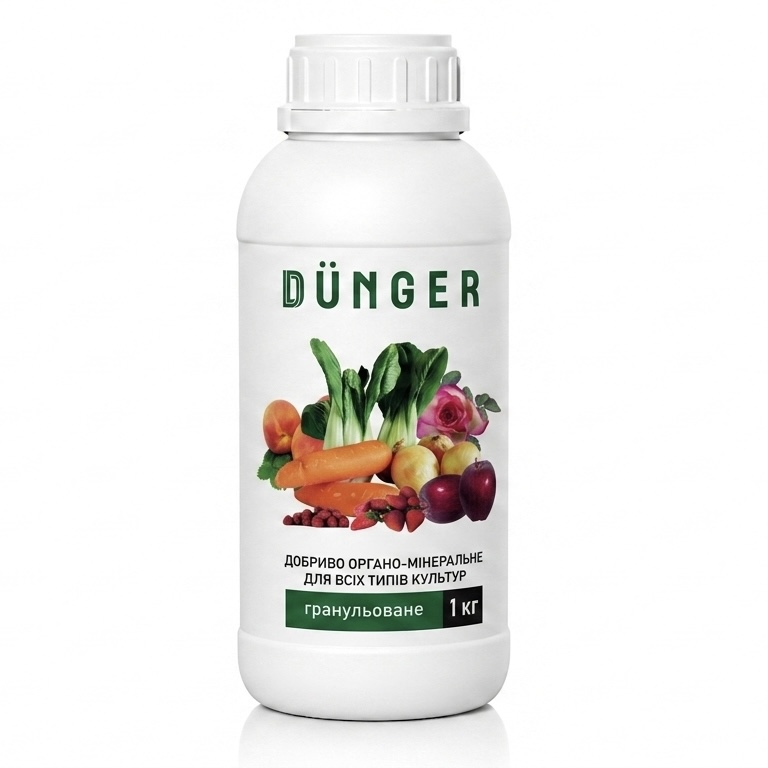
Organo-mineral fertilizer for all types of crops granular
DÜNGER organo-mineral fertilizer granules for all types of crops. Available pack sizes: 1 and 5 kg. Select a pack, check its price and availability, and place an order for delivery within Ukraine.
Plan growing areas and pack requirements in My Garden.
What changes when lilies grow in pots?
A container has a limited growing volume and is best treated as a separate planting. Check drainage openings and the initial composition of the medium. Do not convert an area-based rate into an arbitrary handful per pot. Mixing fertilizer into a growing medium, or using another container method, requires the appropriate instructions rather than an approximate reduction of a flower-bed dose. The pack size itself does not determine the amount needed by a particular pot.
Several pots standing together may have different histories. One might have been repotted recently, another may still contain an older mix, and a third may receive more rain. Label them or make a simple list before feeding. This helps avoid repeating an application where it has already been made and prevents confusion between different products. It also makes it easier to explain a problem accurately if a plant later needs further assessment.
What to observe after applying
Return to normal observation and care. Do not expect flowers to appear immediately after feeding, and do not treat the absence of a rapid visible change as a reason for another dose. If the condition worsens, consider watering, physical damage and other possible causes. Retain the label so you can state exactly what was applied and how. A useful assessment compares the whole planting rather than one isolated leaf.
Green foliage remains important after flowering because it supports the bulb's stored reserves. Avoid cutting the whole plant back early merely to tidy the bed. A spring fertilizer purchase is one part of care, not a substitute for light, healthy foliage and suitable conditions through the season. Judge the result by the planting's overall condition and avoid promises that any single product will guarantee a particular number of flowers.
Frequently asked questions
No. Emerging shoots alone do not establish a need. Consider the soil, previous applications and the chosen product's instructions. Where weak growth results from standing water or damage, address that cause first.
Consider one whose complete instructions cover the appropriate ornamental plant group. Use its stated method and rate; do not borrow an application for another crop simply because it appears on the same product page.
A higher rate does not guarantee flowering. A small bulb may need time to develop. Check light, plant condition and care while keeping fertilizer use within the product instructions.
No. Calculate each planting's requirement using the appropriate method, then add together quantities of the same product. Do not combine different fertilizers in that calculation merely because their packages look similar.


