


Feed garden roses in spring when the bush is ready to resume growth and the root zone is in a suitable condition. First inspect winter damage, soil moisture and any fertilizer already applied. A dedicated granular rose fertilizer can then be used according to its own instructions. A blackened cane, waterlogged soil or a newly planted weak bush calls for assessment before another dose.
Start with the bush, not the calendar
Spring reaches Ukrainian rose beds unevenly. A sheltered sunny wall and an exposed low part of the same garden can be at different stages. In colder northern or elevated sites, frozen ground and repeated cold spells may persist while another bed already shows growth. In a dry southern spring, moisture may become the more immediate concern. Use the actual soil and buds to organise the work rather than copying one date for the whole country.
Look for swelling buds and developing shoots, but consider the weather forecast alongside them. A brief warm spell does not settle the season. Feeding is one part of a spring restart; opening winter protection, pruning and checking moisture require their own decisions. Do not bundle every task into the first convenient weekend if the conditions around the bush are still changing.
Identify the type of rose before making major cuts. A climbing rose's framework is not managed in the same way as a compact hybrid tea. Removing dead or damaged tissue and shortening healthy flowering wood are different jobs. If the rose is unfamiliar, find its variety label or planting information first. Feeding after an unsuitable pruning cut will not replace the flowering structure that was removed.
Separate winter damage from a feeding need
Examine the canes from the base upwards. Dead sections can become clearer as living buds develop. Remove confirmed dead growth back to living tissue using an appropriate pruning method for the rose type. A few damaged tips and extensive dieback across the whole bush do not describe the same situation. Take time to assess the remaining live plant before deciding how much routine feeding is appropriate.
For a grafted rose, inspect where strong new shoots originate. Growth from below the graft union may belong to the rootstock rather than the named variety. Do not judge recovery by shoot vigour alone. If the top has died and only rootstock shoots remain, more fertilizer will not restore the original variety. This is a plant assessment problem that should be resolved before treating the bush as a normal established rose.
Yellow leaves also have several possible causes. Shade, unsuitable feeding and root damage in poorly drained soil can produce similar symptoms. Check whether the change affects young or older leaves, one cane or the whole bush, and whether the soil remains wet. Brown edges can be associated with drought or excess fertilizer as well as heat. A photograph and a description of recent care are more useful for advice than the statement that the rose needs something stronger.
Check water, soil and previous additions
Move aside enough surface mulch to inspect the soil. A dry top layer does not show the moisture throughout the root zone, and a wet surface does not prove good drainage. Newly planted roses need particular attention while their roots establish. Water should reach the root area without leaving it continually saturated. Direct watering towards the soil, keeping unnecessary wetting of foliage to a minimum.
Read the labels of products used during planting or the previous feeding. Some growing media and planting preparations already contain nutrients. Write down their names and application details in your own notes before selecting another fertilizer. Buying several different rose products does not mean that they belong in one application. The useful comparison is their purpose, composition and instructions, not the number of promises on the front of the package.
If a rose bed repeatedly performs poorly, assess the wider soil conditions. The guide to checking garden soil before fertilizing helps organise questions about structure, drainage and analysis. For comparing product types, use how to choose rose fertilizer. Here the aim is to decide whether this particular spring application is suitable and how to prepare for it.
Prepare the root area for even application
Remove small weeds carefully so the soil around the rose is accessible. Some roots lie near the surface, so avoid deep, forceful cultivation around the bush. Work gently and keep the stem base visible. If mulch hides the soil, move it aside as needed to follow the selected fertilizer instructions. Do not use a pile of granules against the stems as a shortcut for even distribution.
Mulching and fertilizing are related but separate choices. An appropriate mulch helps conserve moisture and limit weeds; its presence does not identify the nutrient supply or automatically determine the next fertilizer dose. Leave space around the stem base when replacing organic mulch. Review the bed's condition after the work, especially where water collects or a thick layer makes it difficult to inspect the soil beneath.
A granular option for spring rose feeding
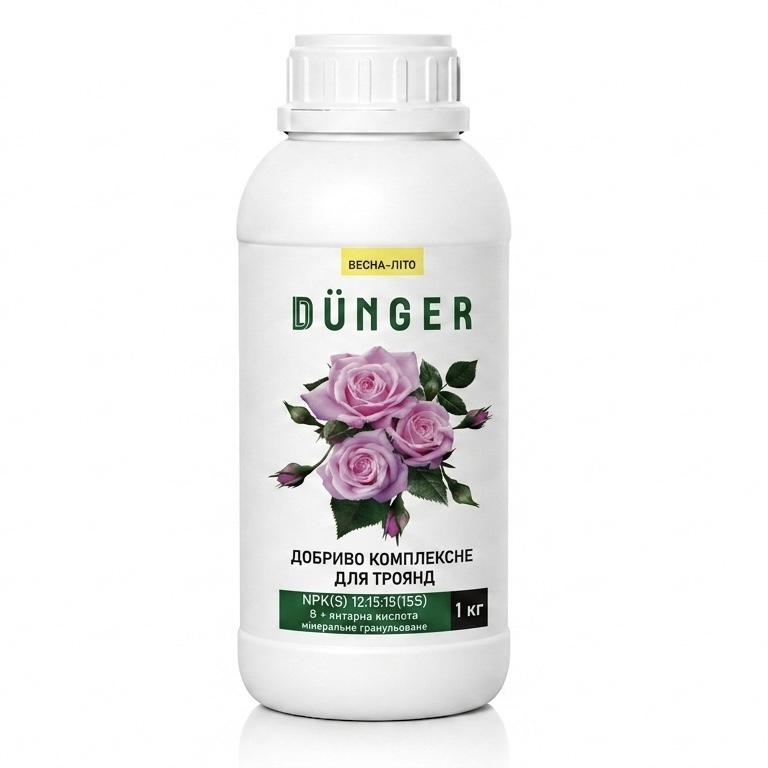
Complex fertilizer for roses granular
This product comes in 0.5 and 1 kg packs. The bottle contains granules, so use the weight and the instructions for this product when planning the purchase. For an established garden rose, review the root-zone application and the rose-specific rate together.
The complex is used before planting, as well as for fertilization. The fertilizer is evenly distributed on the soil surface in the root zone, or in the hole during planting. Take into account the size and age of the bush when using the tool.
Roses: 20-40 g under the bush
The stated range requires consideration of the bush's size and age. Do not automatically give every plant the upper amount, or substitute the rate for another shrub group. Keep the pack nearby while measuring. Compare the range of rose fertilizers and organise your zones, plants and selected product plan in My Garden.
Calculate the purchase after choosing the application
Count the bushes that actually need the planned application. A mature climbing rose, a recent planting and a small replacement bush should not be grouped solely because they grow along the same path. Determine each appropriate quantity within the instruction before adding the total. Check what remains in an existing pack and compare that total with the available pack weights.
Keep a simple written record of the product and amount you actually used. This prevents a later purchase from becoming an accidental repeat application. The product's stated action period is not automatically a command to repeat feeding on a fixed day. Subsequent care still depends on the selected instructions, rose type, growth and the earlier nutrient supply. One spring application should not become an improvised year-round programme.
What to watch after feeding
Continue checking moisture and the developing shoots. Do not judge success by the speed at which one leaf changes colour. If symptoms spread, inspect for pests, disease and root-zone problems instead of immediately adding another fertilizer. Excess fertilizer can encourage growth without solving poor flowering and can damage leaf margins. More is not a dependable response to uncertainty.
Compare each bush with its own condition before the work. Different varieties naturally differ in growth and flowering pattern. A rose that flowers once is not expected to behave like a repeat-flowering type. Suitable light, water and pruning remain essential parts of care after the fertilizer has been applied.
Frequently asked questions
Not automatically. Check live growth, moisture, the state of the soil and the weather. Removing protection and feeding are separate decisions, even if they happen close together in a particular spring.
The displayed method is soil application. Do not turn it into a foliar treatment or invent a solution concentration. Choose a product with an explicitly suitable method if a different application is required.
Do not assume so. Check the planting medium, previous additions, plant size and the product's planting instructions. Establishment and moisture deserve attention before copying the routine used for a mature rose nearby.
Explore further seasonal topics in Flowers and ornamentals.


