


A seasonal feeding plan for established grapes starts with a check that you repeat at different stages. In spring, assess the vines after winter and review earlier inputs. At bloom or the beginning of ripening, collect tissue samples if they are useful to your diagnosis. After harvest, compare results with vine condition and plan the next season. Growth stages give you useful times to observe and test. They do not create a compulsory series of fertilizer applications for every vine.
Make a simple record of the vines and their site
Write down the cultivar, approximate age, rootstock if known and earlier fertilizer applications. Mark parts of a row that receive different irrigation or grow in different ground. In a home garden with a few vines, a paper sketch is enough. Keep an old vine beside a wall separate from a younger plant in an open row when their conditions and growth differ.
Compare like with like. Strong shoots close to a drip line and weak growth in a dry corner may show how water is distributed rather than how much fertilizer is missing. If vines only lag in a low part of the site, check drainage and signs of cold injury. If foliage changes along a whole row, note whether it starts on young or older leaves. A photograph of one leaf cannot give you a reliable composition or application amount.
On an unfamiliar site, start with soil assessment before fertilizing. A soil test can assess pH and levels of certain nutrients in the ground. A tissue test tells you something different: the nutrient concentration in the sampled tissue at that growth stage. For established vines, interpret the two kinds of results alongside irrigation, vine vigor and the history of previous inputs rather than selecting a product by one number.
From early growth to flowering
In spring, see how many buds are growing and which shoots survived winter. Check if the condition differs along the row. If a vine lags after cold damage or sits in waterlogged ground, examine those problems first. Fertilizer cannot replace living tissue injured by frost. Before planning early work, see spring feeding for grapevines and decide whether you have enough reason to apply a product this season.
Bloom is one possible time for sampling if the laboratory works with grape tissue at that stage. Ask whether it wants petioles or leaf blades, which leaf position it needs, how much material to collect and how to deliver it. Label the cultivar, stage and exact area. Do not blend symptomatic and healthy vines into one sample when trying to compare them. Avoid combining cultivars or rootstocks unless the laboratory specifically advises it.
From fruit set to the start of ripening
As the berries grow, look at crop load, shoot growth and where water reaches. Mark places where the ground dries much faster, then check whether irrigation really wets the root area. If one vine is weak but another of the same cultivar on the same support is growing normally, look at its particular soil and care. A row-wide application can hide the difference without addressing its cause.
The start of ripening is another possible time for a tissue sample. Signs depend on the cultivar. Dark grapes often change color, while pale varieties can be assessed using changes such as softening as well. Do not directly compare a ripening sample with a bloom sample without the laboratory's explanation. The concentration of nutrients in the tissue changes during growth. For repeat monitoring, use the same stage and the same tissue type when possible.
In Ukraine, two cultivars in one garden can reach those stages at different times. Vines on a warm wall or a sheltered sunny slope may develop sooner than vines in a cool hollow or those recovering from spring frost. Record the stage on the vine itself. An application date copied from another job cannot tell you when to sample or whether a new treatment is needed.
After harvest, connect the results to next season
Review how the shoots developed, how long the leaves remained healthy and whether problems from the previous year returned. Collect the names of products, the quantities and the areas where they were used. If you traced a problem to irrigation or poor drainage, plan how to assess that particular change before adding other treatments. The end of harvest is not a reason to repeat the spring applications. Established vines and soil being prepared for a new plant are separate jobs.
If testing shows a nutrient deserves attention, compare the result with a product's composition and with anything else it supplies. A potassium product will not correct a lack of nitrogen or standing water. If soil and tissue results point in different directions, do not add the recommendations together. Ask what may be limiting uptake or whether a second sample at a comparable stage would help. Decide which action to take first.
Before ordering, measure the area you would actually treat or use the other unit specified by the label. Calculate different parts of the row separately. Account for other products that already supply the nutrient in question. If no extra feeding is needed, keep the measurements and notes for next year. They make it easier to see what has changed when shoot growth or foliage differs later.
For example, consider a sunny section and a low section of the same row. Both have mature vines, but only the low section showed poor growth after prolonged rain. Give the laboratory separate samples if requested, and record how long each zone stayed wet. If drainage is the main difference, plan its repair separately from buying nutrients. The better-growing section need not receive the treatment planned for the other.
Keep the report usable for next year
Label the sample with its zone, cultivar, stage and date. Tell the laboratory if the foliage was recently treated because residues can affect readings. Ask how it wants the material prepared rather than guessing. On the report, read the nutrient, unit and comparison range together. If the range belongs to a different tissue or stage, ask how the result should be interpreted before buying fertilizer. Mark where you took the sample so you can repeat it from comparable growth next year.
A short follow-up note is as useful as a record of the product. Write what you changed, what stayed the same and when you will look again. If both irrigation and fertilizer changed at once, avoid attributing all later growth to one application. Comparing similar photographs and a same-stage sample gives you a better basis for the next decision.
A potassium product for grapevines where needed
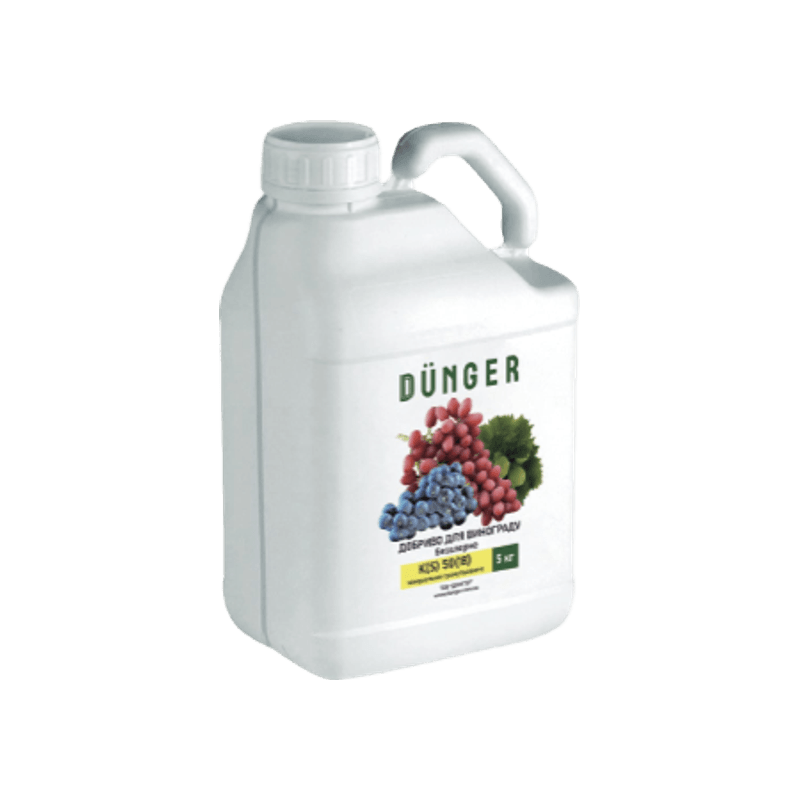
Complex fertilizer for grapes
This chloride-free granular product supplies potassium and sulfur. Consider it only if assessment points to a potassium need and the early-season conditions in the directions suit the planting.
Read the complete directions and check the area being treated before comparing 1 and 5 kg packs. Tissue sampling at bloom or ripening does not call for this product at those stages.
Questions about feeding grapevines through the season
No. Bloom and the start of ripening are opportunities for assessment. Use those stages to compare what the vines are doing, then decide about feeding according to a confirmed need and the directions for the product.
Leaf color and symptom position can help you choose what to investigate. Compare them with watering, root conditions and past inputs. Where the pattern is unclear, separate samples from healthy and affected areas may be useful.
First calculate what you need using the unit given for grapes in the specific directions. Compare the figure with pack sizes and the possibility of storing leftovers as directed. Do not add extra applications simply to use the rest of a package.


