


Autumn grapevine pruning starts with the cultivar, established training system and completion of growth. Every vine does not need its final short pruning immediately after harvest. For vines that receive winter protection, the autumn operation may relate to arranging canes for protection, while the final bud load must account for cold hardiness and bud survival.
If the cultivar or training system is unknown, do not assign the same bud count to every vine. First distinguish the permanent structure from the growth produced this season. The general guide to when to prune grapevines explains seasonal choices. This guide focuses on autumn selection and preparation, including decisions that should not be rushed before winter.
Collect information for each vine
Record the cultivar, age, site and growing system. Separate vines that receive winter protection from those staying on their supports. A young plant still developing its framework should not be treated as a mature fruiting vine. Grapes on an arbor grown mainly for shade also have a different purpose from a compact row managed for fruit.
Recall earlier winter damage and this season's growth. The same cultivar name does not remove the difference between an exposed slope and a sheltered yard. For a problem vine, establish which parts are already damaged and whether suitable replacement growth exists. Do not use the strongest vine as the only model for all neighbouring plants.
If labels have been lost, making a map and identifying individual vines is more useful than assigning them all one assumed cultivar. Retain photographs of the whole plant on its support and close views of the base. They help explain its structure during a consultation. Avoid irreversible major cuts before understanding the role of the parts you intend to remove.
Harvest completion is not the only signal
The vine is not necessarily fully dormant after the final bunch has been picked. During the season, shoots mature, lose their leaves and become overwintering canes. Do not strip green leaves simply to make the framework easier to see. Different cultivars' harvest dates do not establish a common pruning day for every plant.
Assess the overall condition and natural completion of the season. A brown surface alone is not a full test of bud viability throughout the coming winter. It does not prove that the vine will survive cold without damage or that every possible reserve cane can be removed. Autumn appearance and actual survival after cold are different pieces of information.
Season length differs between southern Ukraine, central regions and Polissia, with elevation, slope and local weather also relevant. Use the plant's actual condition and forecast. Do not copy someone else's date without comparing cultivar, winter protection and site. Plan autumn work after inspecting the particular vine, rather than trying to complete every operation in one day regardless of conditions.
Identify permanent wood and one-year canes
Permanent parts maintain the vine's structure. One-year canes carry buds from which shoots capable of fruiting develop in the following season. This is why all current-season wood should not be removed simply because it seems surplus. First establish where the necessary fruiting wood will remain in the existing training system.
Grapes bear on new shoots originating from buds formed during the previous season. Selection therefore relates to cultivar and training. Short spurs and longer retained canes are not arbitrary versions of one universal length. They belong to systems suited to the vine and the position of its fruitful buds.
An old neglected vine can have a complicated structure. Do not try to convert it to an entirely different system in one autumn operation. Mark the main parts and problem locations, then prepare a staged plan. Large cuts made without understanding the future framework can remove the very material needed for the next season.
Separate preparation from the final bud load
Where winter covering is required, autumn inspection helps determine which canes can be arranged for protection within the existing form. Taking a vine off its support, positioning it and pruning it are related but distinct operations. Do not force every vine into a covering arrangement that does not fit its structure.
The final number of buds depends on cultivar, growth, training and potential winter injury. In cold conditions, delaying the final assessment allows bud survival to be considered. Preliminary autumn selection should not automatically mean cutting every retained part to the shortest possible length before its condition after winter can be known.
If a specialist will finish the work, agree which questions and parts are being left for later inspection. A reserve is not a reason to retain every tangled shoot indefinitely. There should be a clear plan for completion during dormancy, rather than postponing the decision without describing the intended future form.
Understand how cold risk changes the decision
Grapevines are pruned during dormancy, but in cold climates final pruning is often better delayed towards the end of winter so damage can be assessed. This does not prohibit an autumn inspection. It explains why one date or bud count cannot be declared correct for every cultivar and growing site.
Wood becomes brittle in severe cold. Do not force frozen canes to bend or pull them from supports. If a crack or break is found, do not hide it beneath a tight binding and call the operation complete merely because the vine now fits under protection. That damage needs its own assessment.
Keep the site and the cuts understandable
Inspect fallen fruit, leaves and pruning residues. Tidying around vines is part of seasonal care, but does not replace identifying a particular disease. Assess suspicious parts separately. Do not prescribe the same chemical treatment to every vine merely because an autumn work date has arrived.
Use a tool that gives a controlled cut appropriate to the wood. Trace the cane from its base to its tip before cutting within a dense tangle. Avoid sharply dragging removed wood through living parts. If the structure becomes confusing, improve the view first and return to the vine map rather than cutting more material to find your way.
Do not attach an improvised feeding programme
The amount of wood removed does not set an automatic fertilizer dose. Plan nutrition from need and complete instructions, allowing for soil and earlier applications. The potassium product below has its own grape-specific timing. Its crop name is not a reason to move that application to autumn pruning.
Potassium feeding at its own permitted time
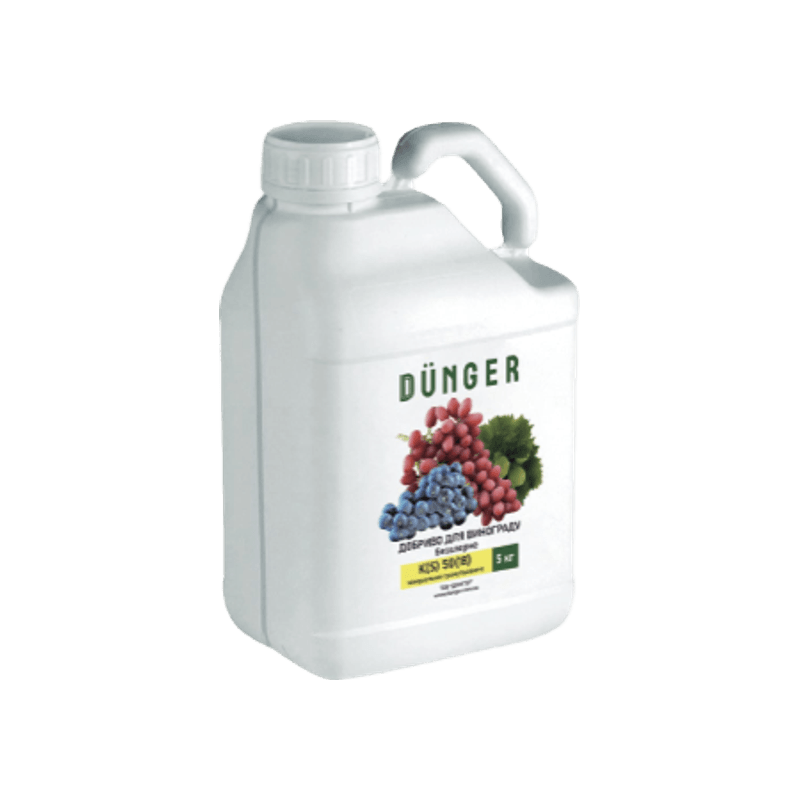
Complex fertilizer for grapes
This product is intended for potassium feeding of grapes, rather than as an automatic step after an autumn cut. The grape row and the timing from its own instructions are shown below for future planning.
Pack sizes are 1 and 5 kg. Both contain granules; pack mass is not the volume of prepared solution.
The ideal time - early spring, before the flowering of grape leaves.
Every part of the rate matters: mass, water and area. Do not replace one square metre with one vine or turn root application into treatment of pruning wounds. Read the full method for a future plan. The guide to choosing spring grapevine feeding explains seasonal feeding decisions in more detail. Buying now does not mean an application is required in November.
Follow one autumn inspection sequence
- Check cultivar, age and whether the vine receives winter protection.
- Establish its actual stage at the end of growth and inspect the canes.
- Map permanent framework and the one-year parts to retain.
- Decide the scope of preparation and questions left for final assessment.
- Allow for cold, brittle wood and protection without breakage.
- Remove residues and retain the map and personal records of the work.
In My Garden, define zones, crops and measurements to prepare a fertilizer plan. Keep training diagrams, photographs and pruning records separately. Browse Fruit garden for other crops. Their pruning systems and fertilizer programmes should not be transferred to grapes without checking their relevance.
Prepare useful information for a consultation
Provide a picture of the full vine on its support, the base and the canes you are considering retaining. Explain whether winter covering is planned and what happened in earlier winters. This gives more context than a close-up of one cut. Keep each vine's identity clear, particularly when several cultivars share a support.
When buying fertilizer for a later permitted application, check the selected pack and complete product name. The bottle or canister shape does not determine whether the contents are liquid. Confirm current price and availability during ordering, and choose a quantity from the planned application rather than from the number of canes removed.
Questions about grapes in autumn
Harvest completion does not prove dormancy. Assess leaves, growth stage, cultivar and conditions. Do not turn harvest day into an automatic date for final pruning.
There is no universal count for an unknown cultivar and system. Allow for structure, vigour and survival after winter. Preliminary selection does not replace the final decision.
No. Winter protection should suit its training and cultivar. Do not remove needed fruiting wood merely to make positioning easier or break it while taking it down.
A cut does not establish the nutrient need or application date. Follow the complete product instructions. The displayed option has early-spring grape timing rather than an automatic autumn application.


