


A watermelon layout needs room for vines and a way to water and harvest. First find out how far your cultivar spreads. Then mark the growing area and the paths separately. Measure the space in a row from one planting center to the next, and measure between rows from one center line to the next. Even a single row needs enough width for vines to grow away from each plant in more than one direction.
Choose outdoor watermelon spacing for the cultivar
Look for the cultivar's growth habit and spacing on the seed packet. If it mentions only small fruit or early harvest, ask how far the vines spread. The size of a melon does not tell you how much ground the plant will cover. Compact forms can fit in a smaller garden. Long, branching vines need more open ground. Do not copy spacing from another cultivar just because its fruit looks similar.
Check whether the distances describe individual plants or hills. A hill can be sown with several seeds and later thinned, depending on the chosen method. Plan around the final number of plants rather than the number of seeds. When transplanting, match each marked point to one prepared plant if you intend to keep one plant there. See the guide to raising and transplanting watermelon seedlings for what to do before moving the young plants outdoors.
In a narrow plot, try one row with room to reach the soil on both sides. Use two rows only if the mature vines and separate access to the root zones will fit. Before buying extra plants, lay out string for the future edges, walk through with a watering can, and check the space beside any fence. If you can work only from one side, consider fewer plants or a more compact cultivar.
Worked example for a bed with one row
Suppose you have a rectangle 6 m long and 4 m wide. Set aside 60 cm along each long side for access. That leaves a 2.8 m wide growing strip. In this example the seed supplier recommends 1.4 m between plants of the chosen cultivar, and their vines fit the remaining width. Stretch a string down the middle. Mark four centers 0.9 m, 2.3 m, 3.7 m and 5.1 m from one end. That gives three equal intervals of 1.4 m, with space at each end.
The whole rectangle is 24 m². The two paths account for 7.2 m², so the watermelon strip is 16.8 m². Keep all those measurements for access and watering. If a soil treatment is measured by planting area, use only the part of the growing strip you intend to treat, excluding the paths. The numbers show how the layout works. Use different spacing if your cultivar or site needs it.
Check the short ends too. A gate, tap or route to another bed might require moving the nearest mark and recalculating the count. Avoid squeezing the same number of plants into a shorter span. If the selected vines will outgrow the strip, choose a more compact cultivar, leave fewer planting positions, or use a larger plot. When you have clear access from one side, keep it free of unnecessary stakes and hose loops.
What to reconsider for two rows
On a wider plot, mark both center lines using guidance for your cultivar. Then mark the space for vines along the outside of each row. The whole space between center lines will not stay open as a path. Some will fill with stems even if the bed is easy to cross when the plants are young. For a central path, mark a separate strip, allow for vines on both sides and check the total width. Leave enough room to turn with a crate at the end.
Staggering the planting centers can put a plant opposite a gap in the other row, but it does not create more space for vines. If the outer edge meets a greenhouse, tall sweet corn or another crop, check how much sun it receives and whether you can still reach that neighboring crop. Set the available width before deciding where to put the individual plants.
Make room for drainage, warmth and water
Watermelons need a warm sunny bed that drains excess water. If a plot includes a cold wet hollow, use the more suitable part instead of closing up the rows to fit extra plants on the dry edge. At an exposed spot that dries quickly, make sure irrigation can reach every planting center. Limited water on a hot site can be a reason to grow fewer plants. Two Ukrainian gardens may call for different layouts for the same cultivar.
Mark the bed once you have chosen the cultivar, then wait for suitable soil warmth and low frost risk before sowing or transplanting. Check the guide to when to plant watermelons for those planting decisions. If you will use temporary row cover, plan to remove it when the crop begins flowering so pollinators can reach the flowers. A triploid seedless hybrid needs a seeded cultivar that provides viable pollen. Follow the supplier's directions for positioning that cultivar and reserve space for it in the layout.
Keep access after the vines start to spread
Run an irrigation line while the centers are visible and you can still walk along the row. Check water delivery near both ends. Guide young flexible runners that start crossing the path into the area you set aside. Avoid pulling long stems sharply, particularly if fruit has already set. When a path narrows, use another way into the bed and work out which space to adjust next season.
After rain, watch for water from a nearby path flowing into just a few plants. If some plants fail, check the soil, the rest of the crop and the warm time remaining before replacing them. A gap does not always need another plant if nearby vines are already spreading. Treat the choices after establishment, including vine care, pollination and ripening, as separate from laying out the bed.
Bed measurements help you prepare the site, but area does not tell you whether the soil needs fertilizer. Take account of past applications and test results before adding granules. See the guide to feeding watermelons by growth stage for decisions at different growth stages. Record the watermelon growing area separately from other beds when planning a purchase, particularly where they have different irrigation or soil fertility.
At the end of the season, compare the plan with how far the vines actually spread. Note which side gave you the easiest access to fruit and where you had to walk around the plants. If you change cultivars, keep the working path and recalculate the number of plants. In My Garden, save different growing areas as separate zones with their crops and measurements. Keep observations on your own sketch.
Fertilizer for the prepared watermelon bed
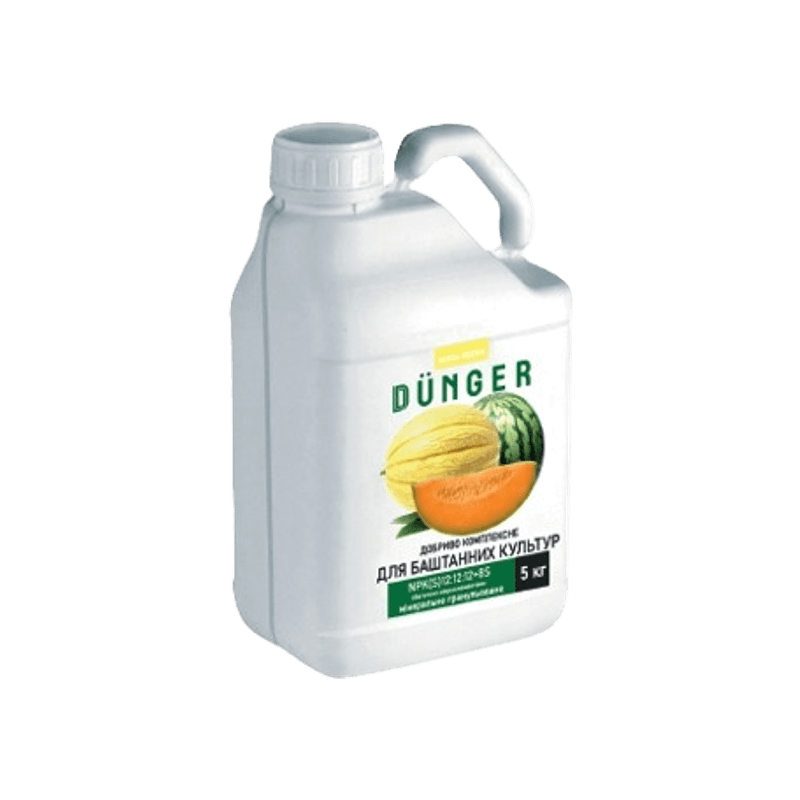
Fertilizer for melon crops granules
If testing shows a need for the nutrients in this watermelon and melon fertilizer, check the main spring directions for application at sowing or planting. For this method, measure the area you will actually treat. Confirm the open-ground conditions before buying.
The granules come in a 5 kg pack. Compare the amount for the planting strip with the pack weight. Leave paths and areas without a confirmed need out of the calculation.
Questions about watermelon spacing and layout
Yes, if the distance between plants suits the cultivar and there is space across the bed for vines and access. Check the mature spread, then mark the planting centers. A compact type may suit a narrow plot.
Check whether the chosen method calls for thinning. The final number of plants left in a hill determines the established planting density. It can be lower than the number of seeds you start with.
If a need is confirmed and the method applies to the planted area, measure the part of the bed where you will use the granules. Exclude paths and other crops. Check the relevant line of the instructions before comparing the required amount with the pack weight.


