


Feed watermelons according to previous soil preparation, vine growth and the stage of the crop. Where additional nutrients are justified, a compound product covering the relevant vegetable group and application method can be suitable. Do not begin with an increased nitrogen dose: excessive nitrogen can encourage vine growth at the expense of fruit development.
If vines are weak, small fruit stops growing or plants wilt, first assess warmth, water, light and the root zone. Fertilizer cannot replace suitable conditions. This guide explains what to establish before buying, how to separate a feeding question from other problems and how to use a specific product without borrowing a programme from a neighbouring crop.
Start with the bed's history
Review compost, manure, granular fertilizer and solutions applied after planting. They belong to one nutrient history even when different people did the work. Record product name, amount, area and date. Saying that the ground was well prepared does not identify the next useful step when nobody knows what was added or how much the plants have already received.
On unfamiliar ground, a soil test can help relate crop needs to measured conditions rather than leaf colour alone. Keep areas with different management histories separate when sampling. Read how to assess garden soil before preparing samples, and explain the watermelon planting to the laboratory so the question and interpretation concern your actual bed.
Watermelons need sun, warmth and soil that drains excess water. Additional fertilizer cannot compensate for shade or roots in cold, wet ground. Look at the site at different times of day. An apparently open morning position may later spend a long period behind a building or tall neighbouring crops, changing the conditions without changing the fertilizer already present.
After transplanting, assess establishment first
For young plants, establish whether the seedling mix contained nutrients and what was added at planting. Do not repeat feeding merely because several days have passed. Check moisture in the root ball and surrounding soil, leaf condition and new growth. Moving a plant into the garden and buying its next fertilizer do not necessarily need to happen together.
Handle roots carefully because damage at transplanting can slow establishment. Avoid digging up each plant to see whether it has rooted. Observe above-ground development and planting conditions instead. If a problem occurs in one place, compare it with neighbouring plants before changing feeding for the whole row. A local difference deserves a local investigation.
Seedling care differs from care of a mature planting. With a liquid product, consider intended use and solution quantity as well as dilution. An adult application cannot simply be renamed a seedling treatment. The guide to growing seedlings at home provides a broader framework for handling young plants before they become established crops.
During active vine growth
Vine development helps assess whether additional feeding is reasonable. Large dark-green leaves and vigorous growth are not a reason to supply still more nitrogen. Compare plants with earlier observations and application records. The aim is balanced development, rather than producing the greatest possible mass of leaves regardless of what happens to flowering and fruit.
When growth is weak, look beyond fertilizer. Cool weather, drying soil and drainage difficulties can create different problems. Note when the setback began and whether every plant is affected. This prevents a sequence in which each delay triggers another product while the original limitation remains in place and becomes increasingly difficult to distinguish from subsequent treatments.
Keep access to watering and application points as vines spread. Mark plant bases while they are easy to locate, and avoid trampling or stretching vines to inspect leaves. Later, when growth becomes intertwined, those markers help connect observations and measured solution quantities with the correct plant rather than whichever leaf happens to be nearest the path.
Flowers and fruit set require more than nutrients
Watermelon produces male and female flowers; a small swollen ovary sits below the female flower. Fruit formation requires pollen transfer. If flowers are abundant but fruit fails to set, consider insect activity and weather. Rainy conditions can interfere with pollination. Another fertilizer solution cannot itself perform the transfer of pollen that the flowers require.
Seedless watermelons particularly need an appropriate pollinizer planted with them. Check the requirements of the selected seed before sowing. Increasing nutrition will not replace a missing pollinizer plant. Keep the seed packet or obtain the cultivar name from the supplier when uncertain: that identity is useful evidence when investigating poor fruit set later in the season.
Not every small ovary will become a ripe watermelon. Follow development over time instead of diagnosing from one photograph. Mark several fruit and observation dates without damaging vines. If growth stops, gather watering, weather and pollination information before deciding what to do next. Those observations do not provide an instant diagnosis, but they make further assessment more specific.
Water while fruit develops
Avoid water shortage during fruit set and expansion. Assess moisture in the root zone rather than relying on a wet surface after a brief watering. Equally, water should not remain permanently pooled around the plant. Soil, weather and delivery method all matter, so one fixed volume for every bed and every day is not a reliable approach.
Drip irrigation directs water towards roots without repeatedly wetting foliage. A hose being present does not prove even delivery, however: check the planting for blocked outlets and local dry areas. When watering overhead, allow time for foliage to dry afterwards. Keep ordinary irrigation distinct from applying a measured nutrient solution; they are related tasks with different calculations.
Sweetness cannot be guaranteed by increasing a particular nutrient. Cultivar, growing conditions and maturity also matter. Do not attempt to compensate for unripe fruit with extra feeding immediately before harvest. As fruit approaches ripening, reconsider care for the actual planting rather than automatically continuing every previous operation on an unchanged calendar.
A suitable product and its application method
For an established feeding need, one option is DÜNGER's liquid compound for vegetables, fruit and berry crops, and flowers. Its directions cover vegetable crops and distinguish root feeding from foliar treatment. The method below applies to the vegetable group specified for this product.
Choose the method before preparing the solution. Concentrate and ready-to-use solution are different quantities. Measure the concentrate in a dedicated measuring vessel, check the water volume and label what you prepare. Do not combine root application with spraying just because both appear in the directions. The care task determines which application is appropriate.
Prepare a purchase for your planting
The selected liquid product comes in a 5 L pack. This is concentrate volume, not a ready-made watering solution. Count plants in the appropriate groups and calculate the requirement from the directions. Do not buy according to the number of buckets used for ordinary irrigation: the water needed to moisten the soil is not the amount of fertilizer required.
Fertilizer for your planned care
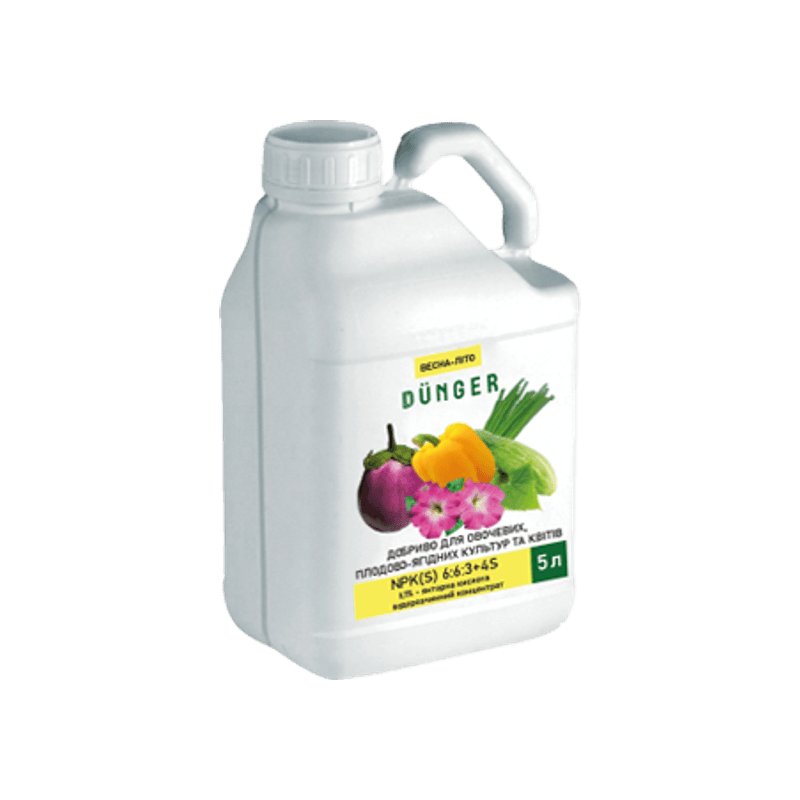
Complex fertilizer for vegetables, fruit and berry crops, and flowers
Compare the requirement of your planting with the 5 L pack. Check the complete name, liquid form and intended method before ordering, and confirm the current price and availability on the product page.
Add your plants to My Garden and prepare your purchase calculation.
After application, record date, method, concentrate quantity and the plants actually treated. Make the next decision with that record available. Other articles in the vegetables and greenhouse section help plan neighbouring crops, but their rates are not additions to the watermelon bed. Keep a separate calculation for each product and method.
Frequently asked questions
Check pollination, cultivar and conditions first. Vigorous growth does not establish a need for more nitrogen. Additional feeding may reinforce the imbalance, so make the nutrition decision after assessment rather than simply responding to the fruit count.
Yes, when its full directions cover the relevant crop group, stage and method. The name does not have to include watermelon. Check the particular product and its own rate rather than choosing a familiar vegetable figure from a different formulation.
Do not create an improvised mixture without established compatibility and a clear need. Account for nutrients already applied and the planting's condition first. An arbitrary mixture cannot guarantee flavour, ripeness or yield, and adding several products makes the feeding history harder to interpret.


