


After cucumber seedlings emerge, they need adequate light, warmth without overheating, moisture throughout the rootball and room to grow. The aim is a compact plant with healthy true leaves and intact roots. The tallest seedling may have a thin, weak stem caused by unsuitable conditions. Assess plants by their condition and intended planting site as well as the time since sowing.
What to change after emergence
Germination under a cover and growing leaves require different care. Once seedlings appear, remove the clear lid or film and provide good light. Check that excess water can leave the container. Avoid keeping young cucumbers in a closed humid space with leaves touching the cover and a persistently wet surface.
Label the variety or hybrid, emergence date and destination: an outdoor bed or a particular greenhouse. Consult the guide to when to sow cucumber seedlings for planning the start. Now focus on the plants already growing and whether their destination will be ready. Two trays emerging on the same date can develop differently in different homes.
Light and temperature work together
A cucumber grows towards light. When light is insufficient, stems can become elongated and weak. Space the plants so they do not shade one another. Check the entire row rather than the brightness beside the glass. A tray farther into the room can experience very different conditions from a few pots directly by the window.
If daylight is inadequate, choose seedling lighting to suit the growing area and follow the equipment maker's guidance. Distance depends on the particular fixture. Allow a dark period, protect electrical equipment from watering and keep leaves clear of hot surfaces. Recheck height and light distribution as the plants grow. A lamp over the centre may leave a wider row unevenly lit.
On a Ukrainian windowsill, cold nights beside the glass can combine with daytime sunshine and dry radiator heat. Check conditions beside the plants and in the root zone rather than relying on a thermometer elsewhere in the room. Move seedlings away from a cold draught when ventilating. Exposure to freezing conditions is unsafe for this warmth-loving crop.
Individual containers and an intact rootball
Cucumber roots are sensitive to damage. An individual pot or cell for each plant makes handling easier. In a crowded communal container, roots become entangled and separating plants can injure them. If several seedlings emerge in one pot, retain the strongest and carefully snip the weaker ones at the surface. Pulling them out can disturb the plant you want to keep.
Does the container still have enough room?
Look at drainage openings, drying speed and plant size relative to the pot. A small cell limits how long you can keep a growing seedling. Leaf size alone cannot tell you how much root space remains. If planting is still some way off and the plant is outgrowing its container, consider carefully moving the complete rootball into a larger pot.
Prepare a suitable seedling medium and a larger container with drainage holes. Support the rootball as it leaves the old pot. Keep the mix around the roots, avoid teasing them apart and never pull the stem. Check moisture and stability after moving. Where outdoor conditions are suitable, preparing the final site is preferable to repeatedly moving the plant between indoor pots.
Water by the condition of the medium
Inspect moisture rather than watering every pot to a calendar. A dry-looking surface can cover a wet rootball. Frequent surface misting can also leave the deeper mix dry. Compare pot weight and medium condition gently, without digging through the roots. Small containers may need attention sooner than larger ones, particularly near a bright window.
Add water gently without washing mix away from the stem. Let excess water drain and empty the tray. Compare individual pots: a sunny edge, cool corner and tray centre may dry at different speeds. If watering through a tray, keep water from suspect seedlings away from healthy ones. Clean containers, equipment and water help limit the movement of problems between plants.
Cotyledons, true leaves and warning signs
The first pair of leaves are cotyledons. The later leaves with the characteristic cucumber shape are true leaves. Assess their development together with roots and stem strength. Cotyledon colour or a slowly appearing new leaf does not automatically establish a fertilizer need. Review light, warmth, water and the contents of the growing medium first.
When to postpone feeding
If a stem becomes thin and water-soaked near the surface and the seedling falls, separate suspect pots and investigate. Fertilizer cannot treat rotting tissue. Avoid placing a new tray in the same dirty container or reusing mix from dead seedlings. The guide to problems in young seedlings can help identify reasons for closer inspection. Seek diagnosis if damage is spreading.
A prepared seedling mix may contain an initial nutrient supply. Check its label and earlier inputs before adding another compound. Healthy active growth in a suitable medium does not require feeding with every new leaf. When nutrition is independently needed, choose a product intended for seedlings and the exact method for soil or substrate. Use the directions for that particular product.
Seedling nutrition when needed
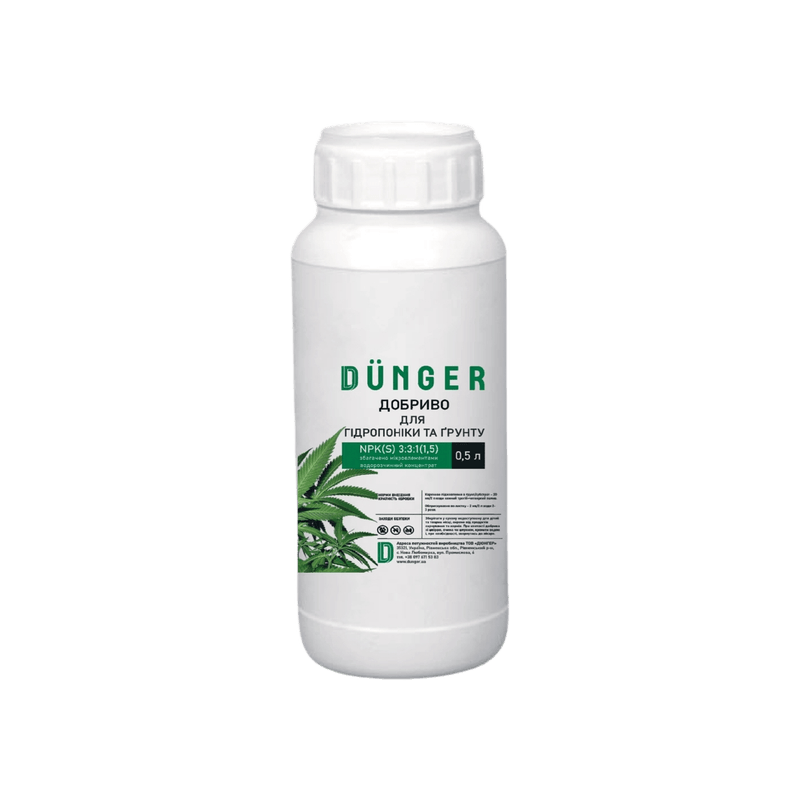
COMPLEX FERTILIZER FOR HYDROPONICS AND SOIL
For healthy seedlings with an established need for extra nutrition, this product's directions include all types of seedlings and root feeding in soil or substrate. Account for the medium's initial nutrient supply first. The method below is from this particular product's directions.
The bottle holds 0.5 L. Measure concentrate with a dedicated measure and follow the complete directions. Avoid increasing concentration to control stretching or hurry transplant readiness. Check the product page for the current price.
Hardening off and moving to the final site
Indoor plants need gradual exposure to direct sun, air movement and changing temperatures. Begin with a short period in a sheltered position during suitably warm weather, then increase exposure according to their response. Bring them in before a cold night and avoid strong wind. Hardening off does not remove a cucumber's sensitivity to frost.
A small unheated greenhouse also cools at night. Check its actual conditions, soil and forecast. If cold weather delays planting, maintain room, light and moisture. Avoid trying to hold plants back through severe drying or excessive fertilizer. For the next stage, see the guide to planting cucumbers in beds and greenhouses. Assess readiness again before transporting the pots.
Prepare seedlings for transport
Inspect every pot before the journey. Keep plants with suspicious spots or damaged stems separate. Check for a dried-out rootball and for water sloshing in the tray. Put containers into clean, stable carriers so they cannot topple and break leaves. Keep variety labels with the correct plants.
Count seedlings for each destination separately. Plants for an outdoor bed and an unheated greenhouse may move on different days. Large leaves alone do not make a cold greenhouse safe. Confirm conditions before loading, so plants can go to the prepared location rather than wait somewhere dark while you reorganise the space.
Individual pots make a small collection easy to inspect and move. A cell tray is convenient for a group, but the cells may need water at different times. Compare plants of the same variety and emergence date in different positions. That can reveal whether weak growth follows location, watering or a particular container. A whole-tray photo and the medium label are useful when seeking advice.
Frequently asked questions
Grow them separately and protect their roots. If a pot is too small, move the intact rootball without splitting it or pinching roots.
Check light, crowding and heat. Fertilizer cannot correct insufficient light. Compare stem strength and new growth after improving the conditions.
Assess actual temperatures and gradual acclimatisation first. A cold night or frost remains hazardous even after hardening off.


