


Choose fertilizer at potato planting by checking the soil, earlier applications and planting method. A well-managed bed and a depleted plot may need different decisions even if you plant the same variety. If an application is justified, choose one method from the product directions and calculate the quantity before setting out the seed potatoes.
Check the bed before choosing a pack
Mark the area where this season's potatoes will grow. Look at it after rain. Does water drain away or remain in a hollow? Can you loosen the soil without it sticking to the spade in a wet mass? Potatoes do best in well-drained soil. If a corner stays cold and wet, assess it separately instead of treating it as another part of a ready bed.
Make a list of what has gone onto that ground. Include product names and quantities used for the previous crop, along with any organic materials you added. Newly brought-in soil and the ground you have cultivated for years can have different histories within one garden. Keep distinct areas separate when deciding how to sample them, and ask the laboratory for instructions.
See how to assess garden soil before fertilizing for a way to organise those details. Tell the laboratory that the bed is intended for potatoes. Ask which results describe acidity and the available phosphorus and potassium, and supply information on earlier inputs. The results help you choose a composition for the bed. A large number on the front of a pack does not tell you which nutrient the soil needs.
Phosphorus moves little in soil. Growing roots need to reach the part of the bed where it is available, and acidity, moisture and aeration affect that availability. This is one reason to choose placement carefully when the directions permit it and the soil needs that nutrient. The observation does not justify a bigger dose merely because the soil feels heavy.
Distinguish broadcasting, row placement and planting holes
Broadcasting means distributing a measured quantity across the area specified by the directions. A rate per square metre therefore needs an area. A rate per linear metre, where supplied, needs the total length of the actual planted rows. A rate per hole needs a hole count. Keep the unit beside the quantity when transferring it to your notes.
When a product lists methods as alternatives, choose one for a given area. A garden with one block planted in holes and another in furrows can be split into two zones. Check that the instructions for the selected product actually include the method used in each zone. Mark which zone has received its application. Adding full area and hole amounts on the same ground can double-count that ground. Similar pack names are no reason to transfer a rate from one product to another.
Keep concentrated granules away from the seed piece
For a permitted local application, work out where the granules and seed piece will sit before filling the hole or furrow. Follow the directions and keep a layer of soil between concentrated fertilizer and the tuber. Avoid setting seed potatoes on a pile of granules. If several people are planting together, agree who measures the fertilizer, who adds the separating soil and who lays out the seed pieces.
For a broadcast application, check how the directions specify soil preparation and distribution. Divide the measured amount between marked sections if that makes even coverage easier. Stop after the first section and compare what you used with what you intended to use there. A pile tipped from the bottom of the bag or a second pass over the same strip changes the distribution even if the original total was correct.
Prepare the seed potatoes and wait for a workable bed
Start with healthy planting material. Set aside seed potatoes that are soft or clearly affected by disease. Extra fertilizer cannot put them right. You can arrange the planting material by rows before starting, which makes changes in the number of planting positions easy to see. Handle already sprouted tubers with care so the shoots are not rubbed off.
In Ukraine, use the condition of your ground and local weather to decide when to plant. A low patch of heavy soil after persistent rain can remain unworkable while a raised, light bed in the sun is ready. Use soil and weather checks for potato planting before setting a date. A purchased bag can wait until the bed is ready; it does not decide the planting day.
Calculate what to apply before working out what to buy
Start with the measurement for the permitted method. For an area rate, multiply the square metres by the stated amount in matching units. For a row rate, add the actual planted lengths and use an amount per metre only when explicitly stated. For holes, count the positions and measure the amount for each one. If the directions give a range, check the conditions for selecting within it and use the soil results in that decision.
Keep the calculated amount separate from rounding up to buy whole packs. If the pack contains more than the bed needs, keep the rest in the package under its storage directions. Using it all will not improve the calculation. If two rows are reassigned to another crop after you first measure the plot, recalculate the potatoes rather than applying the original quantity to the remaining rows.
Granular fertilizer for potatoes
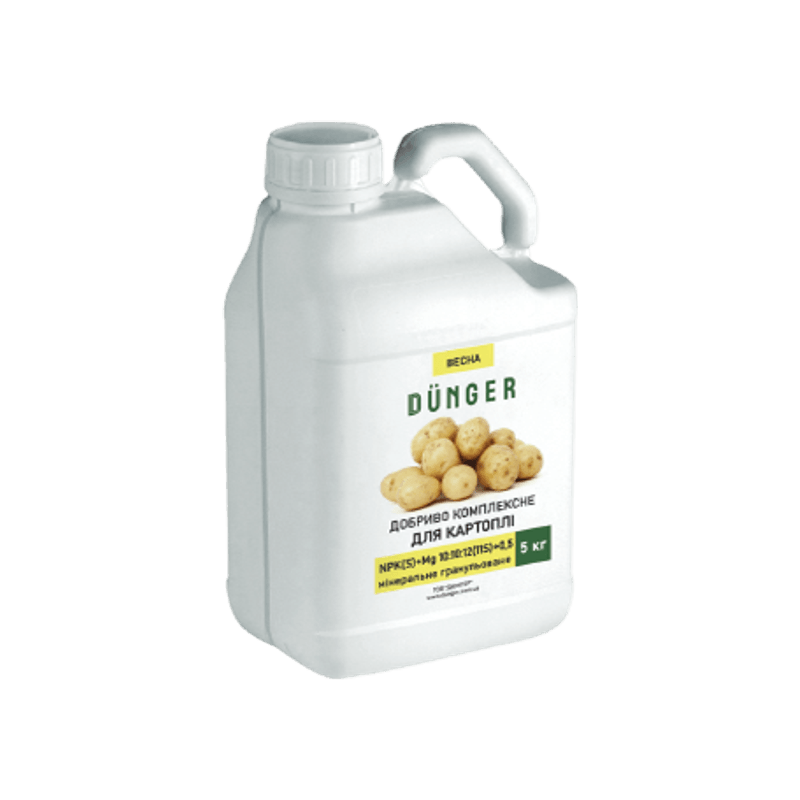
Complex fertilizer for potatoes granular
Consider this product when soil results indicate a need for its composition. Choose one of the listed methods for a given bed. Use the stated weight in grams for a precise calculation.
Open the product page for the full directions and check the price and availability of the 5 kg pack before ordering.
What to look for after planting
Mark which parts of the bed received each permitted placement and keep your own note of the actual amount, product name and date. When shoots emerge, compare sections planted together under similar conditions. One wet hollow or a few missing plants deserve a closer look before you decide that the whole bed needs extra nutrients. The location of a problem can help you choose where to start investigating.
As green shoots develop, hilling can protect shallow tubers from light. Consider nutrition later in the season separately, using the earlier application, the actual condition of the plants and the full directions for the product you intend to use. Use the guide to potato feeding at different growth stages if you need to make a later decision. Do not repeat an at-planting rate simply because you are already working along the row.
Questions about fertilizing potatoes at planting
Choose hole placement when the directions list that method and the bed needs the nutrients it supplies. An approved broadcast application may be a better match for the way you work. Where the ground already received what it needs, another full application simply to put something in each hole is unnecessary.
Find the earlier product name, quantity and treated area. Compare those details with the soil test and the composition of anything you intend to buy. Pay attention to differences in units even when two products have similar names. If you cannot establish what went on the bed, avoid stacking complete feeding plans to make up for that uncertainty.
Weigh it when possible. The amount in a spoon varies with granule size, how well they flow and how you fill it. If the directions show an approximate kitchen measure alongside a weight, use the stated weight for the calculation. This is also easier to repeat consistently across a long set of planting holes.
Check whether the water has drained and the soil can be worked again. Postpone the work or leave the wet section out if needed. Establish which ground is ready before choosing the method and quantity. Do not use an application intended for a whole bed on the smaller portion simply because the rest is still wet.
Calculate the total required mass and open the exact product page. Confirm the full product name, pack weight and quantity in the basket. Check current availability and price while ordering. If different beds need different products, check each separately instead of treating a similar name or package design as proof of the same instructions.


