


Feed windowsill cucumbers with a product whose instructions cover vegetable crops, allowing for plant age and nutrients already present in the growing mix. An edible cucumber does not become an ornamental houseplant because its pot stands indoors. Before adding anything, check the cultivar, available light, root space and drainage. Fertilizer cannot replace suitable growing conditions or guarantee a winter harvest.
First decide whether the plant lacks nutrients or struggles to use the resources it already has. A small container, a shaded window, unsuitable growing medium and inadequate pollination call for different decisions. The general guide to feeding cucumbers from seedlings to fruiting explains development stages. This guide focuses on the particular constraints of growing an edible crop in an apartment.
Check the cultivar and the light first
Read the seed packet and establish whether the chosen cucumber sets fruit without pollination. Parthenocarpic cucumbers can develop fruit without pollen transfer. A description of predominantly female flowering is not automatically the same statement as parthenocarpy. If the packet is unclear, ask for the cultivar's full description before sowing rather than discovering the difference when flowers appear.
A compact cultivar may suit a confined space, but check its intended growing conditions and support requirements as well. The word balcony alone does not describe every characteristic of a hybrid. Leave room for its shoots and for access to the pot. A dense arrangement pressed against neighbouring plants makes it harder to inspect each plant, reach the growing medium and water accurately.
Cucumbers respond strongly to the amount of light available. Assess what reaches the leaves, including shade from buildings, nearby trees and the distance from the glass. Window direction is only part of that assessment. In Ukrainian apartments during autumn and winter, consider whether enough light can actually be provided before planning a crop. Stronger fertilizer solution does not replace light. A more suitable season may be the better choice.
Choose a container for the mature plant
A seedling cell and a permanent container serve different purposes. Plan the final root space for the chosen cultivar rather than using the present size of a newly emerged seedling as the guide. A small root environment limits the supply of water and nutrients available between checks. Another dose of fertilizer does not provide additional room for roots to grow.
Check for open drainage holes and a practical way to remove excess water. An ornamental outer pot must not hide a permanently flooded space around the inner container. Inspect underneath after watering instead of looking only at the top of the growing mix. A dry surface does not describe the moisture throughout the entire root ball, particularly in a deep container.
Choose a growing mix intended for container vegetables with a known composition. Keep the label so that you can check whether fertilizer was included when it was prepared. Avoid combining several nutrient sources immediately just because they have different names. An initial fertilizer charge in the mix belongs in the same decision as any further product you are considering.
Write down the starting conditions
- The cultivar or hybrid name and its pollination requirements.
- Sowing date, present stage and any transplanting already completed.
- The permanent container's capacity, drainage holes and plant support.
- The growing mix name and any nutrients listed on its packaging.
- Previous fertilizers and actual quantities used, rather than brand names alone.
Label individual containers when growing several plants. One sown later or planted in a different mix should not automatically be managed like the others. These simple personal records help you check a purchase decision. A difference caused by different starting conditions does not necessarily call for changing the fertilizer used across the whole collection.
Assess watering before adding feed
The water needs of a container cucumber change with plant size, light and temperature. Check the mix and container instead of delivering an identical amount every day regardless of conditions. Pots beside heating and pots near a cool window can dry differently. A convenient day of the week is not evidence that all plants need the same amount of water or nutrients.
Separate ordinary watering from a measured fertilizer application. The volume of prepared feed stated in a product instruction is not automatically the plant's entire daily water requirement. Do not respond to a drying pot by multiplying the fertilizer dose. If water fails to drain or the medium stays excessively wet, establish why before treating the problem as inadequate feeding.
Choose feed for the edible crop
Read the covered crop group and application method in the complete instructions. Root feeding and foliar application have different concentrations. Seedling instructions also differ from the instructions for established plants. Do not transfer a rate from a bottle for an ornamental houseplant collection or from a different vegetable fertilizer simply because both products are liquid.
Vegetable concentrate for the appropriate stage
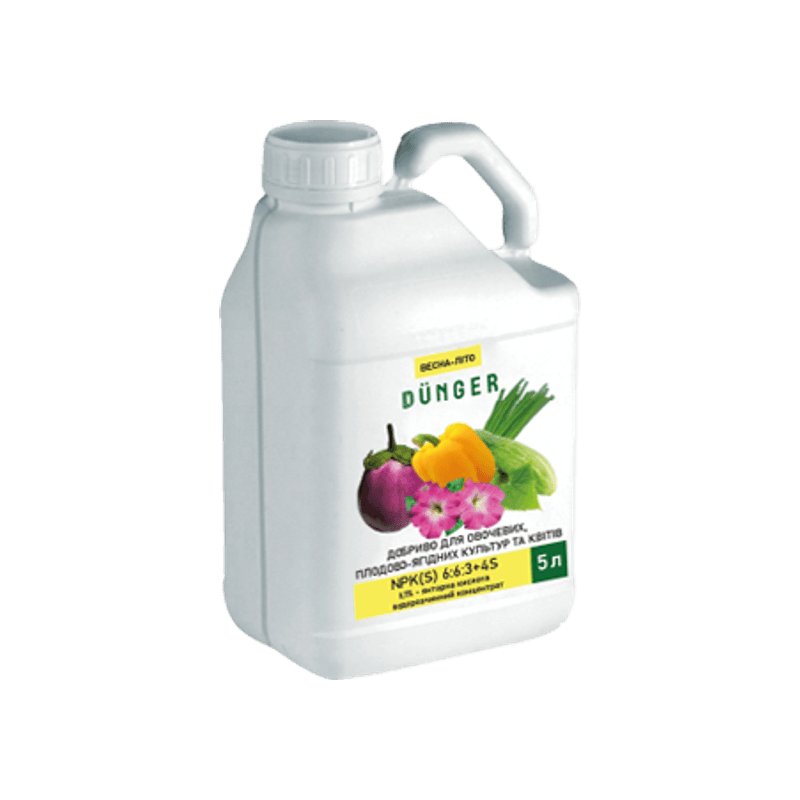
Complex fertilizer for vegetables, fruit and berry crops, and flowers
This product covers vegetable crops and their seedlings. The row below is for root feeding of mature plants. It is not the seedling row and does not describe a hydroponic system.
This liquid product comes in a 5 L pack. Measure concentrate separately from water and prepared solution.
The displayed instruction contains two distinct quantities: concentrate used to prepare a solution and prepared solution used for a plant. They cannot be substituted for one another. This product also has a separate seedling row; the mature-plant row must not be applied automatically to a young seedling. Read the complete method and application intervals on the product page before preparing it.
A 5 L canister may suit a garden containing several crops, but assess the real need before buying it for one windowsill. A lower price per litre is not by itself a reason to choose a large volume. Check the selected pack's current price and availability when ordering, and follow the packaging requirements for storing any remaining concentrate.
Carry out one considered application
- Confirm that the cucumber is at the stage covered by the instruction row you have selected.
- Check the growing mix and previous applications to avoid counting the same nutrient input twice.
- Use separate measuring equipment for the concentrate and a suitable vessel for the finished solution.
- Follow every stated unit and the intended application method. Do not strengthen the concentration by eye.
- Record the actual quantity in your own notes, then reassess the plant and its environment before another decision.
In My Garden, you can define zones, crops and measurements to prepare a fertilizer plan. Keep the cucumber growing space separate from your ornamental plants. Store dates of actual applications, the growing mix label and your own observations separately so that the relevant information is available when you next choose supplies.
When another dose does not answer the problem
If flowers appear but fruit does not develop, check pollination requirements and light again. Lack of fruit alone does not identify a potassium shortage or a need for a different mixture. Compare the cultivar description with the plant's actual stage. Adding a fertilizer, homemade infusion and protection product at once makes a poor substitute for understanding the cause.
When leaves change colour, inspect the whole plant and its root environment first. An isolated mark, general pale growth and a wilted plant are different observations. The guide to checking the causes of yellow cucumber leaves can help structure that assessment. Rapid deterioration calls for identifying the cause, rather than preparing a succession of increasingly concentrated solutions.
Find other edible-crop guidance in Vegetables and greenhouse. When comparing advice for an outdoor bed with advice for an apartment, retain the exact instructions for the chosen fertilizer while checking whether the growth stage, root environment and ability to carry out the stated method are actually comparable.
Questions about windowsill cucumbers
Choose a product whose instructions cover the vegetable crop. A cucumber remains an edible vegetable wherever it grows. A houseplant label alone does not establish that the product is appropriate for it.
No. Assess light before starting the crop. If it is inadequate for the chosen cucumber, more fertilizer will not create the required conditions. A winter window does not guarantee fruiting.
Check the cultivar, pollination, light and general plant condition. A small ovary does not prove a particular nutrient deficiency. Identify the likely cause before selecting the response.
This concentrate has different instructions for those stages. Open the appropriate row and complete method. Half of an arbitrary dose is not a universal seedling programme for all fertilizers.


