


Prepare potatoes for planting by checking the origin and condition of the seed tubers. Treatment cannot replace sound material or turn a decaying tuber into healthy seed. Remove unsuitable examples, assess sprouts and storage history, then decide whether a particular product is needed for a defined task.
Sprouting, protection against a disease or pest, and fertilizer application are separate operations. Do not combine them in a bucket of unknown mixture. Each step needs a clear purpose, material and permitted method. Stronger solution or extra granules will not resolve the original problem when the tubers themselves are unsuitable.
Seed potatoes and potatoes bought for food
Choose planting material of verified origin intended for seed use. Ask about variety, lot and quality documentation. A grocery-store tuber is not automatically equivalent: its disease history and possible sprout-suppressing treatment may be unknown. The appearance of a food potato does not establish its suitability as seed.
Assess your own harvest using the previous crop's history too. If plants had unexplained symptoms or rots spread during storage, do not rely on attractive tubers selected from the top. Some problems develop while stored, and visual inspection cannot identify every infection. Resolve doubts about the lot before introducing it to another area.
Keep different sources separate after purchase instead of immediately combining them in one heap. Identifiable lots allow a problem to be discussed with the supplier and traced to its origin. Variety also matters for the expected growing period and preparation, but its name is not a guarantee that the tubers are free from disease.
Inspect before sprouting and planting
- Check that the tuber is intact and reasonably firm, without wet patches or obvious tissue breakdown.
- Look for sunken marks, distinct cavities or suspicious growth on the surface.
- Examine skin injuries caused during storage or transport.
- Assess eyes and whether existing sprouts have been broken.
- Check whether the same problem occurs repeatedly across the lot.
Wet decay may produce soft tissue and an unpleasant smell; other rots can appear as dry or wrinkled patches. These signs help reveal a problem, but one photograph cannot reliably identify its cause. Do not diagnose solely by skin colour or select a treatment because an unrelated picture looks similar.
Exclude obviously decaying tubers from seed use. Do not try to rescue them by removing the visible mark and soaking them alongside healthy material. Repeated symptoms call for assessment of the lot with a specialist or supplier. Prepare clear photographs, storage history and a description of how the symptoms changed when asking for advice.
Inspect on a clean surface with adequate light. Avoid dropping tubers or placing heavy boxes on them. Injury creates additional problems during subsequent holding. An organized sorting space lets you isolate uncertain material without repeatedly returning it to the main stock. Keep the rejected and accepted groups clearly distinguishable throughout the work.
Sprouts and physiological condition
Sprout numbers reflect more than the number of visible eyes. The tuber's condition and storage history also matter. Storage duration and temperature affect physiological age, so bringing different varieties and lots out on the same day does not make them equally ready. Assess the material in front of you rather than applying one calendar rule to everything.
If sprouting is chosen, prepare a light, frost-free place and handle the tubers gently. Protect existing sprouts from breaking during transport. Sprouting is not disinfection and does not prove tuber health. Do not routinely remove every sprout in an attempt to make different lots look identical without first assessing their condition.
Relate preparation to actual soil readiness. An open Polissia plot, a sheltered southern Ukrainian garden and a cool foothill site can differ substantially. Cold saturated ground is particularly unfavourable for injured material. The guide to soil temperature and readiness for planting potatoes addresses the separate timing decision.
Should large tubers be cut?
Suitable whole seed potatoes do not need cutting simply because a video shows it. A cut creates a wound, and the decision depends on size, condition, variety and the ability to hold the material appropriately. Cutting is not a way to retain part of a decaying tuber for planting.
If cutting is genuinely selected, use a clean sharp tool, sound tubers and pieces with viable eyes. Establish suitable wound preparation and storage for your particular material beforehand. Do not transfer one drying period to every temperature and humidity. A holding plan does not mean leaving cut potatoes in a sealed wet bag while waiting for planting weather.
Assessing a treatment decision
First define the task. Is there a confirmed lot problem, a known site risk or a recommendation for the particular seed material? A product described as against everything is not a plan. Seed quality, drainage and gentle handling remain relevant regardless of the protection decision. Treatment should have an identified purpose rather than become a ritual performed on any bag.
If choosing plant protection, check current authorization in Ukraine and the label of the actual product. Match the crop, seed-tuber treatment, target problem and method. An active ingredient or similar trade name does not authorize transferring a rate between products. Follow label restrictions, including handling of the treated material.
If a supplier has already treated the seed, establish which product was used and what further steps are intended. Coating colour does not identify a preparation. Do not automatically add another treatment or wash the material as if preparing kitchen potatoes. Keep it identified and separate from potatoes intended for food.
Avoid homemade mixtures of fertilizers, ash, household antiseptics and plant-protection products. Spraying a tuber and applying a material to soil involve different directions and units. Advice for another country, or an old purchased label, does not establish today's appropriate use. Clarify the actual application before beginning if essential information is missing.
Before moving outside, match each box label to your row plan. If any material is already treated, retain its label separately and share those details with everyone helping to plant.
Soil nutrition separate from tuber treatment
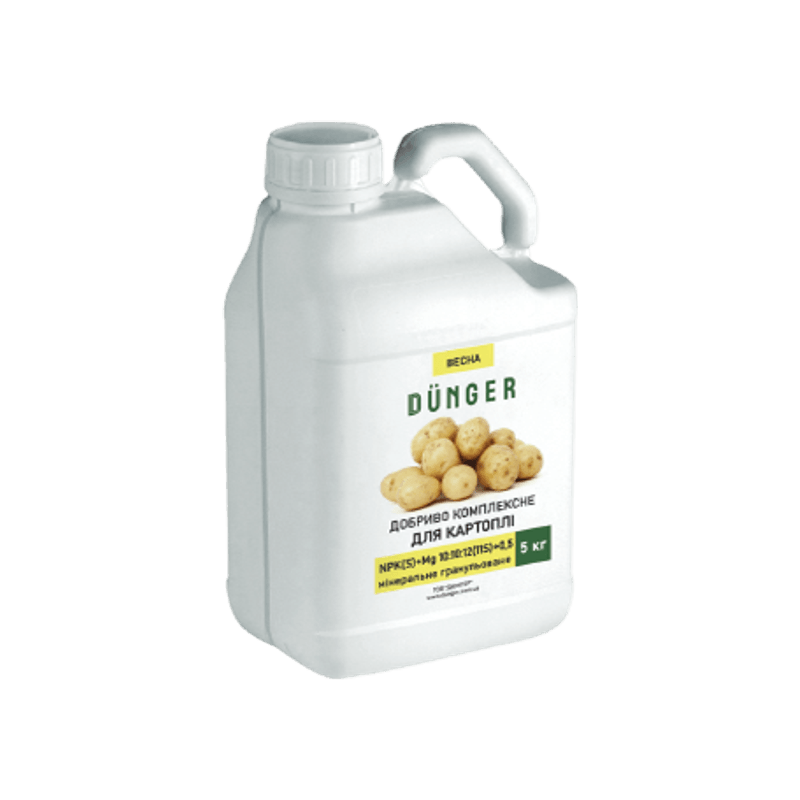
Complex fertilizer for potatoes granular
This granular complex is an option for feeding potatoes. Its instructions concern fertilizer application, rather than dressing or disinfecting seed material.
DÜNGER granular potato fertilizer in a 5 kg pack. Check the current price and availability, choose the number of packs and agree how to receive your order.
Apply fertilizer before sowing, as well as for fertilization. The complex is evenly distributed on the surface of well-loosened soil, make a scattering on the site at a rate of 20-30 g / m2 or in planting holes (3-5 g / hole ~ 1 teaspoon), taking into account the size and depth.
Do not dissolve granules for improvised tuber soaking or add them to a protection mixture. Select an appropriate method from the complete instructions, count previous fertilizer additions and identify the intended area. Check pack size and ordering conditions on the product page.
Final checks before taking seed to the bed
Prepare only the amount that can be handled carefully. Inspect again after holding, then move the lot without rubbing sprouts harshly. Clean boxes and variety separation help keep material identifiable. The separate guide to planting potatoes by hand covers organizing the planting work itself.
My Garden can hold crops, zones and measurements and help prepare a product plan. Fertilizer planning uses the treated area, while assessment of seed uses lot quality; these are separate decisions. Browse the garden crop fertilizer catalogue and compare each product with its own complete instructions.
Autumn preparation may include reviewing the previous crop and planning next spring's purchase. It does not mean starting a warm sprouting programme months before the intended planting. Match preparation to the material, storage possibilities and expected local workability, and reassess the actual weather when the growing season approaches.
Frequently asked questions
That is not a reliable correction for seed material. Do not retain an obviously affected tuber because the remaining portion looks healthy. Inspect the rest of the lot and its origin. Replacing unsuitable material is a different decision from protecting suitable material against a defined risk.
A sprout shows growth beginning, but does not establish health or soil readiness. Inspect the tuber, assess storage and check the site. Long sprouts are not a reason to plant into cold wet ground. Timing and material condition must both be suitable.
The granular fertilizer shown is intended for feeding according to its instructions. It is not a tuber-disinfection programme. Do not make a soaking solution from a soil-application rate. Select and assess protection separately, with the actual label governing any use.
The decision depends on seed quality, an identified risk and an appropriate authorized use. Begin with verified material and inspection. A universal treatment does not replace that preparation or guarantee freedom from every problem. Ask for clarification where the lot's history is incomplete.


