


When cucumber leaves turn yellow, first check which leaves changed colour and whether there are spots, webbing, wilting or moisture problems. Yellowing does not automatically mean that fertilizer is missing. It can accompany ageing lower leaves, cold, drought, waterlogging, root damage, disease or pest feeding. Choose nutrition after these checks rather than using it to replace them.
Look at the whole plant
Start with the vine: is the growing tip developing, are young leaves healthy, and is the problem spreading? One old lower leaf and simultaneous yellowing along an entire row call for different decisions. Avoid removing all affected foliage before inspecting it, because you may lose the pattern of symptoms. Photograph the plant and compare neighbouring cucumbers first.
Lift a leaf and inspect its underside. Fine speckles, insects, webbing or fungal growth may be difficult to see from above. Examine the stem base and the area beside the irrigation line as well. If one end of the bed looks worse, check whether it actually receives the same water supply as the other.
Leaf age helps narrow the questions
The oldest lower leaves can gradually yellow and die while the rest of the plant remains healthy and productive. This differs from rapid spread to young leaves or spots appearing on many vines. Do not label every yellow lower leaf as normal ageing: assess the speed of change, the number affected and the whole plant's condition.
Record whether yellowing is uniform, veins remain green or a dry margin is developing. These observations help diagnosis but cannot identify one nutrient with certainty. Several problems may overlap. This caution is particularly useful after transplanting, when roots and the conditions around them are still changing.
A practical inspection guide
| Observation | Next check | Avoid rushing to |
|---|---|---|
| One old leaf with healthy new growth | Watch for additional symptoms | Increasing every feed |
| Yellowing and wilting after weather changes | Root-zone moisture and temperature | Adding water to wet soil |
| Fine pale stippling and webbing | Leaf undersides and mites | Calling it a deficiency without inspection |
| Angular spots or unusual growth on leaves | Disease signs and spread | Treating with fertilizer |
| Decline after a new application | Product, concentration and combined inputs | Adding another mixture |
Check water beneath the surface
A dry surface crust does not prove that the whole root zone is dry. Equally, a wet surface after brief watering does not guarantee moisture farther down. Check carefully without cutting roots beside the stem. For containers, inspect drainage and the saucer; in beds, look for hollows, compaction and places where water stands.
Cucumbers need moisture together with drainage. During heat, water loss can increase; after cool rain, the same watering frequency may become excessive. Compare morning and daytime appearance, but investigate persistent wilting. Base watering on soil, plant condition and weather instead of assigning the same number of litres to every situation.
Weather, greenhouses and Ukrainian outdoor beds
After cold nights outdoors, ask whether decline coincided with cold and wet soil. Cucumbers are warm-season plants and can grow poorly in cool conditions. During dry southern heat, actual moisture and irrigation performance deserve early attention; after rain in cooler areas, drainage is an especially useful check. These are inspection priorities, not a diagnosis made from a region's name.
In a greenhouse, do not rely on outdoor temperature. Check conditions inside, ventilation and differences between the edge and centre of the planting. The same symptoms can occur in different months depending on the crop cycle and shelter. This guide concerns actively growing cucumbers rather than compulsory feeding of an outdoor bed in November.
Spots, coatings and pests
Spider mites can cause fine pale stippling, with webbing visible in heavier infestations. Aphid feeding can also accompany yellowing and distortion. Look for the organisms on leaf undersides instead of relying only on a similar photograph online. Do not choose an insect treatment while the cause remains unidentified.
Pale or yellow angular spots bounded by veins, particularly with growth underneath during humid conditions, warrant checking for downy mildew. A white powdery coating can be consistent with powdery mildew. Mosaic patterns together with distorted young growth also need diagnosis. These are inspection clues rather than a final identification from one sentence.
If spots spread quickly, keep photographs of both leaf surfaces and the whole planting. Establishing the cause matters more than buying a general feed. Fertilizer does not treat fungal, bacterial or viral disease and is not a mite control. Any specific protection needs to match the established problem and permitted use on that crop.
When to investigate nutrition
Return to nutrition after checking water, weather, roots and visible damage. Account for previous fertilizers, compost and the contents of purchased growing medium. A container filled with pre-fertilized mix starts differently from a long-used bed with unknown fertility. Uncertainty about the soil does not mean that every nutrient should be added at once.
A soil or substrate test, and plant analysis when appropriate, can support a decision. Ask the laboratory what sample is required and how to prepare it. Interveinal yellowing on young leaves and on old leaves can guide different investigations, but a photograph alone does not establish a dose of iron, magnesium or another element.
Excess fertilizer and salts can also harm cucumbers. If symptoms followed an application, check the product, measured amount, water volume and whether several products were combined. Do not correct a suspected overdose with another fertilizer. Keep the label and precise records for a consultation.
Compound nutrition after checking the need
Cucumbers fall within this liquid compound’s vegetable group. Consider it after assessing roots and earlier applications when nutrition is needed. It is not a disease or mite treatment. The application method follows; check the full card and separate seedling requirements before use.
Complex fertilizer for vegetables, fruit and berry crops, and flowers
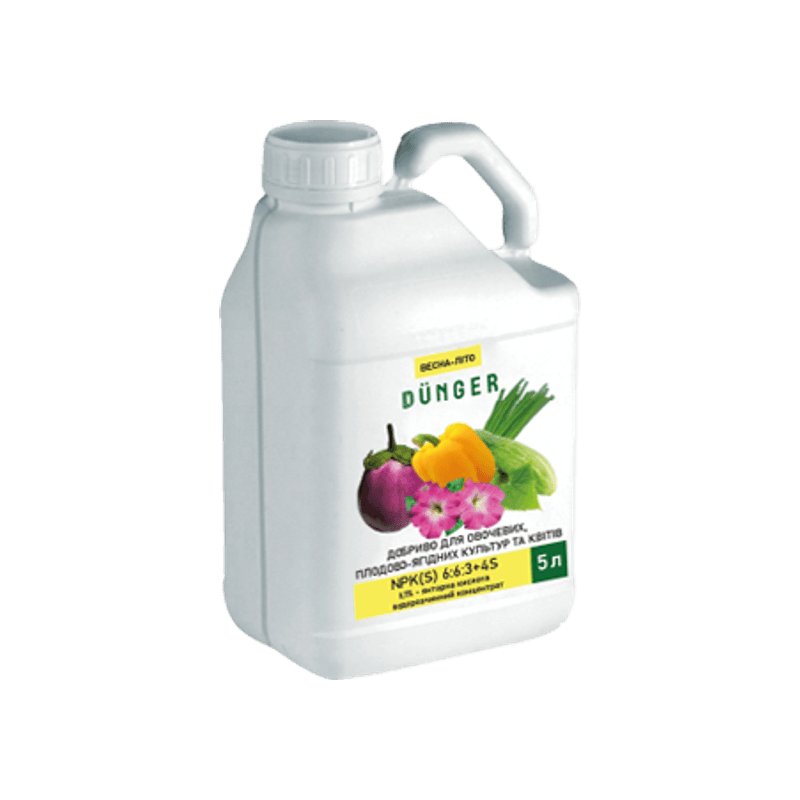
Used throughout the entire period of plant development and growth. For root feeding into the soil/substrate, dilute 50 ml of fertilizer in 10 L of water (100 ml of solution per 1 plant) and use at intervals of 10-12 days. For foliar treatment (spraying), dilute 25 ml in 10 L of water and apply with a sprayer, ensuring even coverage.
For treating seedlings, halve the concentration of the working solution!
Set the crop, plant count or zone measurements in My Garden for planning. Keep symptom photographs and application history in your own journal.
Assess the next step
Change care to match the identified cause and record the action in your own journal. Compare the growing tip, new spots and the spread of yellowing. Dead dry tissue will not turn green after watering or feeding. If new leaves continue to develop damage, reconsider the original explanation.
Check the broader programme in feeding cucumbers from seedlings to fruiting. If the problem began immediately after moving plants outdoors, also revisit conditions for transplanting cucumbers. These decisions are connected, but they do not replace inspection of the particular leaf and root area.
Prepare useful information for advice
Provide the cultivar, plant age, growing location and when symptoms began. Show a young leaf, an old leaf and a representative damaged area. Include watering, weather and all recent applications. A sharp photograph without a colour filter is more useful than an edited image that exaggerates yellowing.
For a greenhouse row, state whether plants at the entrance resemble those in the middle. For containers, give the size, medium and drainage arrangement. Mention an incorrect concentration or accidental repeated application honestly: that detail can help prevent the next mistake. Keep observations separate from your own assumption about a deficiency.
Common questions
Establish the cause first. When a nutritional need is supported, choose a product for the crop group and growth stage. Extra fertilizer does not replace correcting a problem involving water, cold, pests or disease.
Do not automatically strip the vine. Assess leaf age, spread and damage type first. Decisions about affected foliage depend on the cause, and removing everything can eliminate useful diagnostic evidence.
The pattern needs assessment alongside leaf age and root conditions. It is not a prescription for iron by itself. Similar appearances can have different explanations, so avoid adding a micronutrient blindly.
An arbitrary increase in concentration can create another problem. Follow the selected product's instructions and account for earlier applications. Do not transfer a mature-plant rate to seedlings.


