


Start feeding decisions for rhododendrons by checking the root zone. A shrub with healthy new growth in suitable acidic soil may need no immediate extra feed. If young leaves pale or the shoots struggle, examine the soil acidity, drainage and root conditions. When there is a clear need for added nutrition, choose a product that lists rhododendrons and follow the directions for the shrub's actual stage.
Identify what changed in the shrub
Look at the plant from several sides. Are the youngest leaves affected, or only the branches on one side? Compare an exposed plant with one sheltered by a wall or a tree. After winter, the side facing a drying wind may look worse while the protected side has sound buds. The pattern shows where to investigate. It cannot diagnose the cause on its own.
Yellow tissue between green veins on young leaves is a reason to check acidity and the roots. At high pH, a plant can have trouble taking up iron that is already present in the soil. Poor drainage and damaged roots can also contribute to yellowing. See whether the symptom returns on new growth and whether it is concentrated in the part of the bed that stays wet.
Review earlier feeding and other work nearby. Take note if the lawn beside the bed was treated, the ground was limed or new soil was brought in. One shrub at the edge may receive extra runoff while others on the same bed have well-drained roots. This information helps you decide where to sample and what to tell the laboratory.
Check acidity and where the water goes
Many garden rhododendrons prefer acidic soil. Measure the pH in the actual root zone before attempting to change it. Ask about your particular cultivar and about taking a representative sample. Ground next to a foundation can contain fragments of building material, while a prepared bed farther away has a different history. A sample from the other end of the garden will miss that difference.
Move a little mulch aside and inspect the soil without digging through the root zone. The fine roots of rhododendrons sit close to the surface. If the soil is dry, check how to restore even moisture. When the ground stays wet and the plant is wilting, look for a drainage problem before adding water or granules. Keep mulch away from direct contact with stems.
See soil and irrigation water for rhododendrons for decisions about the root environment. Separate three questions first: whether excess water can escape, whether acidity suits the shrub and whether it needs added nutrients. Each question calls for different information. If the soil is alkaline, establish what correction it needs rather than assuming that one application of any ornamental feed will bring it to the right pH.
Plan soil correction and plant nutrition separately
A pH adjustment depends on both the starting acidity and the characteristics of the soil. If the test shows a problem, seek an adjustment suited to the actual bed and check the result again later. Treating an entire mixed border based on one shrub's sample can affect neighbours with different requirements. This matters in small gardens where plants with different soil preferences grow close together.
Choose rhododendron fertilizer when the shrub needs the nutrients supplied by that particular product. Compare its name and analysis with your earlier applications and the soil assessment. Read whether the product lists separate conditions for planting and feeding an established shrub. If yours grows in a container, check that the directions cover that setting before relying on guidance intended for an outdoor bed.
Compare shrubs even within the same bed
Imagine three plants: one growing well, another with yellow new leaves beside a foundation, and a third wilting where water collects. Continue observing the first, check the second plant's root-zone pH and investigate drainage for the third. Keep the notes separate. That gives you something to compare when fresh growth appears after any change.
Choose the time by plant stage and weather
Spring growth does not begin at the same time in every Ukrainian garden. Buds next to a sheltered, warm wall may move earlier than those on an exposed plot. In a low spot, thaw and rain can leave the bed wet long after the nearby path looks dry. Check root-zone conditions and the shrub's growth stage together. A date or the first flowers in another garden is only a reminder to inspect your own plants.
Spring and summer directions apply when the conditions and stage they describe are present and the ground is suitably moist. Feeding that encourages soft growth late in the season creates a risk as cold weather approaches. In autumn, concentrate on drainage, mulch and protection from drying wind. If winter damaged the shoots, assess them first. Do not prune a healthy shrub merely to create the circumstance mentioned in a product's feeding directions.
Measure for one shrub or a group
Count the shrubs that actually need the product. In a mixed-age planting, review the directions for each plant before adding the amounts together. Weigh the required quantity and identify the application area before opening the rest of the pack. Do not combine a per-shrub instruction with a per-area rate copied from another product. If the amount for your situation is unclear, clarify the full instructions before buying or applying it.
Protect shallow roots from deep cultivation. If the selected method calls for surface placement, spread the granules evenly in the specified zone and check that they do not collect against stems or on leaves. Keep your own note of the product, application date and amount. This gives you useful information when the next growth stage arrives and you need to decide whether any further feeding is justified.
A granular feed for rhododendrons
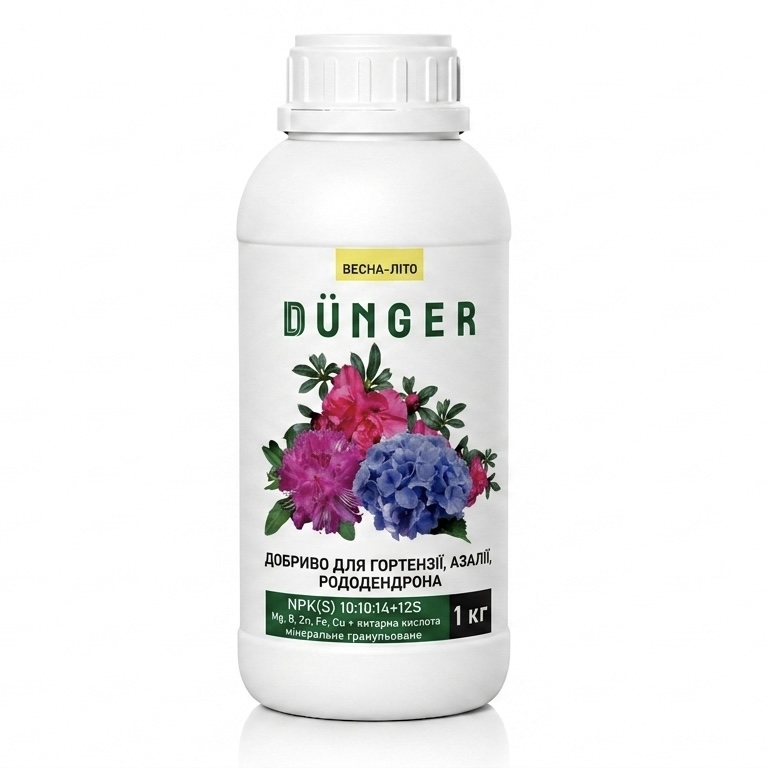
Complex fertilizer for hydrangea, rhododendron, azalea granular
This product lists rhododendrons. Consider it if the bed and plant checks point to a need for its nutrients. The method below is specific to this product. Review the conditions for an established shrub or a new planting separately.
Compare the 0.5, 1 and 5 kg packs against the quantity you need. If the amount for your shrub needs clarification, ask before applying the product.
Questions about feeding rhododendrons
Check pH, drainage and root conditions first. A green vein pattern on a pale young leaf is helpful for describing the symptom, but a photograph is not enough to select fertilizer. If the soil and plant checks show a feeding need, choose a composition that addresses that need. Resolve an underlying root-zone problem before assuming a feed will help.
Check the growing medium, moisture and whether the shrub is settling in. Use fertilizer only when needed and when the selected directions describe that planting stage. A nursery plant may already have fertilizer in its growing mix. Ask what was used before adding another product, and distinguish a new planting from a shrub established for several seasons.
A product can include directions for both crops. Check each group's feeding need, soil conditions and growth stage separately. Add the actual quantities once you know they need the same product. A shared purchase can be convenient while the amount and timing for each shrub still follow its own conditions.
Count the shrubs that need feeding and consult the product directions for their age and size. Compare the total required quantity with the available packs. If you need only part of a pack, use the measured quantity and store the remainder according to its label. The number of packs you order should follow the calculation rather than drive the amount you apply.


