


Good dracaena care begins with two checks: the light reaching the leaves and the moisture remaining around the roots. A plant may resemble a small palm, but the size of its cane is not a guide to how often it needs water. Brown tips, yellow leaves and leaf loss have several possible causes. Adding water or fertilizer every time the appearance changes means treating a symptom before understanding the conditions.
Identify the dracaena you have
Common indoor forms include narrow-leaved dracaena sold as marginata and the broader-leaved Dracaena fragrans. Both have green and patterned cultivars. The label helps distinguish a normal pale stripe or reddish edge from a new problem. Keep the name and a photograph of healthy foliage so that later comparisons are meaningful.
This guidance concerns ordinary cane dracaenas growing in potting medium. Do not automatically transfer it to lucky bamboo kept in water or to snake plants. Botanical relationships do not make watering requirements identical. If the plant's identity is uncertain, establish it before choosing a location or buying a care product.
Bright filtered light, without a sudden change
A well-lit position with indirect light suits these dracaenas. Strong direct sun can damage foliage, while a permanently dark corner is not a good alternative. Watch patterned forms carefully. A lasting loss of distinctive colouring may be associated with insufficient light, but colour alone does not establish the cause.
Assess light where the crown actually sits. A room can look bright to a person while leaves behind a heavy curtain receive much less light. When moving the plant closer to a window, avoid an abrupt increase in exposure and observe its response. Leave space between leaves and cold glass, and allow the window to open without directing cold air through the crown.
Deciding when water is needed
The condition of the growing medium matters more than a weekday. Check below the surface and compare the weight of the pot if it can be lifted safely. A dry-looking top can conceal damp material underneath. Marginata should dry between waterings without prolonged severe drought; fragrans also needs protection from roots remaining constantly wet.
When watering is needed, let water move through the medium and drain freely. Empty the saucer or outer pot rather than allowing roots to stand in the collected water. If drainage is poor or the rootball remains wet for a long time, inspect the holes, growing medium and pot size. Another scheduled drink will not explain why the previous water has remained.
Brown tips: look beyond watering
Dry leaf tips can be associated with dry air, watering problems, accumulated salts or sensitivity to substances in the water. Dracaenas are sensitive to fluoride, so water quality can matter. However, a brown tip does not prove that tap water is responsible. Compare the growing conditions, previous watering and feeding, root health and distance from heating.
Do not assume that every household filter removes every relevant substance. If you decide to change the water, check its known characteristics and the filter's stated purpose. Avoid improvised acidifying recipes. The aim is to prevent further damage and assess new growth, rather than treating the appearance of an old dry tip as a precise test of today's care.
Ageing leaves or a wider problem?
Individual lower leaves can die as a dracaena grows. A gradually exposed lower cane is not necessarily a sign of disease. Look more closely if many leaves turn yellow, changes spread rapidly, new foliage looks weak or the cane loses firmness. Those patterns should not simply be dismissed as normal ageing.
Start with the roots and environment. Too much or too little water, cold, draughts, an oversized pot and inadequate light can produce overlapping symptoms. If the medium is wet and roots are soft or rotten, fertilizer will not resolve that condition. For advice on an uncertain problem, prepare photographs of the whole plant, both leaf surfaces, the pot and the root area rather than one isolated close-up.
Pot choice and repotting when needed
Dracaena needs a container with drainage holes and a growing medium that does not remain a sodden mass. An attractive outer pot can still be used if you monitor water inside it. A much larger new container is not automatically an improvement: surplus medium can hold moisture longer than the existing roots need.
Check how fully the roots occupy the current container and the condition of the mixture. The guide to potting mix and containers for dracaena develops that decision. Roots visible at a drainage hole are a reason to inspect, not an instruction to move immediately into the largest available pot. Also consider the signs described in when to repot houseplants.
Winter care in a Ukrainian home
Shorter days and indoor heating affect the plant in different ways. A radiator can dry the surrounding air or overheat leaves, but room warmth does not replace daylight. Avoid placing dracaena against a heater. During ventilation, protect it from cold airflow and assess conditions around the pot, not just a thermometer elsewhere in the room.
If growth slows and the rootball remains damp longer, check before every watering. Reassess after heating starts or the plant moves. One frequency throughout the year ignores the season, window exposure and plant size. Extra fertilizer is not a substitute for sufficient light. If several people care for the plant, agree who checks moisture so that separate acts of kindness do not become repeated watering.
Leaf inspection and sensible placement
Inspect leaf undersides and the places where leaves join during routine care. Suspicious insects, damage or unusual deposits need identification rather than a mixture of every available product. Keep a suspect plant apart from the collection while investigating. Do not spray the foliage with a fertilizer whose directions specify root application.
Position dracaena where pets and young children cannot chew its leaves. A tall plant should also be stable and clear of the walkway. Before moving a heavy pot, clear the route and plan how to carry it without bending the canes. Access for inspection and watering is more useful than fitting the plant tightly between pieces of furniture.
Nutrition for a healthy dracaena
Feeding belongs within suitable growing conditions; it is not a response to every spot. Before choosing a product, consider what is already in the growing medium and read the complete directions. The guide to when to feed houseplants provides related decision points.
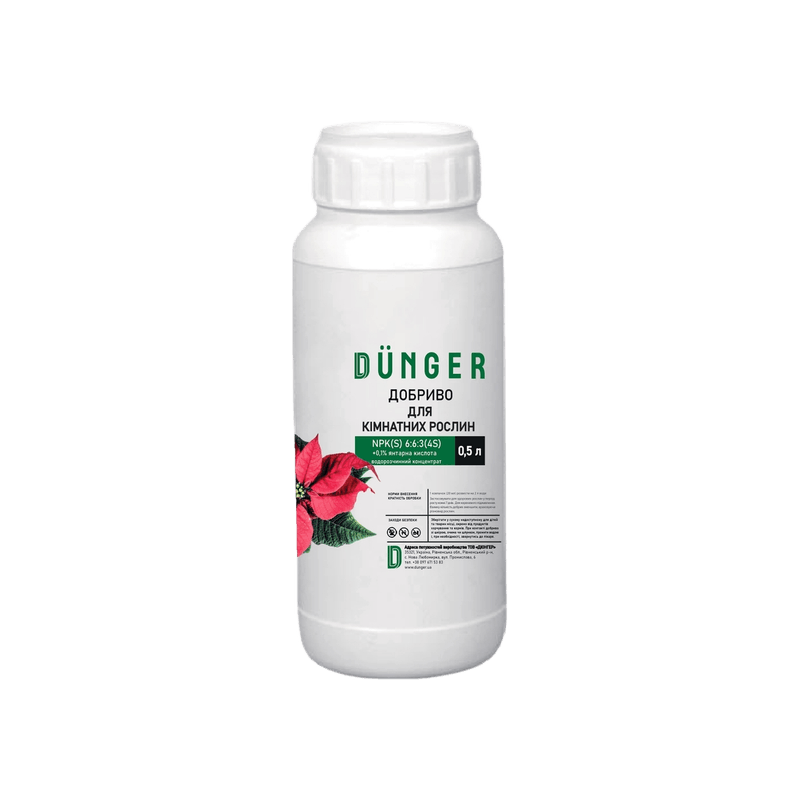
Complex fertilizer for house plants
DÜNGER complex houseplant fertilizer in a 0.5 L bottle. A water-soluble concentrate for root feeding of indoor plants.
Dracaena is included in the plant group covered by this product's instructions. My Garden helps organise growing zones and a purchase plan; decide whether to apply the chosen product from plant condition and its stated conditions of use.
Common questions
There is no universal interval. Check the rootball, drainage and actual conditions. If the inside is still wet, a familiar watering day is not a reason to add more water.
No. Check moisture, dry air, water quality, earlier feeding and roots. Similar symptoms have different possible causes, so increasing the dose without assessment is not a reliable response.
Individual older leaves gradually die naturally. Widespread or rapid yellowing, especially alongside changes in new foliage, calls for a closer check of conditions and the root area.
Avoid close exposure to hot airflow. It can affect foliage, and extra watering does not correct an unsuitable position. Choose a bright location without overheating or cold draughts.


