


An indoor yucca needs a bright position, a pot that drains and watering guided by the condition of its growing medium. A tall trunk and a large crown do not automatically call for frequent feeding or permanently wet compost. Identify the plant, examine the rootball and assess the light where you intend to keep it. These checks help separate ordinary maintenance from attempts to solve an unsuitable growing environment with fertilizer.
Identify the yucca in your pot
Yucca gigantea, also sold as Yucca elephantipes, is a common indoor yucca with a woody cane and rosettes of long leaves. It differs from the garden species Yucca filamentosa. Check the botanical label before deciding on winter accommodation; the word “yucca” alone does not establish frost tolerance.
For this tender indoor species in Ukraine, protected indoor accommodation is the starting point for winter planning. Do not wait for the first frost to test its tolerance. Choose a stable position where a tall container cannot tip into a walkway. Allow room around the leaves and keep the plant away from pets or children who might chew them. A location that looks attractive in a photograph still needs to work during everyday use of the room.
Assess light throughout the day
Choose a genuinely bright position. Check it at different times, considering neighbouring buildings, an overhanging balcony, curtains and distance from the window. A decorative corner may be too shaded. Window direction alone does not describe the light reaching the leaves.
Ukraine's short winter days make this assessment especially useful. Moving closer to available daylight must not leave leaves against cold glass or expose the crown to freezing air when the window opens. If the plant has spent a long time in shade, avoid suddenly placing it in intense summer sun. Change exposure gradually and watch the foliage. Turn a stable pot gently when growth becomes noticeably one-sided, rather than repeatedly moving it between very different rooms.
Water according to the rootball
Check below the surface before reaching for the watering can. A dry-looking top can cover a wetter lower rootball. Compare accessible compost moisture, the weight of a movable pot and any water in the saucer. Together these observations are more useful than a fixed watering day shared by every plant in the house. If another person helps with care, agree who checks the pot so that neither waters it merely because they did not see the other doing so.
When watering is needed, wet the rootball and let excess water escape. Empty the saucer or outer container. Make sure the inner pot has unobstructed drainage holes: an attractive cover pot must not become a reservoir around the roots. Persistently wet compost calls for a closer look at conditions. Adding more water to drooping foliage without checking the rootball can make an existing problem worse.
Water use changes with light, temperature, growth and medium. Winter heating does not recreate a long summer day, so reassess the summer routine. Drought tolerance is not a reason to leave the plant completely dry indefinitely. Aim for suitable root conditions, not a fixed calendar.
Growing medium and container choice
Choose a medium that allows surplus water to leave without prolonged saturation. Heavy garden soil and an airy potting medium behave differently inside a container. Compare the structure and intended use on the package, including whether nutrients have already been added. The guide to choosing potting mix for houseplants explains these decisions in more detail. There is little value in finding one identical mixture for every plant in a varied indoor collection.
A much larger pot is not necessarily an improvement. A small rootball surrounded by a large volume of wet, unused medium can be harder to manage. Examine the roots before choosing a replacement container. A tall yucca needs stability, but stability should not depend only on surrounding its roots with excessive wet compost. Check how securely the inner pot sits in its outer container and whether you can empty collected water without damaging the plant.
Routine repotting of a healthy plant is best considered as growth resumes. Suspected root deterioration, however, deserves assessment rather than waiting for an arbitrary month. When deciding whether a houseplant needs repotting, consider root crowding, changes in drying, medium condition and stability together. One root visible at a drainage hole is only part of the picture. Prepare the container, medium and workspace before lifting a large plant.
Yellow leaves and a soft trunk
An occasional old lower leaf may die as the plant develops. Rapid loss across the crown or damage to young leaves is a different situation. Do not call every yellow leaf a nitrogen deficiency. Check for standing water, reduced light and recent chilling. Compare the oldest leaves with new growth and inspect the whole plant. A photograph of one leaf tip rarely supplies enough information to choose a treatment confidently.
Dry edges also have more than one possible explanation. Review recent moves and watering, and check whether passing people or furniture have damaged the foliage. Dark soft roots, wet medium and softening at the trunk base warrant careful investigation. Fertilizer cannot restore rotten tissue. If you notice suspicious insects or deposits, separate the plant from the collection while identifying the problem. Avoid applying an assortment of products before you know what you are trying to address.
Cleaning and managing a tall plant
Wipe dust gently with a soft damp cloth, supporting each leaf and checking its base and underside. Avoid spreading suspicious deposits across the crown. Cooking oils and homemade polishing mixtures are unnecessary. Check the outer container for collected water while cleaning.
Yucca does not need regular heavy pruning. If a healthy plant has outgrown its space, reducing its height is a considered operation for renewed growth, with some risk and a changed crown shape. Cutting an unhealthy plant merely to hide symptoms is not a diagnosis. Examine its roots and cane first. Do not promise yourself a specific number of new rosettes by a fixed date. Recovery depends on the plant and its subsequent conditions.
Deciding when to feed
Feeding belongs in the care of a healthy yucca growing under suitable conditions. First check whether fresh potting medium already contains nutrients and record which products you have used. Different bottle labels do not mean that several fertilizers should be combined. The separate guide on when to feed houseplants helps organise that decision. Apply it to the state of your own plant rather than treating every pot as identical.
More fertilizer will not compensate for poor light, damaged roots or saturated compost. A plant growing very slowly in winter needs an assessment of its conditions before an attempt to force growth. Follow the specific product's method. Bottle capacity describes the concentrate, not the quantity of ready-to-use solution. If a winter adjustment is unclear for your circumstances, obtain precise guidance instead of inventing a dilution or borrowing a recipe intended for another formulation.
Fertilizer for a healthy indoor yucca
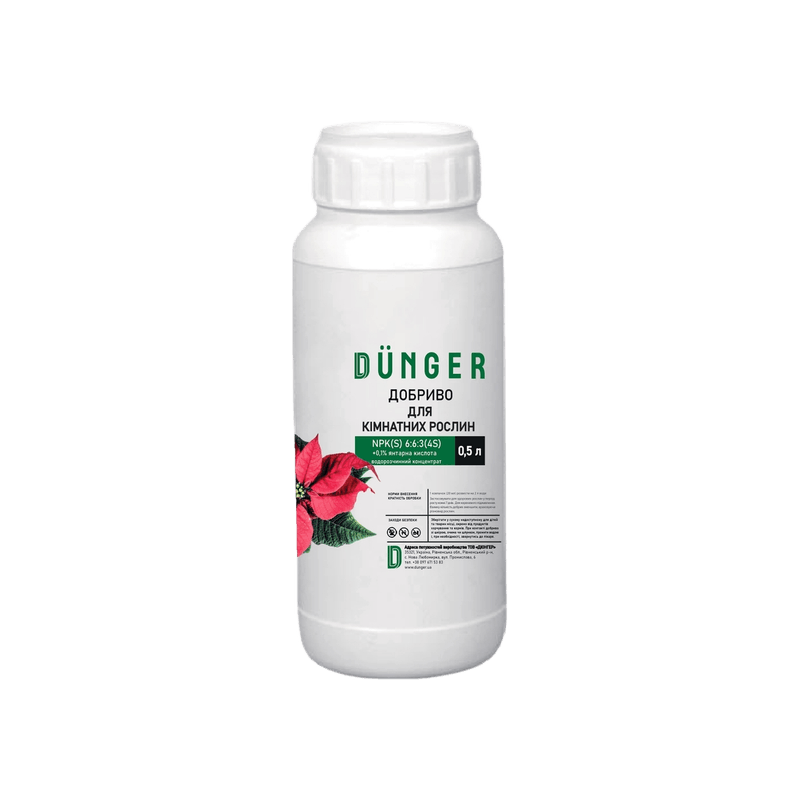
Complex fertilizer for house plants
Yucca is included in this product’s application list. Consider it for a healthy plant under suitable growing conditions. Read the complete method and precautions, and account for previous feeding. The concentrate does not correct root rot or inadequate light.
Frequently asked questions
Yucca gigantea should not remain where frost or sharp chilling can reach it. The hardiness of garden Yucca filamentosa does not apply to this species. Assess night-time conditions and provide a protected bright position.
Indoor yuccas rarely flower. The absence of flowers alone does not demonstrate a nutrient deficiency and is not a reason to increase feeding. Assess roots, the growing tip and new leaves instead.
Check the rootball first. Drooping has different possible causes, and adding water to an already wet pot can worsen the situation. Empty collected water and investigate before deciding on another watering.
The concentrate shown here comes in a 0.5 L bottle. Compare the needs of your collection with the complete instructions and check the exact product name before ordering. Trunk height alone does not determine the application amount.


