


In autumn, check your climbing rose's support, tie in sound long canes and remove clearly broken or dead growth. Keep the main canes until you know how the cultivar flowers. On many once-flowering roses, the long young canes will carry next year's flowers. On a repeat-flowering climber, they form the framework that holds the flowering side shoots. If you cannot identify the cultivar, keep the healthy framework and defer shaping.
Work out which shoots carry the flowers
When the rose flowers once
Think back to whether there was one clear flush of flowers, followed by a season of mostly new stems. Many ramblers, roses with long flexible canes, behave this way. Their flowering branches develop on the previous season's growth. After flowering you can selectively remove old, spent canes if there are young replacements. In autumn, preserve those healthy new canes and find space for them on the support.
On a crowded plant, a young cane is easy to confuse with an older branch that has leaned outward. Trace each stem from its tip to where it starts at the ground or branches from another cane. A new shoot from the base may take over from an entire old cane. A short lateral on an existing cane has a different role. If you cannot tell their ages with confidence, mark the stems with loose ties and look again after the next flush of flowers.
When the rose flowers repeatedly
If more blooms appeared regularly after the first flush, you likely have a repeat-flowering cultivar. Look for the long main canes and the shorter lateral shoots that carried the flowers. The framework covers the support, so the autumn priority is to secure the useful canes and defer the main pruning. In a spot with regular tip dieback, check which growth survived after the coldest weather has passed. Compare your next cuts with the spring rose care and pruning guide.
A few scattered flowers after a long break give limited evidence. The absence of a second flush also tells you little if the plant was recently moved or had a dry season. Check the nursery label or order for the name. If you cannot find it, photograph the whole rose when it flowers again and note which canes carry the flowers.
What to do at the support in autumn
Work from the bottom up so you can see what holds each long stem. Wear sturdy gloves and use sharp pruners only where you can see the cut. If you need to undo an old tie, support the cane first. The top can spring away if it was under tension. Leave out-of-reach canes until you have safe access.
Inspect stems that are already broken or split. Where you have safe access, cut a clearly damaged tip back into healthy wood with a clean, sharp tool. If a dry side branch comes off a living cane, remove it while protecting the base. If a discoloured patch leaves you uncertain, look at nearby buds and mark the spot to recheck. Bark colour alone gives a poor guide to how much wood needs to come off.
Tie in long canes and retain the framework
Fan healthy, flexible canes out across a wide trellis. Where space allows, train some stems at a slant or close to horizontal. This helps distribute the lateral branches across the support. On a narrow arch, follow its curve and tie the stem in at several points. If an old cane resists bending, keep it in the position it has already taken.
A loop should hold the cane and allow a little movement. Keep the tie clear of buds and damaged areas. First try to steer a long loose tip onto a sound part of the support. If it blocks a path or strikes a surface and you cannot secure it, shorten just the troublesome length. Leave the rest of the living cane in place for the next inspection.
Take photos from both sides after tying in. On a wall trellis, mark the long stems you want to keep and those you plan to watch. If you also grow bush roses, compare your tasks with the broader autumn care guide for garden roses. The flowering habit and the support are what make the climbing rose a separate job.
On a wall trellis
If one side of the support has a gap, see whether a young cane can fill it without bending sharply at the base. Bring it gently to the trellis, leave the loop loose and look along the whole stem. If the tip presses on another branch, move the tie before you fasten it. This can separate rubbing canes without an unnecessary cut. If a wall fixing has pulled out, support the canes that depended on it before repairing the trellis.
On an arch over a path
Look from both directions. A cane that appears clear from the front may project at face height on the other side. Secure it on the part of the arch where it cannot swing into the path. If roses meet from opposite sides, trace each cane back to its own plant before freeing the arch or lowering any canes for winter.
Give a young plant with only a few long healthy canes room on the support. Judge the shape by whether you can secure those stems and leave room for new ones. On an old congested rose, identify young replacements first. Mark one old cane for removal at the right stage for that cultivar, rather than opening a large gap all at once.
Choose winter protection for your site
Check the cultivar's hardiness and recall which parts of the canes survived previous winters. A support exposed above the snow and one in a sheltered yard carry different risks. Even within one Ukrainian locality, wind on an open corner can move the canes, while a wall-grown rose may receive runoff at the base. Recheck the ties after a strong wind and see where rain from the roof lands.
If the cultivar is tender and the plant has needed protection in past winters, work out which stems can be released without cracking. Move flexible canes gradually, supporting them near the base. Never force an old stiff cane to the ground. Choose any protection on the support according to the local forecast and whether the materials can be fixed securely. Keep runoff away from the base and remove clearly diseased fallen leaves from under the plant.
At the spring inspection, renew damaged ties and see which buds are growing. Then decide how much to remove in the places you previously marked. On a rose that flowers once, this lets you keep the living portion of a cane even if its tip died back. If the plant starts the season with damage, look at its condition and the soil moisture first. Assess the need for fertilizer separately.
Granules for roses during active growth
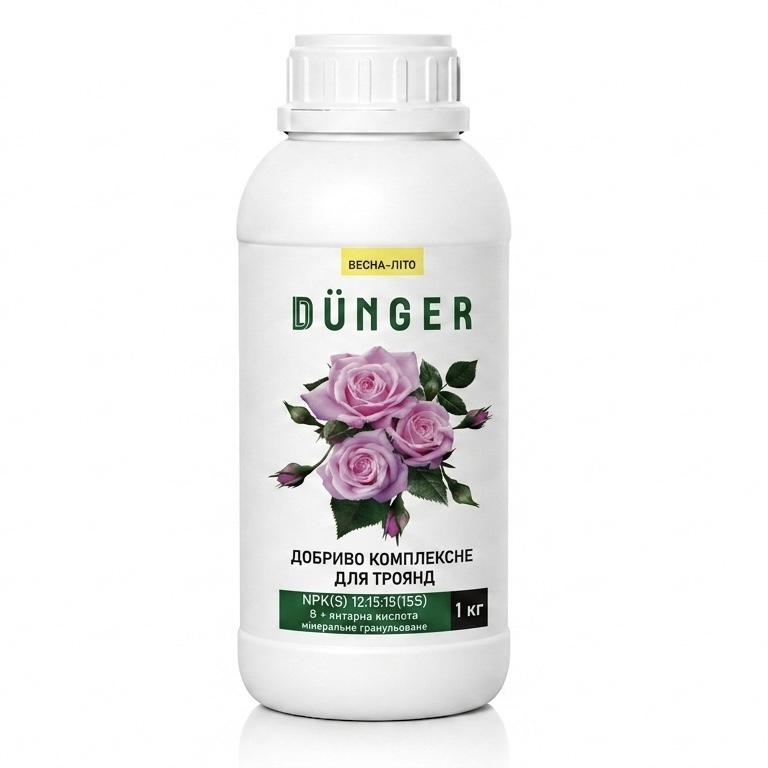
Complex fertilizer for roses granular
When the rose has resumed growth and needs feeding, compare the formulation with its needs and read the full directions. The row below is for roses. Autumn tying and winter covering do not call for an application by themselves.
The product page lists 0.5 and 1 kg packs. Count only the bushes that need feeding and check how the directions account for each bush's age and size.
Frequently asked questions
That can remove the growth that would carry flowers. See which flexible canes can be grouped or secured to the support. Shorten clearly damaged or hazardous tips only if tying them in will not solve the problem.
Trace it from the base. A healthy cane that fills a gap can become part of the framework or replace an older stem. Tie it in and check how the plant flowers the following season.
Support the cane and inspect the break. If the end is split and hanging, remove it back to sound wood where you can reach it safely. Secure the remaining live growth so the next gust is less likely to repeat the damage.


