


A peace lily needs bright indirect light, a pot that drains freely and watering guided by the moisture in its growing medium. Check these three things before trying to encourage flowers with fertilizer. Drooping leaves do not automatically mean thirst, and brown tips do not identify a particular nutrient deficiency. A useful care routine starts with the roots and the position of the plant.
Choose a position the plant can live in comfortably
Spathiphyllum tolerates some shade, but tolerance and good flowering are different things. A plant at the back of a room may remain green while producing little new growth. Choose a bright position where strong direct sunlight does not fall on the leaves. Curtains, neighbouring buildings and the distance from the glass matter alongside the direction the window faces. Look at the actual position during the day before deciding that a north-facing or south-facing window is unsuitable.
In Ukrainian homes, reassess that position when heating starts and daylight decreases. The space beside a radiator can be dry and hot, while the windowsill immediately above it may become cold at night. Keep foliage away from cold glass and move the pot out of draughts when ventilating. An unheated enclosed balcony is not automatically a suitable winter home. Regional outdoor weather matters mainly through transport, ventilation and the temperature of the room where this tropical plant actually stands.
When buying a plant, inspect the whole clump, including the undersides of its leaves. Choose firm, healthy foliage and check for damaged stems or insects. White flowers are attractive, but their number is not a reliable guide to root health. Protect the plant from cold during the journey home, and prepare its indoor position before unwrapping it. Keep it beyond the reach of children and pets that might chew the leaves.
Water the root ball, then let excess water leave
Check the surface and the upper part of the growing medium with a finger. Water when the upper few centimetres have dried, while avoiding repeated drying of the entire root ball. The interval changes with light, temperature, pot size and the medium. A calendar reminder is useful for checking the plant; it should not oblige you to water an already wet pot.
Apply water evenly to the medium and allow excess water to drain. Empty the saucer or decorative outer pot afterwards. A drainage hole hidden inside a watertight cover does not help if the plant remains standing in collected water. Lift the inner pot out when necessary so that you can see what has drained. Pebbles at the bottom of an undrained container do not replace a drainage outlet.
If the leaves droop, feel the medium before reaching for the watering can. A light pot with dry medium suggests a different problem from a heavy, persistently wet pot. With wet roots, further watering can worsen conditions. Check blocked drainage, the size of the container and any recent change of position. If wilting continues or the base becomes soft, inspect the roots and seek a diagnosis before adding a treatment or fertilizer.
Repot for a root problem or a crowded root ball
A new decorative pot does not always require immediate repotting. First inspect the root ball and drainage. Densely packed roots, rapid drying despite thorough watering or deteriorated, compacted medium can justify a change. Choose a container only modestly larger than the existing root ball. A large volume of wet medium around a small plant can remain damp for too long.
Use a free-draining houseplant growing medium that also holds moisture. Ordinary garden soil can become dense in a pot, so a bag intended for container plants is a more practical starting point. Check its ingredients and whether fertilizer has already been incorporated. The coarse medium described in our guide to choosing an orchid growing medium serves a different root environment and should not be copied automatically for a peace lily.
Prepare the pot and medium before removing the plant. Support the root ball, position it at its previous planting level and fill around it without forcing the mix into a hard mass. Water it and let it drain. Routine repotting is easier to plan when the plant is beginning active growth in a warm, bright room. A serious drainage or root problem needs assessment when it appears, regardless of the month.
Understand flowers and brown leaf tips
The white sail is a spathe surrounding the small flowers on the central spike. It can become green as it ages. This change alone is not a reason to add a stronger fertilizer solution. Remove a spent flower stalk at its base when it is no longer attractive, and remove dead leaves with a clean cutting tool. Wipe healthy leaves gently with a damp cloth to remove dust.
When a plant does not flower, review light and general growing conditions first. Fertilizer cannot replace a suitable position. Brown tips may be associated with dry air, inconsistent watering or excess fertilizer salts; strong sunlight can also damage foliage. Examine the pattern and recent care before choosing a response. The separate indoor begonia care guide helps when managing a mixed collection, since different plants should not share a watering schedule simply because their pots stand together.
Feeding a healthy, actively growing peace lily
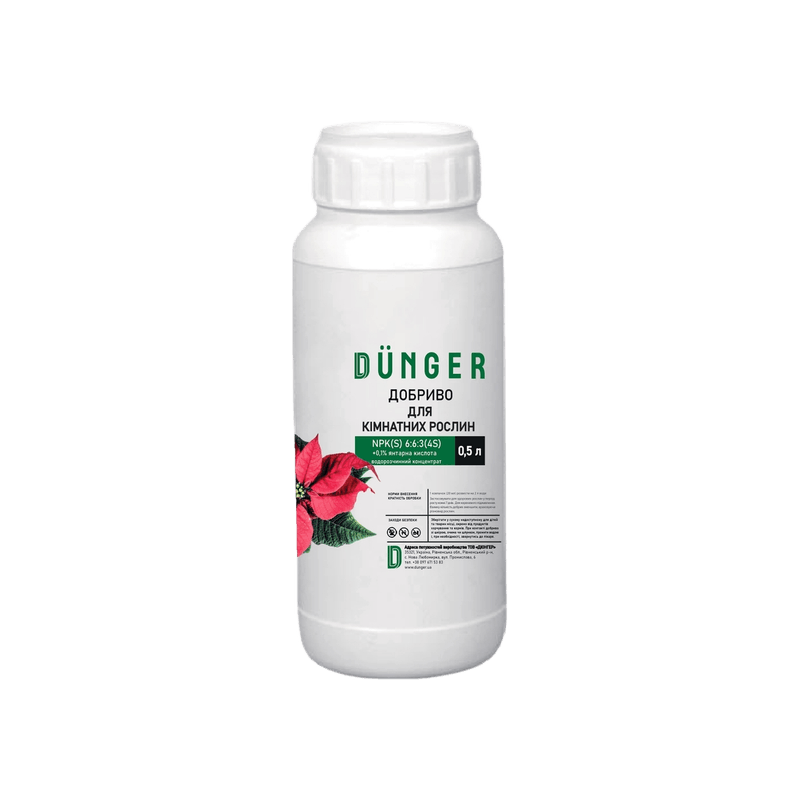
Complex fertilizer for house plants
This houseplant concentrate is an option for a healthy peace lily during active growth. The 0.5 L bottle contains concentrate, so prepare the solution before applying it. Check the fertilizer already present in a newly purchased growing medium before adding another product.
It is used for healthy plants during the growing period every 7 days. Dilute 20 ml of concentrate (1 cap) in 2 liters of water, feed the plant after watering, taking into account the size and age. In winter, reduce the concentration of fertilizer.
Do not exceed the recommended doses of fertilizer, as this can lead to injury or death of plants. Do not use with other fertilizers. Under no circumstances should plants be fertilized when the soil is dry.
For winter use, confirm the reduced concentration with the manufacturer or seller; do not guess a dilution. Compare the intended uses in the houseplant fertilizer range. You can organise the plant, its zone and the selected product in My Garden before purchasing.
Frequently asked questions
Misting does not provide a lasting increase in room humidity. First move the plant away from hot, drying air and check its watering conditions. If the room is persistently dry, a suitable humidifier is a more useful way to manage humidity than repeatedly wetting the leaves.
An established clump can be divided into portions that retain roots and healthy shoots. Do this as a planned repotting task during active growth. Avoid turning a weak plant into many small pieces simply to fill several containers; each division needs a viable root system.
Not automatically. Check moisture, drainage, light and root condition first. A feeding decision should follow those checks, especially when several leaves change quickly. Fertilizer is intended to supply nutrients to a suitable growing plant, not to diagnose the cause of yellowing.
Browse more practical guides in Indoor plants, and base your routine on the conditions around each pot.

